It is just one year left to reach ambitious 2020 targets. The ending year results Alliance for Public Health (APH) is happy to share, made Ukraine and other EECA countries closer to the success, with the scale, innovations, transitioning and sharing effective solutions.
Nation-wide HIV prevention efforts focusing on Key Populations has brought the epidemic under control. During 2019 APH with its partners was providing HIV prevention and testing services to over 170 000 PWID, 38 000 SWs, 42 000 MSM, thus reaching the highest coverage figured in the entire Eastern Europe and Central Asia. Besides the standard package, 2019 was marked with
Reaching those left behind with effective and innovative interventions.
Bringing PeEP: APH-led successful Kyiv pilot scaled up to 22 oblasts with 15 times PrEP coverage increase (from 100 to 1500) just over current year;
Self-testing: APH reached out to partners of key populations with HIV oral and blood self-testing; online selftest.org.ua confidentially delivered self-tests to rural and remote areas;
Artificial intelligence and Machine learning algorithm worked in APH-led extended risk network testing in community-based outreach to optimize HIV case-finding among key populations in Ukraine, including focus on recent infections;
Experimenting with sex and drugs youth: innovatively reached out to users of recreational drugs at night clubs and electronic music festivals, online Free2Ask App and Drugstoreresources;
Transgender people are at the highest risk of HIV. During the year over 1000 trans people in Ukraine reached with essential services, promoting rights of trans people at Kyiv Pride in June 2019;
Achieving the 2nd 90 – 90% on ARV – in the group of HIV+ clients of Opioid Agonist Treatment run with APH support.
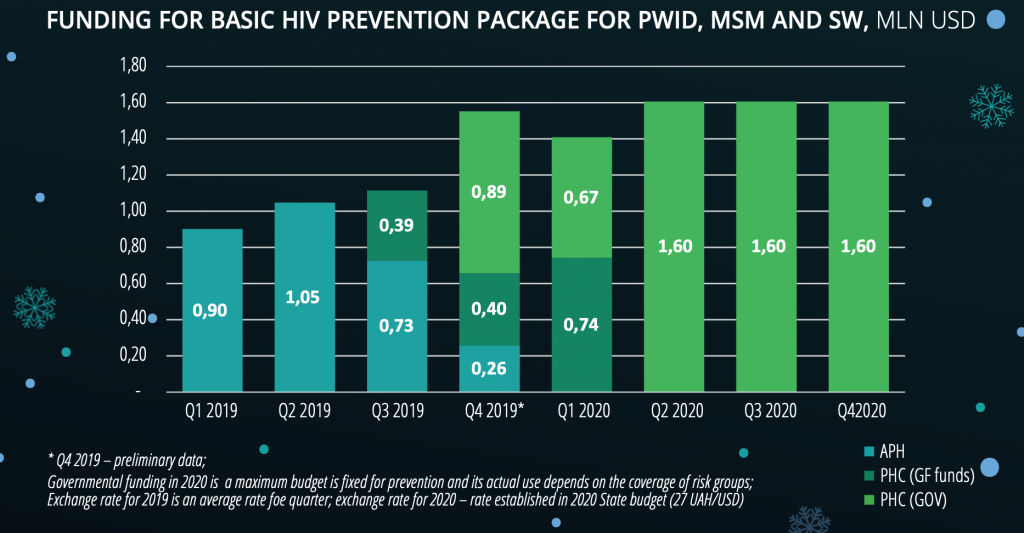
Transitioning the largest KP program in EECA to the governmental funding
At the end of 2019 the largest harm reduction program funded by the Global Fund was transferred to the government funding. APH transitioned its approach to services for key populations which now became the standards approved by the Ministry of Health. The transition is a great result of the joint work with Public Health Center, 100% Life and all implementing NGOs across the country. APH will continue assisting with program oversight, monitoring and technical support and support additional interventions to ensure consistently high quality and maintain coverage.
The successful experience of Ukraine has been used in EECA region. APH-led consortium started 2019-2021 regional GF #SoS_project. This project will ensure sustainability of HIV-services for key populations in 14 countries in EECA region and by 2021 national funding for HIV/AIDS programs will be increased by $10 million from national, regional and municipal budgets and $73.4 millionsavings ensured in the country’s budgets through optimized ARV procurement.
WOW results in TB response
APH adopted Optimized Case Finding methodology for finding missed TB cases. 12 months results show 4.4. times increase in TB detection rate per 1000 contacts in comparison with routine contact tracing. There is a 20% increase of those offered diagnostics in the early detection project (22 536 clients over year). On the treatment side, due to medial and psycho-social support APH managed to increase successful treatment outcomes to 91% and 89% for susceptible and DR-TB patients respectively.
Hepatitis C: getting the best treatment and serving the most in-need patients
Over 2500 patients (PLWH, PWID, prisoners) got through APH comprehensive package of services – starting from HCV diagnostics, followed by treatment, social support, preventive and educational activities and treatment results evaluation. In 2019 Alliance obtained lowest ever in Ukraine price for direct antiviral drugs for HCV 12 weeks treatment course (US$74.9) and launched HCV diagnostic with GeneXpert in laboratories of health care facilities in such a way developing national health system.
Promoting Universal Health Coverage (UHC) agenda
APH is the only Ukrainian organization in the global UHC Civil society Mechanism. In this capacity APH organized a series of consultation prior to the UN High Level Meeting on UHC in September 2019, and is following up with developing multi-stakeholders’ accountability mechanisms. During the year APH expanded its work to supporting vaccination, launching mental health program in 12 regions of Ukraine in partnership with
Ukrainian Institute on Public Health Policy, Yale School of Medicine and U.S. National Institute on Drug Abuse (NIDA).
Leadership of cities in HIV and TB response
APH firmly believes that leadership of cities in HIV/TB response can stop the epidemics. APH completed 3-year regional project “Fast-track TB/HIV responses for key populations in 5 EECA cities” which has significantly improved HIV/TB responses in cities and ensured sustainability achieving a full return of the Global Fund investment of 3.9 Million USD – from cities budget (video). In the new regional project #SoS_project 25 more cities are joining the fast-track initiatives and will sustain response by increasing municipal funding allocations. Just during 2019 political support was provided by mayors of Chisinau (Moldova), Osh (Kyrgyzstan), Svetlogorsk (Belarus) who signed Paris Declaration and ZERO TB Initiative, and Podgorica, Bar, Bijelo Polje (Montenegro) who signed Paris Declaration.
Watch the video: Andriy Klepikov presentation in major event of the year, defining future HIV and TB response in the EECA region.
#InYourPowercampaign launched
APH with partners launched the information campaign “It’s #InYourPower to end AIDS” – https://inyourpower.life.
“Time is what really matters when it comes to tackling HIV. Therefore, we are looking for leaders. Leaders who can make a difference in their countries. Not the day after tomorrow, not tomorrow, but today”, says Andriy Klepikov, APH Executive Director.
14 awards were provided celebrating distinguished leadership in 2019.
ALLIANCE FOR PUBLIC HEALTH CONTINUES TO STRENGTHEN ITS CONTRIBUTION TO THE DEVELOPMENT OF SUSTAINABILITY OF SERVICES FOR KEY POPULATIONS IN EASTERN EUROPE AND CENTRAL ASIA THROUGH ITS PARTNERSHIP WITH THE GLOBAL FUND, PEPFAR, OTHER DONORS
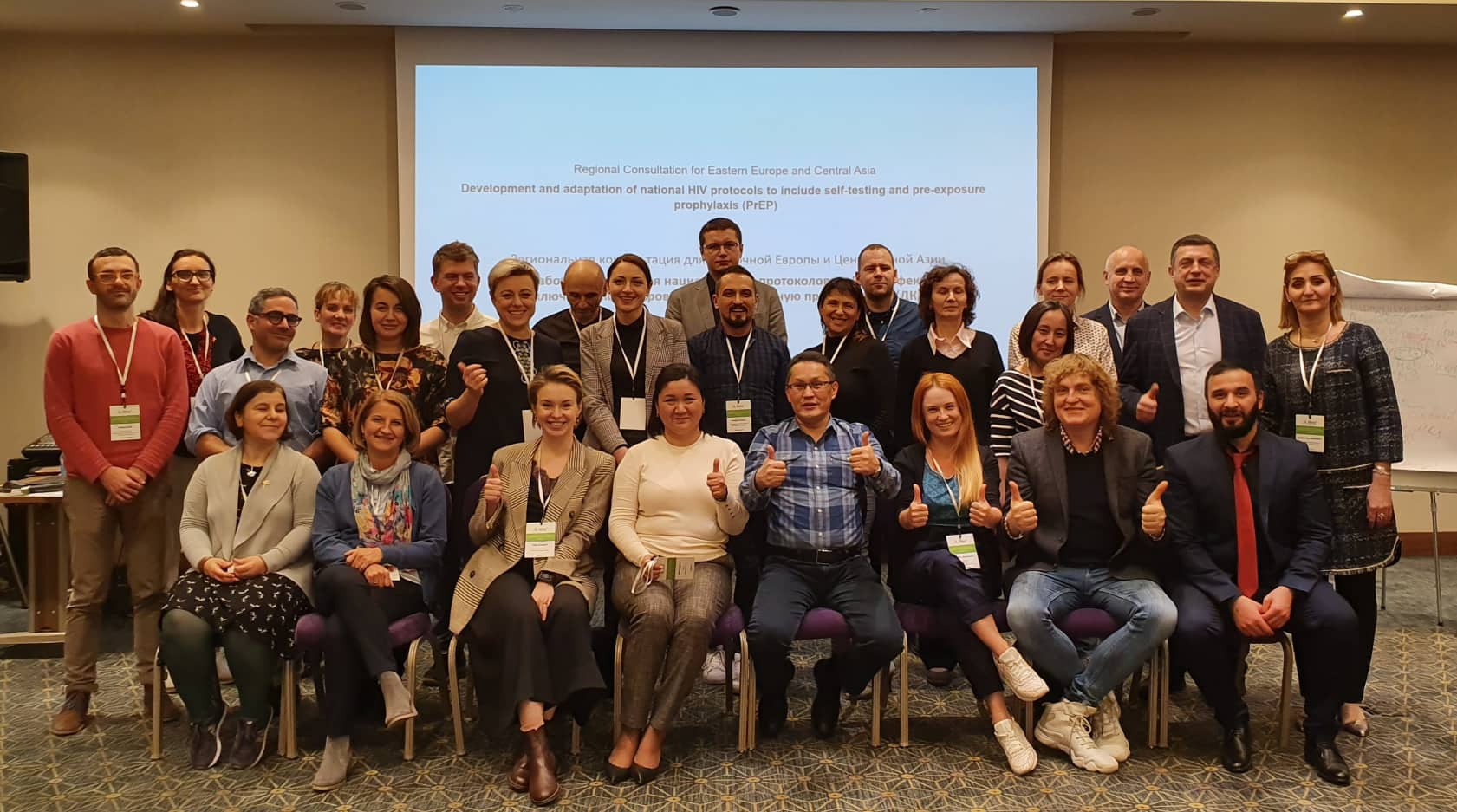
On December 16-17, 2019 in Istanbul the Regional Consultation for Eastern Europe and Central Asia took place on «Development and adaptation of national HIV guidelines, including self-testing (HIVST) and pre-exposure prophylaxis (PrEP)».
Participants from 21 countries of the region discussed the specific steps and prospective to implement in the EECA countries the most updated WHO recommendations on pre-exposure prophylaxis and self-testing, international practice and cases of Germany, Moldova and Ukraine. The consultation was organized by the Alliance for Public Health team with the technical support of the WHO Regional Office for Europe and with the financial support in the frames of the regional #SoS_project.
«More and more countries adopt the policy supporting HIV PrEP. There are many researches, which prove the effectiveness of several PrEP regimens for different populations. This gives the grounds to presume flexibility, choice and accessibility for people who might benefit from PrEP. As of today, there are no hesitations regarding the need to ensure access to PrEP as a part of the standard HIV prevention service package», – says Olga Denisyuk, project manager of the Alliance for Public Health.
Discussions of the specific steps to implement these interventions gain pace during the events of different levels and involve wide range of stakeholder audience. The apparent significance and importance of the issue for the countries and readiness to develop healthcare systems to introduce these services gathered international experts and representatives of national teams of regional healthcare systems representing Azerbaijan, Armenia, Belarus, Bosnia and Herzegovina, Germany, Georgia, Denmark, Kazakhstan, Kyrgyzstan, Lithuania, Moldova, Romania, North Macedonia, Serbia, Russia, Tajikistan, Ukraine, Uzbekistan, Montenegro and Switzerland.
Sergey Filippovych, #SoS_project director: «It’s important even today to more rapidly move from pilots, which proved their relevance, to immediate implementation of the effectively functioning strategies of HIV prevention, testing and treatment. Broad implementation of self-testing and PrEP in the countries of our region will significantly fast-track the EECA regional progress in combating HIV/AIDS. I’ll stress that in the countries of our region strategic implementation of these interventions is supported not purely at the level of operational researches; there’ll be also broad spectrum of technical support provided in the frames of the regional project «Sustainability of Services for Key Populations in Eastern Europe and Central Asia» (#SoS_project).
As regards to application of operational researches, Olga Denisyuk mentioned that the important task remaining for EECA region is in rapid introduction of PrEP maximally adapted to the local context. This is possible to achieve at local level just through initial organization of operational research. «These researches can help develop and evaluate the models of low-threshold access to PrEP in a short time and further serve as basis to scale up the program for the whole country». However, it goes without saying that, based on the results of researches, the NGOs should be involved in order to rapidly implement the important steps to improve health and not to lose the time and the expertise developed in the bureaucratic routine.
We will mention that the primary drug for PrEP is TDF, which is used in different PrEP combinations and regimen.
It is interesting that, according to the report on Assessment of accessibility and major barriers in introduction and scale-up of PrEP in the EECA region held by ЕСОМ in 2018, the major conclusion mentioned that «there were no impassable barriers identified which would make PrEP implementation impossible in any of the countries. When the needed support is available … it seems realistic to resolve the issues of PrEP introduction and scale-up in the EECA region in the immediate future».
EECA region needs a kick: WHO recommendations on HIVST/PrEP
It’s worth mentioning that during recent years the evidence base on reasonability of self-testing introduction and PrEP effectiveness in or region significantly increased.
In 2019 WHO updated its PrEP recommendations as well as HIV self-testing (HIVST) as the effective approach to improve detection of new HIV cases. In the updated HIVST guidelines there were new recommendations outlined regarding optimization of self-testing implementation, including effective service delivery models and linkage to care and support tools.
As the newest recommendations are publicized, their rapid implementation at local level in the countries is very important. Moreover, the evidence base for this is available; also, the negative trends of the region should be considered and controlled by the countries.
Elena Vovc, Technical Officer, TB, HIV & Viral Hepatitis program within the Division of Health Emergencies and Communicable Diseases of the WHO Regional Office for Europe, told that, irrespective to all efforts, WHO European region is not achieving the targets by 2020. Let’s mention that the action plan for healthcare in response to HIV epidemic on the WHO European region adopted by all the countries of the region in 2016 set up the specific goals and target to fast track the response before 2020 in all countries of the WHO European region, including EECA countries.
Surely, it’s consolidated work in the countries in order to:
– achieve decrease in number of new infections by 75% in comparison with 2010,
– mortality resulting from AIDS was less than 30 000 cases (for information: the global target on AIDS mortality is less than 500 000),
– mortality resulting from TB among the people living with HIV was decreased by 75%,
– HIV service cascade achieved the level of 90-90-90.
«HIV self-testing is effective, and in order to introduce it, support is needed as well as relevant policies in the countries. Strategic implementation of this step requires participation of many stakeholders, and I’m glad that currently we’re discussing this issue in such extended format with participation of teams from countries. And we’re not simply talking about scaling-up opportunities of HIV detection; this will help cover more people with the treatment needed at early stages. This is that necessary kick, which can be done by the region right today», – says Elena Vovc, WHO Regional Office for Europe. – «As regards to PrEP, its introduction could potentially save the costs for the HIV combating programs. Thus, with a view to the new data and WHO recommendations, countries already can offer in their national recommendations day-to-day PrEP for all facing the higher risk of getting HIV-infected as well as PrEP intake when needed. It has to make our efforts in the area of STI prevention, including HIV, more efficacious ».
To make this important kick, it’s necessary to introduce pivotal actions at all stages including prevention, detection, and treatment.
Global experience and barriers that might be prevented
In the frames of the Regional Consultation in Istanbul global experience in implementation of PrEP and self-testing was reviewed as well as experience of the countries of the region – Ukraine, Germany, Moldova and Russia.
Olga Denisyuk, program manager of the Alliance for Public Health, shared the experience of Ukraine on PrEP implementation. She stressed the key points, which should be taken into consideration by all countries before introduction of PrEP, in particular, availability of national guidelines and/or relevant instructions on PrEP. Also she stressed that the barrier for this intervention may lay in absence of the indications to use for PrEP in the instructions of some manufacturers of TDF/FTC or other drugs recommended for PrEP! It is important to understand that the potential participants of the program are not always interested in visiting healthcare facilities, that is why it is important to maximally involve community-based organizations to cooperation in this area.
«In order to successfully introduce PrEP in any country of our region I’d recommend to envisage and/or analyze availability of the regulations to implement PrEP at national level. It’s necessary to ensure development of strict mechanism on how to implement PrEP at local level; also the needs have to be considered, since this intervention is not that much known in our countries. I mean development and launch of national information campaign on PrEP promotion among MSM and other key populations. Also pay attention to PrEP inclusion to HIV prevention service package and its accessibility at the community level», – Olga Denisyuk told.
Such PrEP pilots already are operating in the frames of the #SoS_project in Moldova; their launch is planned in Belarus, North Macedonia, Bosnia and Herzegovina; as regards to self-testing – in Georgia and North Macedonia.
Executive Director of the “Fenix Plus” NGO Yevgeniy Pisemskiy shared the experience of work in Russia: «We think that self-testing has good prospective not only among key populations. We hope that in nearest future the self-testing kit might be bought in any supermarket, like it is now in Switzerland».
Yevgeniy told about implementation of large-scale research project in Russia on the issue of HIV self-testing among MSM and transgender people. 26 thousand people got the “SAFE BOX” self-testing kit and reported on its result using the web-site gaytest.info. The research team representing Higher School of Economy measured, to which extent this method of HIV testing is applicable for MSM.
«Per our calculations, we detected more than 2000 HIV cases, and the approach by itself proved to be first-best applicable for MSM and transgender people. We developed the report, which describes in details how people got the self-test kit and their reaction on its usage», – Yevgeniy Pisemskiy tells. – «We see that there are projects currently being developed in Kazakhstan, Kyrgyzstan, Russia and Ukraine, which will really help to countries to achieve first 90% while testing key populations. Since self-testing allows to have HIV test in comfortable conditions and by oneself, without facing stigma and discrimination».
Also he mentioned that national Ministry of health methodological guidelines on work with key populations the self-testing method was envisaged, and currently the work on inclusion of these recommendations to national strategy is ongoing.
What about EECA countries?
Low level of PrEP and HIVST accessibility is still observed in the EECA region.
Aibar Sultangaziev, head of the “Partnership Network” Association, took part in the Regional Consultation on Self-Testing and PrEP in EECA countries, which took place on December 16-17 in Istanbul. We asked him whether the country is ready to introduce these interventions at national level and if there are any barriers for the moment, and he replied as following:
“The opportunities of self-testing and PrEP are included in our new national HIV treatment guidelines, which are currently under discussion and approval in the Ministry of Health. If compared with the acting guidelines, these issues were described rather frivolously; the new guidelines are fully in line with the latest WHO recommendations dated December 2019. The company manufacturing saliva tests is currently starting the process of their registration, and we will support them. After the registration is complete, we will promote introduction of mechanisms to make the tests available in the pharmacies”, – says Aibar Sultangaziev. – “PrEP is already available in the country, and currently about 30 people (according to the Republican AIDS Center) already get it, but Truvada (TDF+emtricitabine) is currently procured for the Global Fund costs. Our goal is to make it accessible for the national budget costs. Actually, Truvada is already being procured for the national budget costs during this year, but the reporting mechanism on distribution of the drugs for people has to be improved.
Yes, as of now, or physicians and governmental officials can hardly understand that the person is not currently ill, but already has to take drugs. But it’s about timing. When one understands economic reasons and economy, which PrEP can ensure, no more questions arise”.
In North Macedonia the situation is a bit different.
Andrej Senih representing the Association to support people living with HIV “Stronger Together”:
“The roll-out of PrEP and self-testing in North Macedonia has been very delayed. We are now working intensively within SoS project, and with WHO support, on national PrEP guidelines and a protocol for а PrEP program, while at the same time making plans for introducing several self-testing options. We are ambitious in our objectives, but it is realistic to expect that we will achieve access to PrEP and self-testing for key affected populations already in the first half of 2020”.
In Moldova, the national information campaign on PrEP is under development. Currently more than 70 people started PrEP already.
Vyacheslav Mulyar, LGBT Community Health Program coordinator within the Information Center “GENDERDOC-M”: “As of today, in the Republic of Moldova everyone who needs PrEP can have it. During next year we plan to advocate for changes to the National PrEP clinical guidelines, namely, by supplementing it with the mechanism of the Community PrEP and case scheme (2 + 1 + 1) recommended by WHO as alternative to the existing scheme. We are also open for exchanges of experiences, which proved to be fruitful, with the partner organizations and governmental structures, and we think this experience has to be considered in the changes, which will be brought at national and international level. We are also grateful for the National HIV Program, Hospital of Dermatology and Infectious Diseases, А.О. «Positive Initiative» and others for cooperation”.
Yevgeniy Goloschapov, Director of the Advocacy department of the public association Initiativa Pozitiva: “When we were developing the PrEP campaign, we requested the potential participants in order to attentively consider the most effective mechanisms of informing about #PrEP, counseling of those interested in PrEP and distribution of drugs. The pilot envisages that about 100 male and female will take PrEP”.
Participants of the PrEP campaign also get social support and counseling of NGOs’ consultants. After the campaign is held, its results will be analyzed, which would become a basis for recommendations on relevance of further PrEP introduction in the country.
It should be noted that the #SoS_projectis aimed to ensure sustainability of services for key populations in 14 countries of Eastern Europe and Central Asia. To achieve this ambiguous goal, the regional project team consolidates and distributes the best global experience among stakeholders in the countries of the region, as well as directly supports implementation of effective interventions like HIVST, PrEP and others.
Implementation of the #SoS_project is coordinated by the Alliance for Public Health in consortium with the 100%Life (All-Ukrainian Network of PLH), Central Asia Association of People Living with HIV and Eurasian Key Populations Health Network with participation of 14 national, governmental and non-governmental organizations as well as regional networks representing key populations, international agencies and organizations, and technical partners. Funding of the regional project is supported by the Global Fund to Fight AIDS, Tuberculosis and malaria.
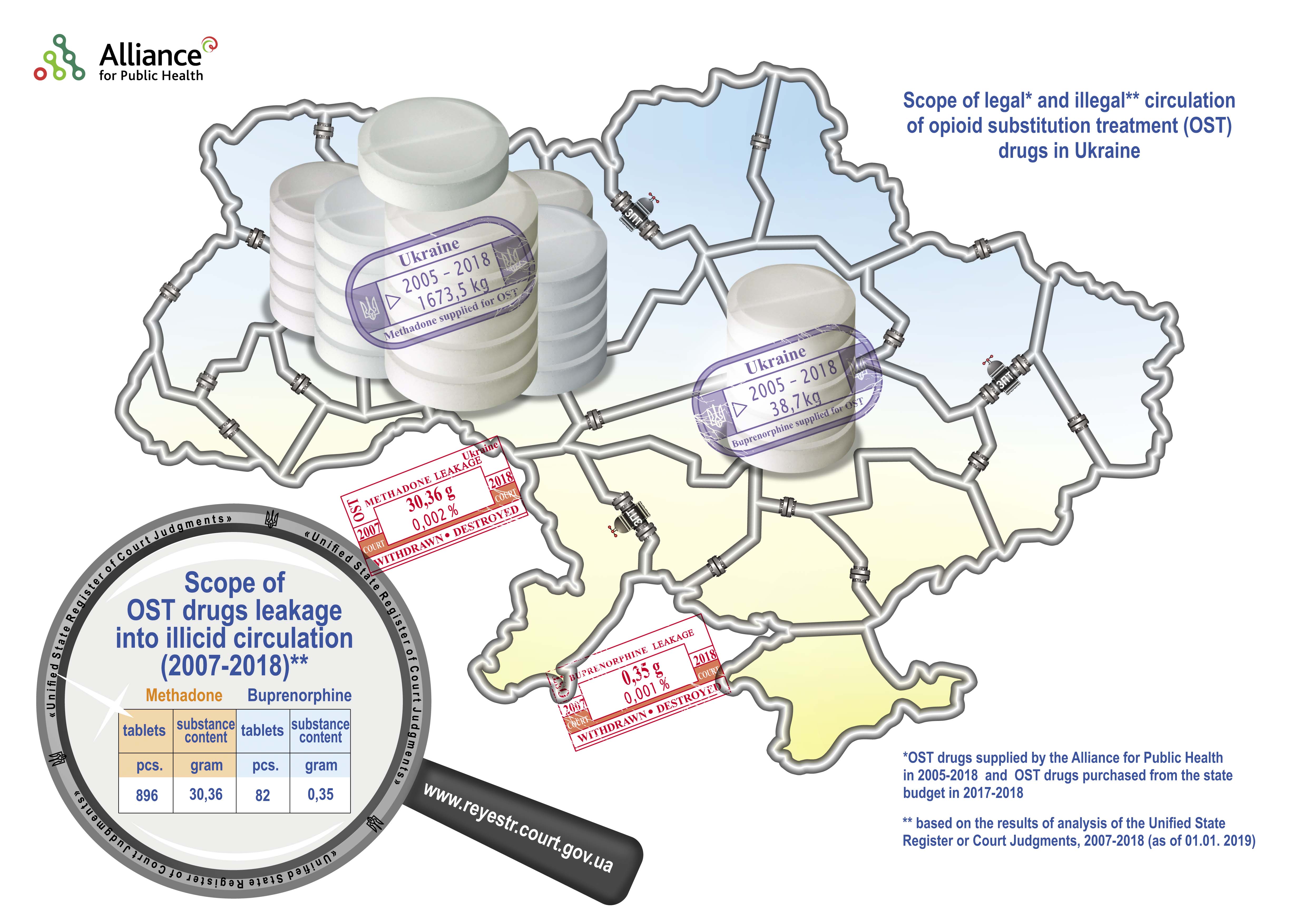
Alliance for Public Health made an analysis and would like to present data on the real scope of legal and illegal circulation of opioid substitution therapy (OST) drugs in Ukraine.
Alliance has been implementing OST programs since 2005, regularly providing evidence of efficiency and safety of harm reduction approach as opposed to ungrounded accusations on allegedly high volumes of OST drugs leakage.
During 14 years of OST program implementation in Ukraine, around 1700 kilograms of OST drugs were purchased at the expense of international donors and of the State budget of Ukraine and delivered to licensed healthcare institutions to cover the needs of the program. The scope of OST drugs leakage recorded in court judgments does not exceed 0.002% of the total amount of OST drugs delivered.
The capital of Ukraine has become a focal point of new record setting and a venue to present an effective package of working interventions, highlight the strength of political will to support decision-making on HIV and TB and the leadership in the countries of Eastern Europe and Central Asia, as well as the Balkan region.
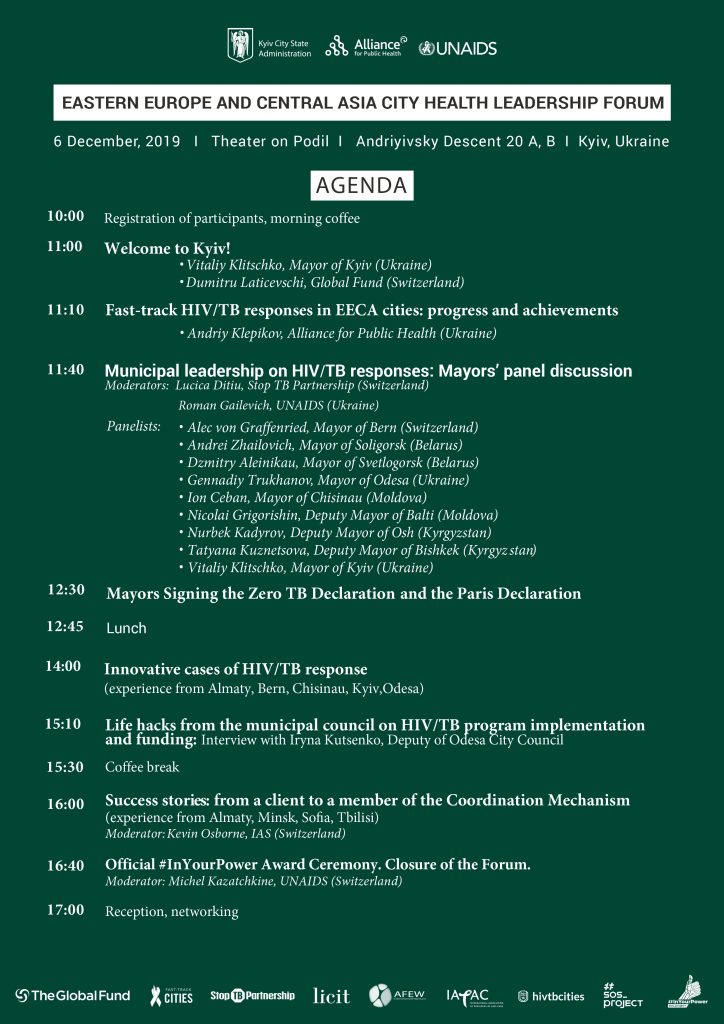
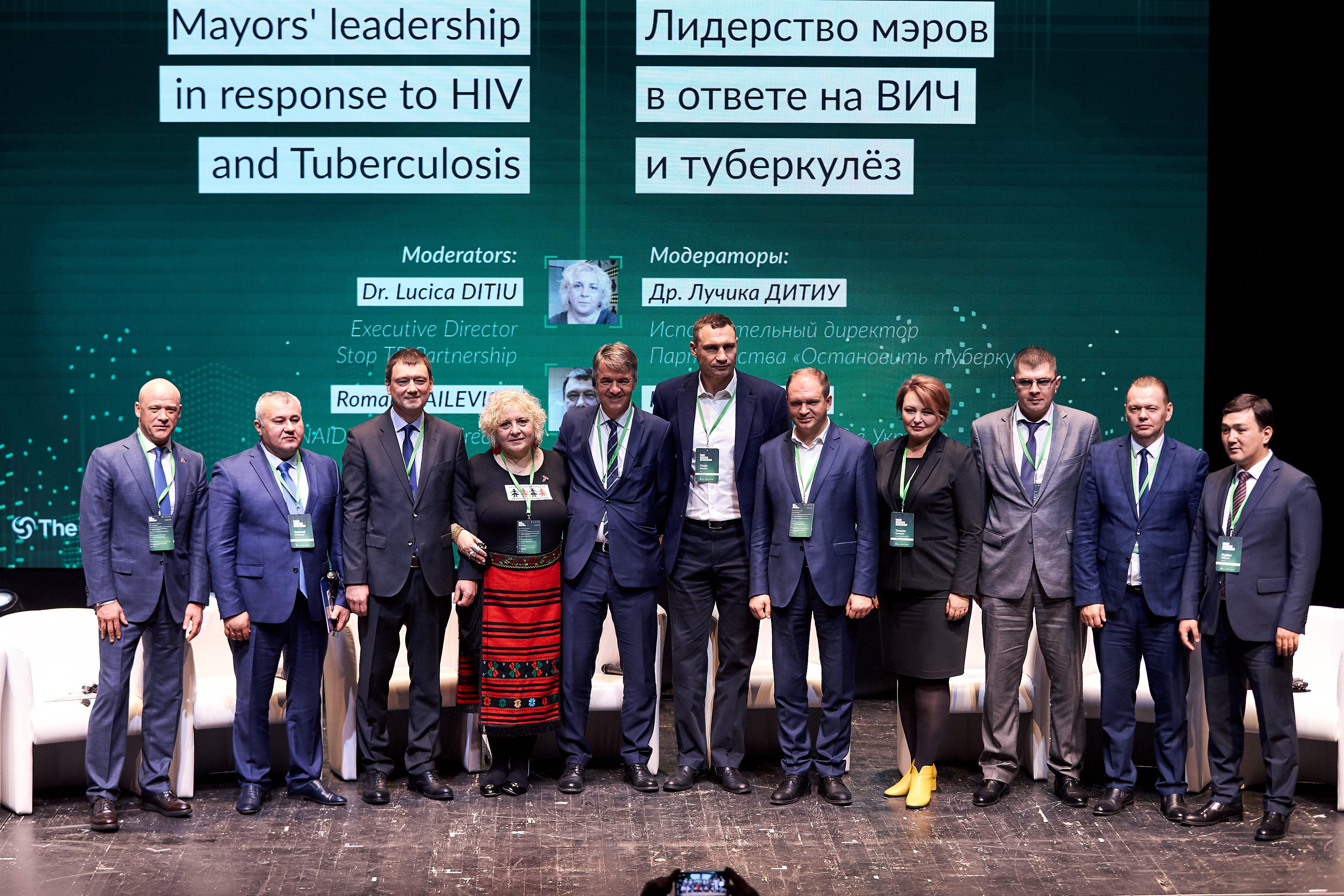
On December 6, 2019 in Kyiv, the International “EECA City Health Leadership Forum” was held, with the participation of top officials of cities – mayors and vice-mayors, representatives of international, national NGOs, invited experts, heads of AIDS and TB centers from 50 cities of the world.
The Forum showcased the results of operational research, practices and innovations with proven efficiency, approaches to HIV detection, testing and treatment, including new technologies and modern methods using network marketing, out-of-the-box decisions of the municipal government for cooperation with NGOs and other partners; the KP movement leaders shared their experience of protecting the rights of communities; moreover, the Forum speakers talked about financing programs and the cost of saving a person’s life, about the regional progress in the context of the fight against epidemics of AIDS and TB.
Andrey Klepikov, CEO of the ICF “Alliance for Public Health”:
“The EECA region in 2020 is already demanding results. And in this context, we are talking about a new dialogue between the state and civil society. Our focus on cities and collaboration with mayors is crucial for addressing HIV/TB. The Alliance team has been working with the regional municipalities teams for the fourth year already, and the cities’ eagerness to cooperate is also increasing. Therefore, the number of partner cities has expanded from 5 to 25 over the past year. As for the methodology, you don’t need to invent the wheel, everything has already been invented and tested. There are working principles on how to reach the level of accelerated response and achieve success. We described our work experience and effective work approaches in cities in a model delivering real results. Cities can make a difference in our countries, and these are not just some imaginary cities, but city leaders, mayors, you and me. For us, this is the way forward. This is #InYourPower, in our power!”
Presentation about the regional progress in combating epidemics, efficient approaches with the overview of the outlook for 2022.
Dialogue about the HIV/AIDS problem in the EECA countries on the highest municipal level
The top officials of the cities discussed good practices, innovations, out-of-the-box solutions of the municipal government and cooperation with non-governmental organizations and other partners.
Within the framework of the forum, a high-level dialogue took place in a panel discussion between the mayors of Kyiv and Odesa (Ukraine), Berne (Switzerland), Chisinau and Balti (Moldova), Svetlogorsk and Soligorsk (Belarus), vice-mayors of Bishkek and Osh (Kyrgyzstan), while Roman Gaylevich (UNAIDS) and Lucica Ditiu (Stop TB Partnership) moderated the discussion.
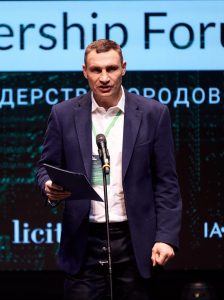
Vitaliy Klitschko, the Mayor of Kyiv: “HIV is a common problem, and we must join our efforts to stop it”
According to Mr. Klitschko, amid the global epidemics of HIV and TB, the city must create favorable conditions for public organizations fighting epidemics, taking active leverage, and actively engaging in it.
“It is very important that the mayors of many cities around the world would play a leadership role in overcoming diseases. The people’s health should be one of the key priorities of the municipal government, and therefore – a priority in the work of mayors. It is in our power to prevent the spread of HIV and TB, to introduce efficient treatment programs”, said Vitaliy Klitschko.
The Kyiv Mayor is convinced that only joining efforts instead of silencing a common problem can solve it. In Kyiv, this approach is already yielding results.
“Kyiv is showing considerable progress in the fight against AIDS,” said Vitaliy Klitschko. “I am sure that common efforts over the past few years helped us to advance in the fight against this serious challenge for our city and increase the numbers of people who receive medical care and prevention”.
Vitaliy Klitschko signed the Zero TB Cities Declaration on the fight against tuberculosis on behalf of the city. This is the second city in Ukraine after Odesa, which signed the Zero TB Cities.
“Kyiv is taking the lead, and we are ready to extend the positive experience to all regions of Ukraine, the Kyiv Mayor said. – And as for the challenges, we, unfortunately, face a plenty of them”.
Ion Ceban, Chisinau Mayor: “We rely on partnership in combating HIV and TB”
According to the Chisinau City Mayor, Ion Ceban, one of the important tasks for the health care of any city is to ensure that people’s lifespan, in particular of people living with HIV, can be as long as possible. So that they have the opportunity to live to old age, women living with HIV can give birth to healthy children, and the townspeople have access to prevention and testing and undergo it regularly.
“We must consider both treatment and HIV prevention in a comprehensive manner, ranging from vulnerable groups to the general population of cities,” he emphasized.
According to Ion Ceban, special attention should be focused on youth. It is necessary to talk about the transmission methods, the importance of prevention.
A pre-exposure prevention program is already working in Chisinau, and a syringe exchange program is being actively implemented. “This is a very important step for those at risk to keep HIV at bay”, Ion Cebanemphasized. “Next, we have a lot to do about tuberculosis, and we really look forward to a partnership”.
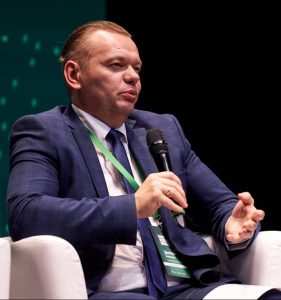
Dmitriy Aleinikov, Svetlogorsk Mayor: “It is easy to achieve 90-90-90 indicators, if we speak up”
In a small Belarusian town Svetlogorsk there is a person who has been living HIV-positive status since 1997. Today his health is quite good and he can live the ordinary life. The reason for this, according to the City Mayor Dmitriy Aleinikov, is that the municipal authorities do not hush up the HIV/AIDS problem, but actively solve it.
“There are only 80 thousand people in Svetlogorsk, but problems such as HIV/AIDS and drug addiction still linger from the Soviet era”, said Dmitriy Aleinikov to the heads of cities of the EECA region at the EECA Cities Forum held in Kyiv on December 6. “And I am grateful that my predecessors did not sweep this problem under the rug”.
Signing of the Paris Declaration posed no additional problems for the city, because, as the Mayor of Svetlogorsk is convinced, achieving the 90-90-90 indicators will be quite easy, if we adhere to the principles of publicity, openness and a strategic approach.
“It will not be difficult, because we speak up, – he stated. – We are tacklingthis problem, it is not new for us, and I am certain that we will solve it”.
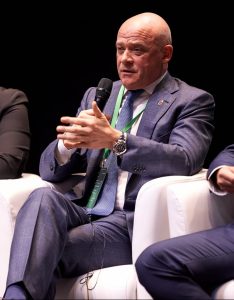
Gennadiy Trukhanov, Odesa Mayor: Combating HIV should start from philosophy
Odesa is the first city in Ukraine to commit to the Zero TB Cities initiative and systematically proceeding towards overcoming the TB and HIV epidemic. Today, all forces that used to withstand these challenges alone, became consolidated. Thanks to joint efforts, the effectiveness of treatment has increased from 53% to 72%.
However, as the Odesa Mayor Gennadiy Trukhanov, said at a meeting of mayors as part of the EECA Cities Forum, this was not easy for the city itself. Deputies engaged in heated debate over two sessions. The experience of other cities, in particular the Swiss municipality of Bern, helped to shift the obsolete views.
“We must start with philosophy”, Gennadiy Trukhanov is convinced. – PWID are people with drug addiction. They are dependent. They are not criminals, but people in need of treatment. And only when we socialize them, when they realize that society is not against them, they will look for opportunities for socialization”.
In addition to local, routine problems, the city authorities also have to solve global challenges, in particular, to help health workers in the fight against epidemics. After all, it is in everyone’s interests. “The mayor’s performance is assessed by the city condition: roads, roofs, heating, comfortable public space. That is all true. But we can make cities clean, however with the spread of all dangerous infections in the world, God forbid, the time may come when there will be nobody to walk along these tidy streets”, emphasized the Odesa Mayor.
Inspired by the Bern experience and changing the philosophy of the attitude towards PWID, Odesa promises to take further steps to combat the spread of infections and ensure socialization of PWID. In the near future, the opening of a safe injecting drug use room is planned.
Alec von Graffenried, Bern City Mayor: “Our goal is 100-100-100”
“Bern accumulated solid experience in this area, not because we are better than other cities in any way, but rather because we faced huge problems with drug users. In the 80s, there were hundreds of them right in the center of the city, they wandered around the streets, threw syringes right in the parks and it was terrible”,Alec von Graffenried recalls. “Since then, city mayors had to solve this problem quite effectively, because PWID is one of the most vulnerable groups, and the most problematic in terms of HIV prevention”.
The first step of the city authorities was the free distribution of syringes on the streets. The second step – the authorities went to the places where people sell drugs.
“It turned out to be a lot harder than just distributing syringes. We had to talk to people, and do not arrest them, because drug addiction is a disease. They need to be treated and receive care like patients”, said Alec von Graffenried.
After drug users got used to people who do not blame them, but are willing to help, the city offered them a safe space, free from crime, in the very center of the city. There they could get syringes, take an injection, meet with peers.
Further, the city began to offer PWID medical assistance, social support, so that they could leave the street where everyone could see them.
“We were not telling people, “Come along, we will cure you, you will no longer be addicted”, but simply accepted the fact that they will continue to take drugs. We want to help them so that people could live in normal conditions. – says the Mayor of Bern. – What did we achieve in the end? We have methadone and heroin programs in Switzerland, so that drug users can live a normal life, avoid involvement into crime, to buy drugs. We provided them a possibility to live as an ordinary citizen, and as a result, the number of people with drug addiction decreases, the number of people with HIV decreases even more, tuberculosis is not a problem for Switzerland at all. If we talk about indicators, then Switzerland has come a long and arduous way in 30 years, and now it has reached the goal of 100-100-100”.
Effective HIV strategies that worked well in the cities of the region
The Forum showcased the best municipal practices such as the Harm Reduction Program in Bern, the state-funded Opioid Substitution Treatment Program in Kyiv, new approaches to increase the effectiveness of tuberculosis treatment in Odesa, the promotion of the VCT program in Chisinau, the work on improving the HIV cascade in Almaty and others.
Thus, two years ago, an Almaty citizen had to go to the clinic to get a blood test to get to know their HIV status and wait two days for the result, which again had to be received from the clinic. Obviously, this was far from the best way to identify all people in need of treatment. AFEW Kazakhstan radically changed the approach and improved the situation with HIV detection in the city. In 2018, key innovations were introduced for the first time in Kazakhstan.
First, rapid saliva tests were introduced in the outreach conditions.
This approach is unique, because outreach workers travel to the necessary places to provide testing and counseling. The test itself is very easy to use. It is only necessary to hold a special spatula between the lip and the gum and dip the spatula into the liquid. And after 20 minutes the result is ready.
Secondly, the index testing approach was implemented.
Initially, outreach workers tested those clients whom they knew. Then they asked those of them who had positive HIV status, to refer 3 people from their close circle with whom they practiced risky behavior in the context of HIV to undergo a test. To motivate customers, special coupons were issued with QR codes and outreach worker contacts, which a client could hand out to friends. Everyone who passed the test or attracted another person received 1000 cell phone payment units or a grocery package, upon their choice.
This is a network marketing in action!
Therefore, for a year and a half, 6,000 people were tested. 145 Almaty residents first learned about HIV! For comparison, this is about a third of all identified cases per year in the city!
Third, the efforts of the project team were aimed at increasing treatment coverage.
When the HIV test result turned out to be positive, the client was provided with social support for testing at the AIDS center. If the result was confirmed, the client received assistance to get enrolled for a dispensary registration and immediately start antiretroviral treatment.
At the same time, outreach workers cooperated with healthcare staff to bring back clients who discontinued treatment, the so-called “lost-to-follow-up patients”. Thus, the project team worked with each patient step by step, returning people to treatment and support programs.
As a result of the project 538 people who were diagnosed with HIV now have the right to life! The efforts of outreach workers and a personalized approach helped to provide people with treatment upon learning about their HIV status for the first time or returning to the program.
For comparison: an average of 400 people in Almaty start ARV treatment annually. It turns out that only the efforts of the pilot project team managed to exceed the average annual rate.
Political commitment to ending HIV and TB epidemics and signing of the TB and AIDS Declaration by the six cities at once, a groundbreaking event for the EECA
The groundbreaking ceremony of simultaneous signing the Political Declaration on AIDS and TB: Declaration to Fight against the TB by the six EECA cities: Kyiv (Ukraine), Chisinau (Moldova), Svetlogorsk (Belarus), Bishkek and Osh (Kyrgyzstan), and the Paris Declaration signing by the Balti city (Moldova) was the cornerstone event of the Forum.
Roman Gaylevich, UNAIDS Director in Ukraine: “We welcome and warmly support the personal leadership of the mayors of the cities that have signed the Paris Declaration and the Declaration to Fight against the TB, I would like to put special emphasis on the fact that all these cities have coordinating councils on HIV/AIDS and TB, which include key communities. The joint work of the city authorities and communities, in my opinion, is the core and the driving force behind positive changes”.
We would like to note that the team of the ICF “Alliance for Public Health” and the #SoS_project partners will provide expert, technical and financial support to Svetlogorsk, Osh and Chisinau at all stages of fulfilling their commitments under the Paris Declaration and the Zero TB Declaration.
Key population communities in the focus of attention
Of course, declarations are signed for a reason, and all programs, foundations, public figures and experts are working not just for the statistics, but solely for the sake of saving human life and improving people’s health.
At the beginning of the session, a video presentation of the leaders of the LGBT, PWID, TG, and SW community networks was presented with a perspective on regional problems and challenges that are most relevant in Eastern Europe and Central Asia.
Four leaders of their communities of Almaty, Sofia, Tbilisi and Minsk shared from the Forum stage their experiences and real stories about how they manage to represent the interests and protect the rights of their communities at various levels, be it international or local city platforms. They presented their vision, their strategies and examples of results that can be achieved and how a person’s life can dramatically change in a comfortable social environment.
The emotion was undoubtedly the most intense during this panel with real heroes in their field, people who inspire and adamantly go forward. Kevin Osbourne, Director of the International AIDS Community, moderated the panel.
#InYourPower awards handed to the winners
The Forum culminated in holding the first #InYourPower award ceremony for political leadership in combating HIV/TB in the special nominations and based on the voting results.
Mayors, vice-mayors and representatives of mayors of 13 cities of Eastern Europe and Central Asia received awards: Kyiv, Odesa, Bishkek, Chisinau, Almaty, Tbilisi, Sofia, Osh, Balti, Svetlogorsk, Bar, Bielo Pole, Podgorica.
The prize was awarded to cities for the following achievements:
– Significant successes in the fight against HIV/TB at the city level,
– The political leadership of mayors and city teams in the fight against HIV/TB, as a symbol of commitment to ending the AIDS epidemic, as well as a sign of support from international partners.
A special award based on the results of voting on the site inyourpower.life was presented to Irina Kutsenko, a deputy of the Odesa City Council.
Dr. Michel Kazatchkine, UNAIDS Special Envoy in Eastern Europe and Central Asia, stated, “We need to change policies to save people, and the ownership of city leaders plays a crucial role!”, greeted the mayors on occasion of awards, significant promotion and commitment to ending the AIDS epidemic and TB.
The participation of the journalist and TV presenter Yanina Sokolova as the host of the event was symbolic; the is the ambassador of the Sustainable Development Goal 3, related to the health and well-being, within the framework of the UN national campaign on promoting the SDGs in Ukraine.
On December 6, 2019, the International Forum on ‘Cities’ Leadership in response to the HIV/AIDS and TB Epidemics’ will take place in Kyiv (Ukraine). It’ll be visited by cities’ mayors, representatives of the international, national organizations from 50 cities of the world. The focus is: innovations, technologies, municipal funding, and political leadership of the cities; mayors.
«We live in the epoch of digital technologies and fast-paced changes, when it’s namely the cities who become leaders in the global health issues. Today more than half of the planet’s population resides in the cities, and in 30 years the municipal population will increase practically up to 70%. Irrespective to the fact that the main problems, which are faced by the population, including infectious diseases, are concentrated on the level of the cities, the infrastructure and resources to stop those are primarily in possession of the cities», – the Forum organizers mention.
The major topic of the Forum is achieving future without AIDS and TB in the fast-growing cities. The main stress of the Forum is made on sharing experience and involvement of the Eastern Europe and Central Asia (EECA) cities in the international movement of mayors to end these epidemics. To get acquainted with the opportunities that are opening for the sustainable development of the cities, representatives of the new potential leader cities are invited to the Forum.
From sharing experience to life hacks: Forum speakers will tell about the funding of the programs and the cost of saving the life of a person, about the progress of the region in the context of combating the AIDS and TB epidemics, will present the approaches in case finding, testing and treatment of these illnesses, which proved to be effective, including new technologies and modern approaches applying network marketing.
Cities’ mayors, executives of international agencies and global initiatives, public opinion leaders, and the best experts of civil society organizations representing more than 25 countries of the world will respond to the main questions: why namely the cities play an important role in the global overcoming the AIDS and TB epidemics and which effective strategies exist to accelerate these measures.
– Panel discussion of the cities’ mayors: Kyiv and Odesa (Ukraine), Bern (Switzerland), Chisinau and Beltsy (Moldova), Svietlahorsk and Soligorsk (Belarus), vice mayors of Bishkek and Osh (Kyrgyzstan);
– Unique for the EECA region synchronic signing of six political declarations on AIDS and TB at the same time by the mayors of Kyiv (Ukraine), Chisinau and Beltsy (Moldova), Svietlahorsk (Belarus), Osh and Bishkek (Kyrgyzstan). Press conference (13:00-13:50);
– Effective practice, innovations, unconventional approach of local authorities related to cooperation with NGOs and other partners, sharing experience of the communities movement leaders;
– the first award ceremony of #вТвоихСилах/#InYourPower campaign for political leadership in combating HIV/TB in the specific nominations and based on the voting results.
Kevin Osborne, International AIDS Society (IAS) Director
Michel Kazatchkine, professor, physician, diplomat and advocate, United Nations Special Envoy for HIV/AIDS in Eastern Europe and Central Asia, member of the Global Commission on Drug Policy.
Lucica Ditiu, director of the Stop TB Partnership leading the way to a world without tuberculosis (TB)
Dumitru Laticevschi, Regional Manager of the Global Fund in the Eastern Europe and Central Asia countries
Alec von Graffenried, Bern mayor (capital city of Switzerland)
Ion Ceban, Chisinau mayor (Moldova)
Nicolae Grigorişin, Beltsy vice mayor (Moldova)
Dmitriy Aleynikov, Svietlahorsk mayor (Belarus)
Andrey Zhaylovich, Soligorsk mayor (Belarus)
Tatyana Kuznetsova, Bishkek vice mayor (Kyrgyzstan)
Nurbek Kadyrov, Osh vise mayor (Kyrgyzstan)
The live broadcasting will be ensured in English and Russian. The link to the broadcasting page: Facebook та Youtube.
Quotes
Vitaly Klichko, Kyiv, mayor Киев (Украина):
«It is very important that many mayors of cities in the world today take leadership in overcoming illnesses. The issue of the health cannot be the priority only for the relevant ministries, organizations, or specific municipal institutions or services in charge. Health of the citizens has to become one of the main priorities for municipal authorities, e.g., the priority in the mayors’ work. It is in our power to prevent dissemination of such illnesses as HIV and TB, to introduce effectives programs for treatment thereof. Kyiv signed the Paris Declaration in 2016. We approved the city program and provide funding for it, work primarily with the groups that are most vulnerable to HIV. In response to our effective work the number of new cases of getting HIV infection in Kyiv starts to decrease. But there still are lots of challenges. And we keep on implementation of the best experience in the world, uniting efforts in overcoming HIV and TB with international organizations, with municipal authorities of other cities».
Andriy Klepikov, executive director, International Charitable Fund ‘Alliance for Public Health’ (Ukraine):
‘Alliance for Public Health has been working with the cities in the region during four years already through implementing the Fast-Track strategy in response to the AIDS and TB epidemics. At this Forum, we will present info graphics and tendencies with the major figures and budgets by countries. It is important that the interest of the cities is growing; thus, the number of partnering cities during the last year increased from 5 to 25. Physicians, social workers, nurses, civil society organizations have been continuously doing their job and are still doing it. But one more component is of crucial importance: political leadership. Everyone who is in the chair of the mayor not by a chance of fortune, who has powers to take decisions, has to take these decisions for the sake of people. In the area of combating AIDS and TB epidemics in the cities it means application of innovative approaches and scientifically confirmed international expertise, resource allocations for prevention and treatment, as well as other important steps, which would provide for saving lives. The partnership of the city and of NGOs is a key for success and the future of cities free from AIDS and TB epidemics.
Raman Hailevich, UNAIDS director in Ukraine:
‘According to the last UNAIDS report, which was made publically available before the World AIDS Day, EECA region is the only region in the world where the number of new HIV cases is continuing to grow. That’s why it’s so important to implement these Fast-Track strategies in response to the epidemic namely in this region. The quintessence of this strategy is the initiative to overcome AIDS in the big cities where about 70% of all people living with HIV reside. UNAIDS jointly with IAPAC are coordinators of this initiative at global level. Welcoming and giving warm encouragement to personal leadership of the mayors of the cities who signed the Paris Declaration and ZERO TB Declaration, I want to specifically stress that there are HIV/AIDS and TB Coordination Councils effectively operating in all of these cities, and key populations are their members. Joint efforts of municipal authorities and communities, from my point of view, are the heart and the driving force of the positive changes’.
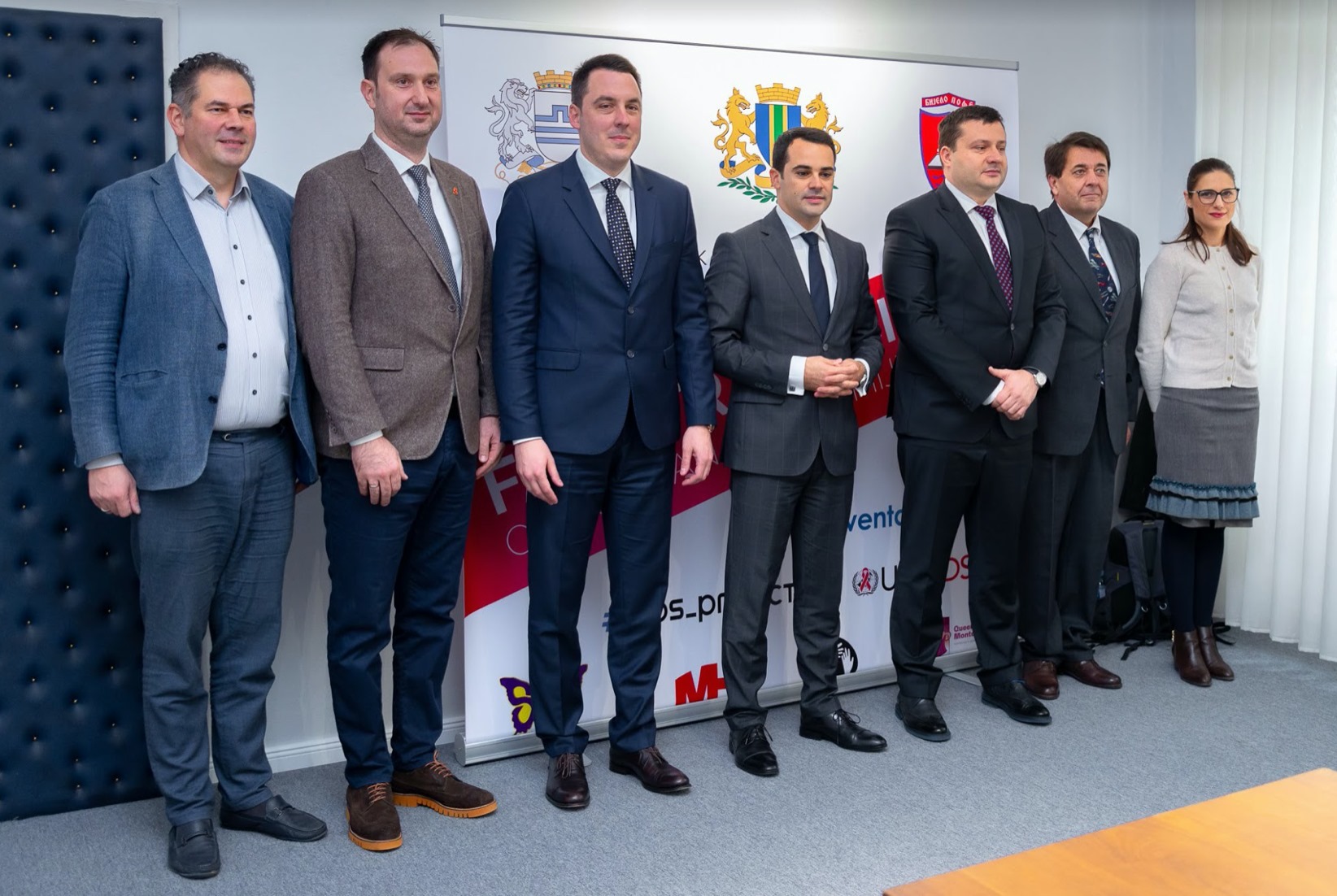
On December 2, 2019, the unprecedented signing of the Paris Declaration in the Balkans took place.
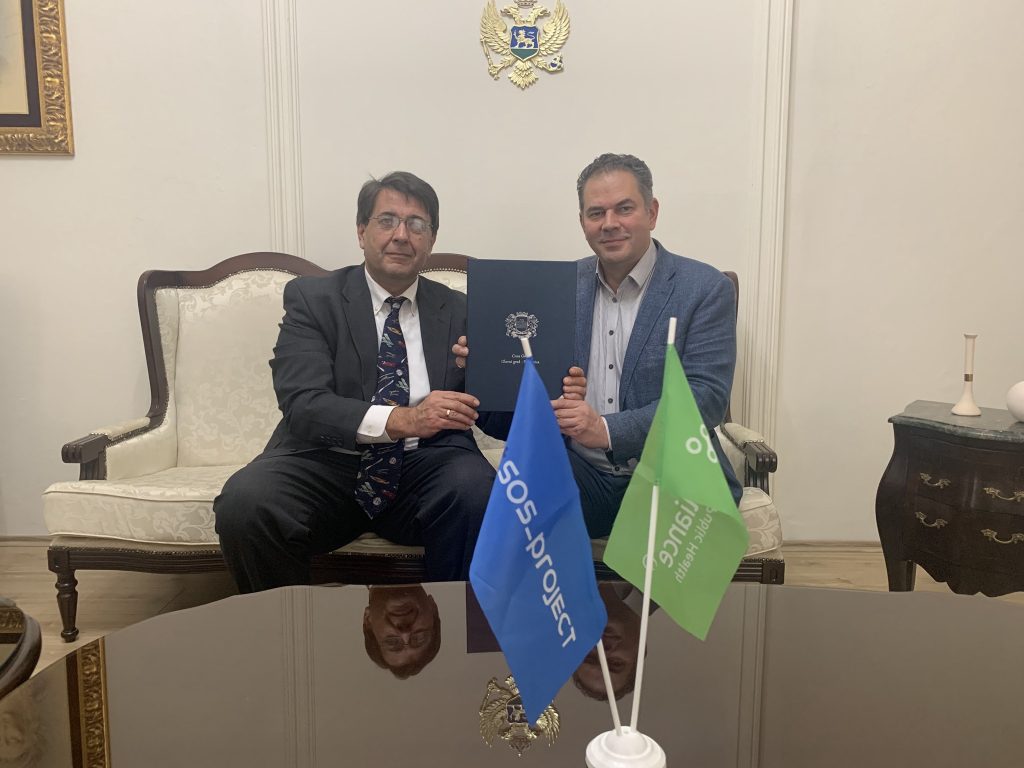
The mayors of three cities – Dr Ivan Vuković (Podgorica), G. Dušan Raičević (Bar) and Mr Petar Smolović (Bijelo Polje) simultaneously signed the Paris Declaration on accelerating the measures in cities to end AIDS.
Andriy Klepikov, Executive Director, Alliance for Public Health:
“For the first time the 3 Mayors sign Paris Declaration together showing strong commitment to put an end to the HIV/AIDS epidemic across the country mobilizing resources of the capital city as well as key cities in the south and north of the country. Civil society is the reliable partner to support municipalities in bringing HIV response to new level – becoming fast track cities!
We congratulate our partners from Montenegro – CAZAS and Juventas on the level of organizations as well as Miso, Sanja and Ivana on the level of personalities, whose amazing work resulted in such great political commitment!”
To date, 277 HIV cases have been reported in Montenegro (prevalence of 0.04%), and in 2018, 23 new cases of HIV infection were recorded.
Konstantin Voytsekhovich, UNAIDS EECA advisor:
“The signing of the Paris Declaration by the three biggest cities of Montenegro – Podgorica, Bar and Bijelo Polje firmly puts Montenegro on the fast-track to ending the HIV epidemic by 2030. The commitment and resolve demonstrated today by the three municipalities is even more significant because it is the first such manifestation of leadership on HIV response in the Balkans.
It is also the first time in history of Montenegro when the three different cities have joined forces in taking political and humanitarian action on HIV with strong support from the community-based NGOs #CAZAS, #Juventas and the Alliance for public Health”.
It’s just the beginning of the municipal response to the epidemic, and #SoS_project team is ready to provide the technical assistance and expertise for the cities in order to achieve the targets together!
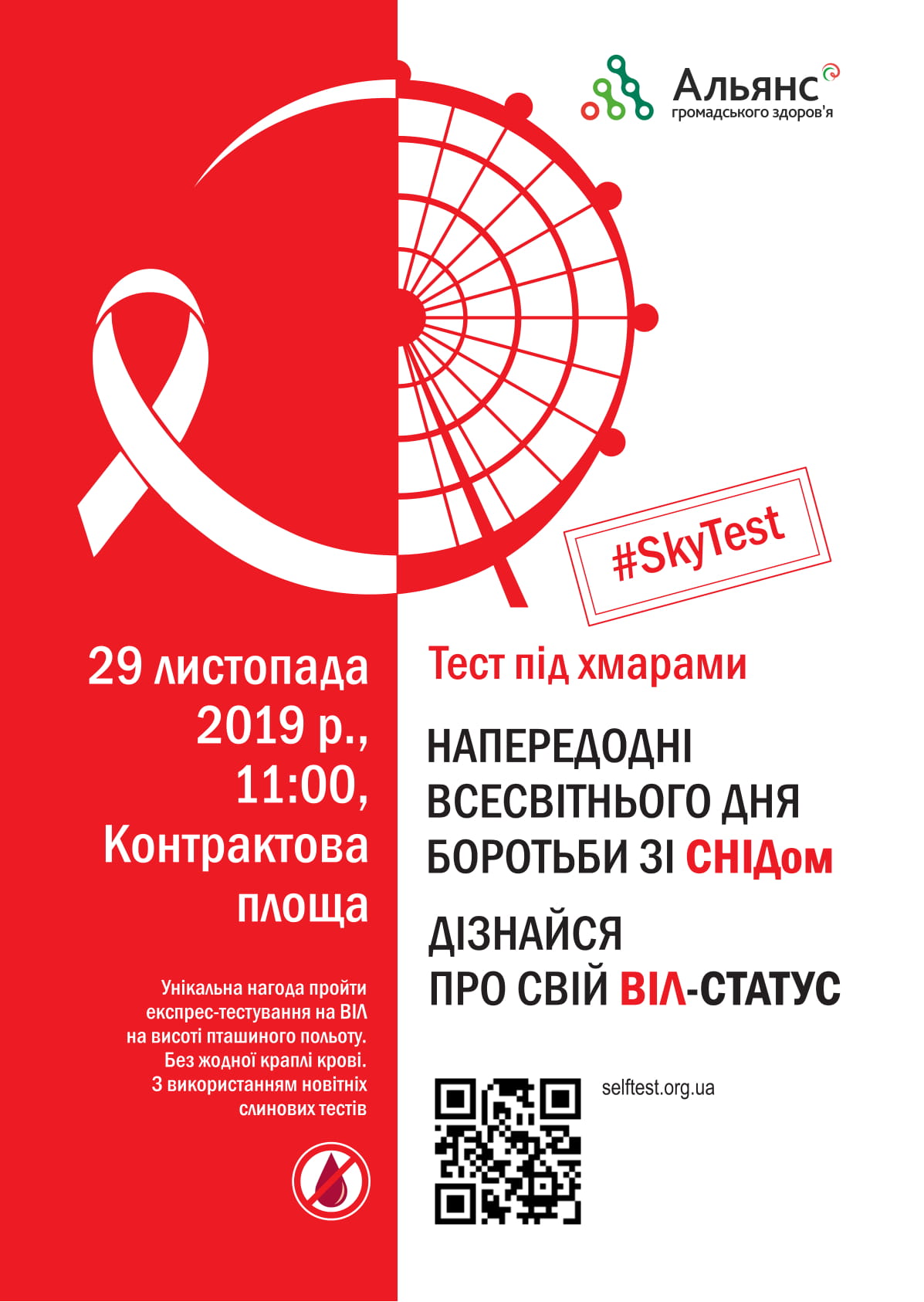
On 29 November 2019, SkyTest (#SkyTest), a traditional outreach event commemorating the World AIDS Day took place near Kyiv’s highest ferris wheel at Kontraktova square. It is the second year that this event is held by the Alliance for Public Health, Public Health Center of the MoH and partners from civil society.
During the event, everyone interested — media people, students, passers-by — could take free rapid testing for HIV using innovative saliva tests (no blood drops). Every person having taken the test got a ticket for free ride on the ferris wheel. Thus, all who wanted could take not just the innovative rapid test for HIV that did not require even a finger stick, but also receive a professional consultation of the doctor right in a ferris wheel cabin, at the height of 43 metres, while enjoying beautiful views of the winter Kyiv from the bird-view height.
During the Sky Test, a press briefing took place involving representatives of public structures, charitable and civic society organizations, leading infection disease doctors and HIV positive people.
Volodymyr Kurpita, Director General of the Public Health Centre of the MoH of Ukraine:“In the last ten years, technological progress has allowed setting a diagnosis in 15 minutes. However, it is not just about technology, it is also about people — their desires, possibilities and fears.Do not be afraid of testing!Doctors know how to help if the test is positive”.
During the event at Kontraktova square, about 300 people (mostly young students) took rapid tests for HIV in the setting of the special mobile ambulatories. Everyone could receive — without any fee — doctor’s consultations, the main HIV/AIDS protection means (condoms) and informational materials concerning the importance of timely HIV testing.
“Since the beginning of 2019, under our programs of HIV prevention for most-at-risk populations, a total of 407 thousand people took free testing in all regions of Ukraine, which has allowed receiving 9.3 positive results (2.3%).However, more than 80 thousand Ukrainians living with HIV are not even aware of their status.At the same time, testing programs are becoming more accessible.For a long time already, you do not to go to a specialized healthcare facility to get tested.A rapid test can be taken on one’s own, using saliva, without a single drop of blood.For Alliance for Public Health, improving accessibility of testing for HIV is a priority, and we are glad that the state has been paying increasingly more attention to prevention and testing programs; that is a sort of a major test for our Government.Take the test!”, urges Andriy Klepikov, Executive Director of the Alliance for Public Health.
The event was organized by the Alliance for Public Health, Public Health Center of the MoH of Ukraine together with the ACO “Convictus Ukraine”, ICF “Drop-in Center” and CO “ALLIANCE.GLOBAL”.
Ukraine ranks among the top European countries in terms of the number of HIV-positive people.According to expert estimates, 244 thousand HIV-positive people lived in Ukraine as of 2018.One in a hundred of people aged 15 to 49 is infected with HIV, which is among the highest rates in the countries of the region.As of 01.10.2019, 136,849 HIV-positive people were registered at health care facilities in the government-controlled territories of Ukraine (i.e. 326 per 100 thousand people) which means that almost a half of the estimated number of people living with HIV are not aware of their HIV status.That is why testing is just as important component in fighting the spread of HIV and an effective tool for fast-tracking 90-90-90 goals as prevention and treatment.It was assisted testing by the Alliance that has allowed reaching to almost 4 times more people in 2019 (407.3 thousand) compared with 2014 (113.4 thousand).This has resulted in getting 3.3 times more positive results.Among the new clients of prevention project, percentage of positive results of HIV testing is 5 times higher than among the “old” ones, which testifies for efficiency of the implemented activities and highlights new challenges in prevention programs.
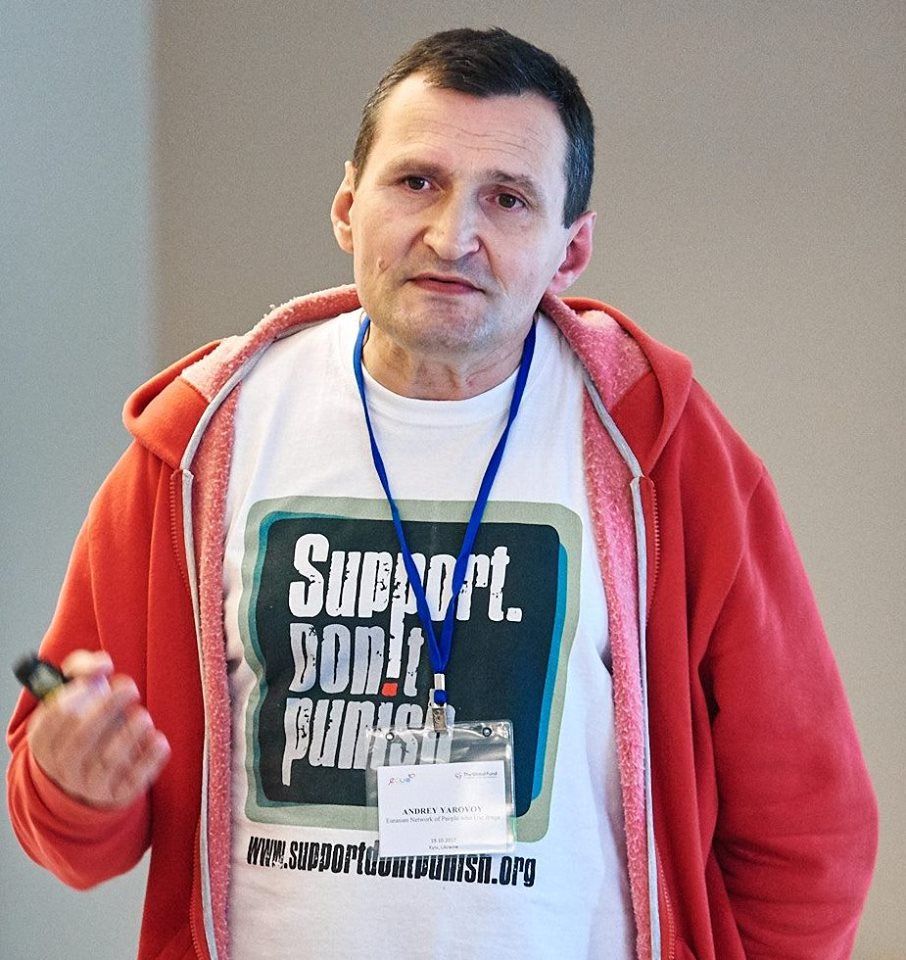
Andrii Mykhaylovych Yarovyi, DOB. 06.11.1967, a citizen of Ukraine from the city of Kyiv, since 2009 has been a substitution maintenance/opioid substitution therapy (buprenorphine) patient. He is a member of Eurasian network of people who use drugs (ENPUD), All-Ukrainian Association of People who use drugs (PUD. Ukraine/VOLNA), a human rights champion and a consultant on quality monitoring at ICF “Alliance for Public Health” working on HIV/AIDS prevention programs that since 2004 have been supported by the Global Fund to Fight AIDS, TB and Malaria.
On 25.08.2018, Andrii Yarovyi once again left from Kyiv to the temporarily uncontrolled territory of Luhansk oblast (Eastern Ukraine) as a consultant of the Alliance for Public Health to study the access of most-at-risk populations and HIV-positive people to prevention services and vital treatment.
In 2015-2018, Andrii for this purpose had on numerous occasions visited the uncontrolled territories of Donetsk and Luhansk oblasts where, at that time, programs supported by the Global Fund to Fight AIDS, TB and Malaria.
It was Andrii who, during such a visit in 2015, made unique video-interviews of the last days of the opioid substitution therapy (OST) programme on the temporarily uncontrolled territories in the Eastern Ukraine that formed the basis of the documentary “Live or Die in Donbass?!” In 2014-2016, more than a thousand of OST patients lost access to the vitally important treatment on this territory.
On 26 August 2018, when Andrii was crossing an unauthorized checkpoint in Krasnodon rayon (temporarily uncontrolled territory of Luhansk oblast), he was illegally detained by members of “Luhansk People’s Republic” ( “LNR”), who seized from him 38 pills of «Buprenorphine hydrochloride», a narcotic medication used for OST, with the total weight of 0.152 mg. The day before, Andrii legally obtained a 10-day stock of this drug (a total of 0.16 g) at a healthcare facility in Kyiv for unsupervised administration. The next day, on 27.08.2018, Andrii was brought to the “Ministry of State Security of LNR” and illegally arrested over “large-scale drug-trafficking”, as was stated in the charge Andrii faced several months later. Only in mid-October 2018, Andrii was accessed by a local lawyer hired through the Alliance for Public Health .
In late October 2018, an investigator of “MSS of LNR” charged Andrii with a «violation» of p. 3 of article 282 of the «Criminal Code of “LNR” (large-scale drug/buprenorphine smuggling), and so-called “court of LNR” selected a pre-trial restriction in the form of arrest the term of which was then extended several times; all this time, Andrii was illegally held in inhuman conditions at an underground facility of the “Ministry of State Security of LNR” (at Sovetskya str. 79 in Luhansk).
Based on Andrii’s mother’s claimt on the illegal arrest of her son on the temporarily uncontrolled territory of Luhansk oblast, Svyatoshyn Unit of the National Police n Kyiv City on 22.10.2018 opened a criminal case under article 146 of the Criminal Code of Ukraine (Unified Register of Pre-Trial Investigations no. 12018100080008478). Simultaneously, to organize further exchange, the woman submitted a request and other documents to the Security Service of Ukraine’s United Center for Coordination and Search and Release of Illegally Incarcerated People, Hostages, and Locating Persons who Went Missing in the Area of Anti-Terrorist Operation.
The situation with Andrii’s illegal detainment with the OST drug was included in the Report on the human rights situation in Ukraine of the Office of the United Nations High Commissioner of 16 August to 15 November 2018 (para.52, page 12).
On February 7, 2019, Andrii was transferred for further illegal detainment to the pre-trial Detention center (SIZO) “Luhansk Penitentiary Facility of the Ministry of Interior of LNR” (23rd Line street, 4; Luhansk).
On February 11, based on the appeal of Andrii’s mother, the European Court of Human Rights (ECHR) opened proceedings according to Rule 39 of the Rules of Court of ECHR (interim measures). Considering the importance and urgency of the case, the Court decided to consider it as a priority case under Rule 41 of the Rules of Court and ensure confidentiality of certain information to avoid harm to the complainant (Rule 33.1). ECHR has submitted a corresponding official communication to the responsible public authorities in the Russian Federation and in Ukraine.
On 22 February 2019, so-called “Krasnodon Rayon Court of LNR” illegally sentenced Andrii to a long-term imprisonment and confiscation of property for the «alleged smuggling of drugs» — his OST medications (part 3 of article 282 and part 2 of article 276 of the “Criminal Code of LNR”).
In April 2019, Andriy was transferred from the detention center to Sverdlovsk prison, currently he is located at (94420, Lininskoe village, Sverdlovskiy rayon, 16 Profsojuznaya Str ); the support of APH has ensured he regularly receives food and living essentials; he enjoys limited access to his lawyer; also, he has recently been allowed to see his family once a month.
As far as we know, Andrii has been included in the exchange list, but nothing is known about specific dates. Previously planned exchange events have already been postponed several times.
We would appreciate dissemination of this information among media, international, humanitarian, public or other organizations that may somehow prove helpful in liberation of Andrii Yarovyi and returning him back home.
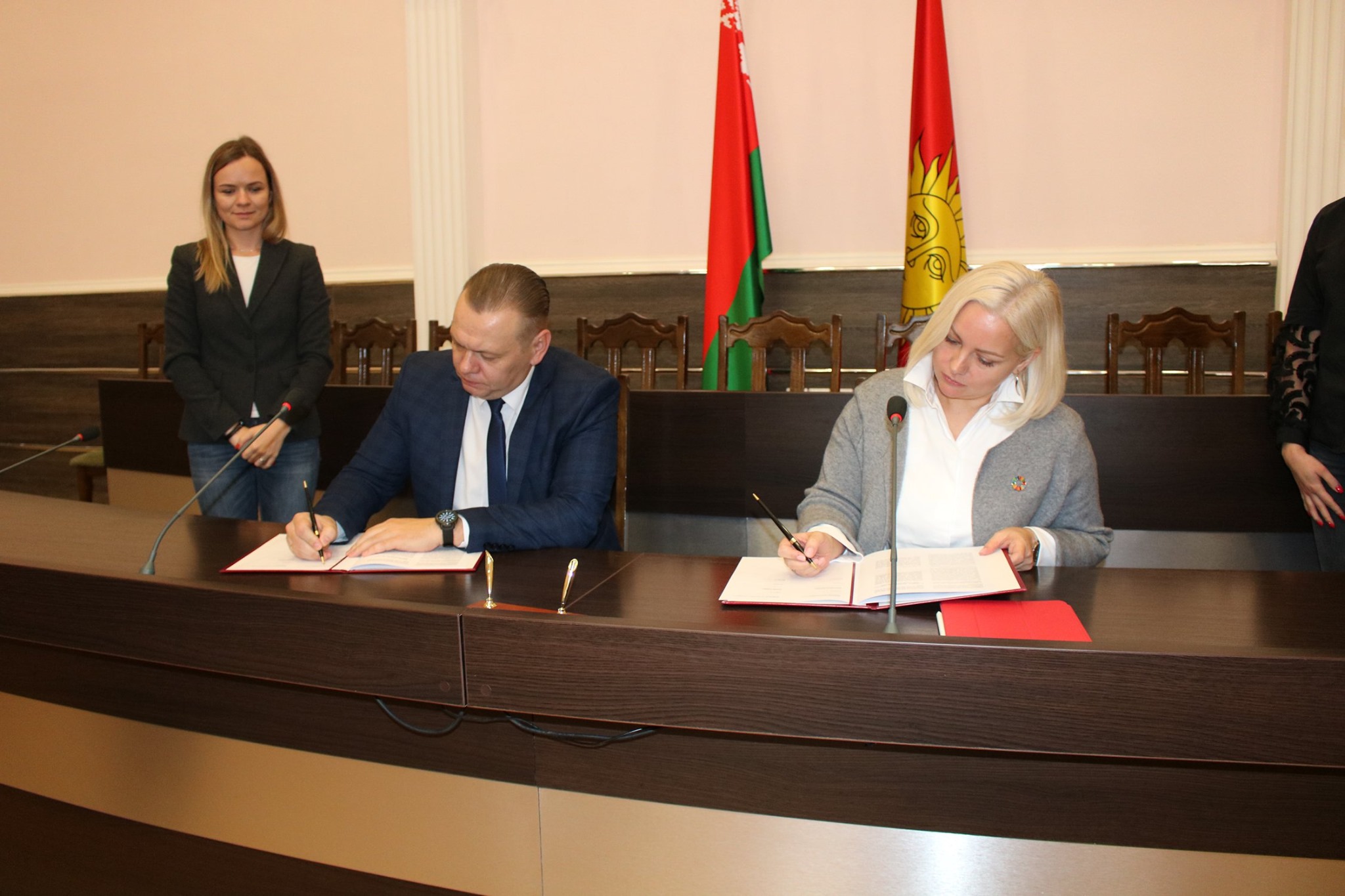
On November 26, 2019 UNAIDS coordinator in Belarus Vera Ilyenkova and the head of Svietlahorsk district executive committee (city mayor) signed the Paris Declaration to intensify the activities in cities aimed to end HIV/AIDS epidemic.
Svietlahorsk has become the second city in Belarus that signed the Declaration, declaring its active leadership in global combating HIV/AIDS epidemic in the cities all around the world.
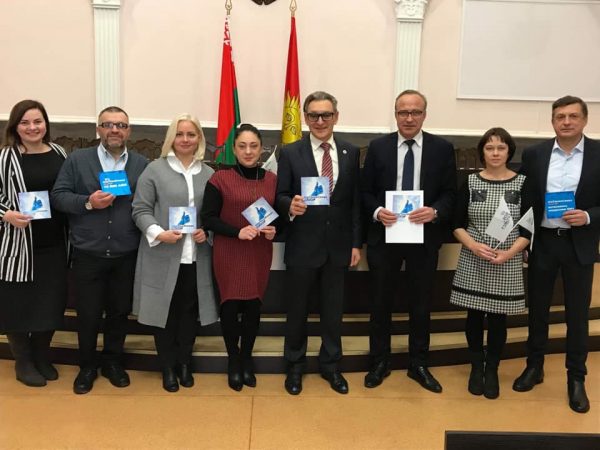
The ceremony of signing the document was visited by the representatives of Ministry of Health of the Republic, city government officials, UNAIDS country office in Belarus, Alliance for Public Health as well as many other international and non-governmental organizations.
Andriy Klepikov, Executive Director of the Alliance for Public Health: “I welcome this important strategic initiative of Svietlahorsk. Signing Paris Declaration means readiness to use the best world experience to develop effective city programs for combating HIV/AIDS epidemic, which are supported by the municipal funding and are aimed to improve the health status of the city residents. It’s just the beginning of the accelerated municipal response to the epidemic, and the team of the Alliance for Public health is ready to provide the technical and expert support to the city”.
“By joining Paris Declaration the city of Svietlahorsk takes the responsibility to achieve the 90-90-90 targets, which means that 90% of all people living with HIV should know their status; 90% of patients knowing that they have HIV infection get access to treatment, and 90% of people getting the HIV treatment have undetectable viral load. The city will pay specific attention to the key populations with high risk of getting HIV infection as well as to elimination of stigma and discrimination in regard to people living with HIV. To coordinate these activities, there is a working group established by the district executive committee, which developed the draft city program on combating HIV/AIDS epidemic in 2019-2021 with active involvement of the representatives of key populations.
We understand that reaching the 90-90-90 targets is a challenging task, but it’s necessary to initiate the changes, increase budget allocations from local budget in order to improve the status of health and the quality of life of the Svietlahorsk residents”, – commented the city mayor, Mr. Dmitriy Aleynikov.
It should be noted that in Svietlahorsk, one of the youngest cities in Belarus, there are about 13% of all people living with HIV in the country.
Vera Ilyenkova, UNAIDS coordinator in Belarus: “The ‘Fast-Track Cities’ Program was launched in Paris in 2014, when representatives of 26 cities signed the Paris Declaration. For today there are more than 350 cities and municipalities, which joined the initiative. By signing this document Svietlahorsk undertakes the obligation to achieve the goals of Paris Declaration and put an end to the AIDS epidemic by 2030. UNAIDS is supporting the Svietlahorsk initiative and jointly with the partners, one of which is the Alliance for Public Health, is ready to provide the city with technical assistance and expertise on the issues of accelerating the measures aimed to combat HIV, eliminating of inequality in access to key medical and social services. The key success factor for Svietlahorsk is the perfect coordination and interaction between the government and civil society, including public organizations uniting people living with HIV.”
Representatives of city administration expect that jointly with the partners and with the support of the international organizations the 90-90-90 target will be achieved by 2021, and the end to the epidemic will be put by 2030.
Event participants supported campaigns It’s #InYourPower to end AIDS.
The regional #SoS_project team continues to advocate for the sustainability of HIV services at the regional and national levels in Belarus, Bosnia and Herzegovina, Georgia, Kazakhstan, Kyrgyzstan, Northern Macedonia, Moldova, Montenegro, Romania, Russia, Serbia, Tajikistan, Ukraine and Uzbekistan.
In the third quarter of 2019, a lot of work was done to prepare countries for the transition to state financing of HIV / AIDS programs: in Bosnia and Herzegovina, Northern Macedonia, Moldova, Montenegro, Romania the cost of services for key population groups was calculated with the technical support of project experts. A number of key meetings were held in Kyrgyzstan, Kazakhstan, and Copenhagen on improving access to treatment.
In August, the Paris Declaration was signed in the city of Osh (Kyrgyzstan). Joining the Paris Declaration in 2019 is expected in: Dushanbe (Tajikistan), Salihorsk, Svetlogorsk (Belarus), and the signing of the Zero TB declaration is being discussed with the municipal authorities of Kyiv (Ukraine), Chisinau (Moldova), Bishkek (Kyrgyzstan). The Balkans countries have actively approximated joining their cities to the Paris Declaration. There are ongoing negotiations with the city authorities of: Sarajevo, Banja Luka, Mostar (Bosnia and Herzegovina), Podgorica, Bar, Bielo-Pole (Montenegro).
In Moldova, preparations have begun for a national information campaign on pre-exposure HIV prevention (PrEP), and 20 people have already started PrEP.
In the “Gender and HIV 2019” area some activities have started in Georgia, Northern Macedonia, Kyrgyzstan, Russia and Montenegro.
Project partners from Belarus and Uzbekistan successfully completed their studies at the Harm Reduction Academy.

 APH with partners launched the information campaign “It’s #InYourPower to end AIDS” – https://inyourpower.life.
 According to Mr. Klitschko, amid the global epidemics of HIV and TB, the city must create favorable conditions for public organizations fighting epidemics, taking active leverage, and actively engaging in it.
 Ion Ceban, Chisinau Mayor: “We rely on partnership in combating HIV and TB”
 Dmitriy Aleinikov, Svetlogorsk Mayor: “It is easy to achieve 90-90-90 indicators, if we speak up”
 Odesa is the first city in Ukraine to commit to the Zero TB Cities initiative and systematically proceeding towards overcoming the TB and HIV epidemic. Today, all forces that used to withstand these challenges alone, became consolidated. Thanks to joint efforts, the effectiveness of treatment has increased from 53% to 72%.
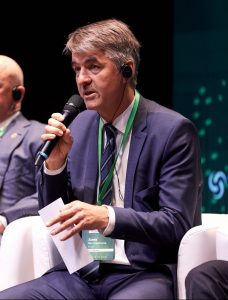 “Bern accumulated solid experience in this area, not because we are better than other cities in any way, but rather because we faced huge problems with drug users. In the 80s, there were hundreds of them right in the center of the city, they wandered around the streets, threw syringes right in the parks and it was terrible”, Alec von Graffenried recalls. “Since then, city mayors had to solve this problem quite effectively, because PWID is one of the most vulnerable groups, and the most problematic in terms of HIV prevention”.