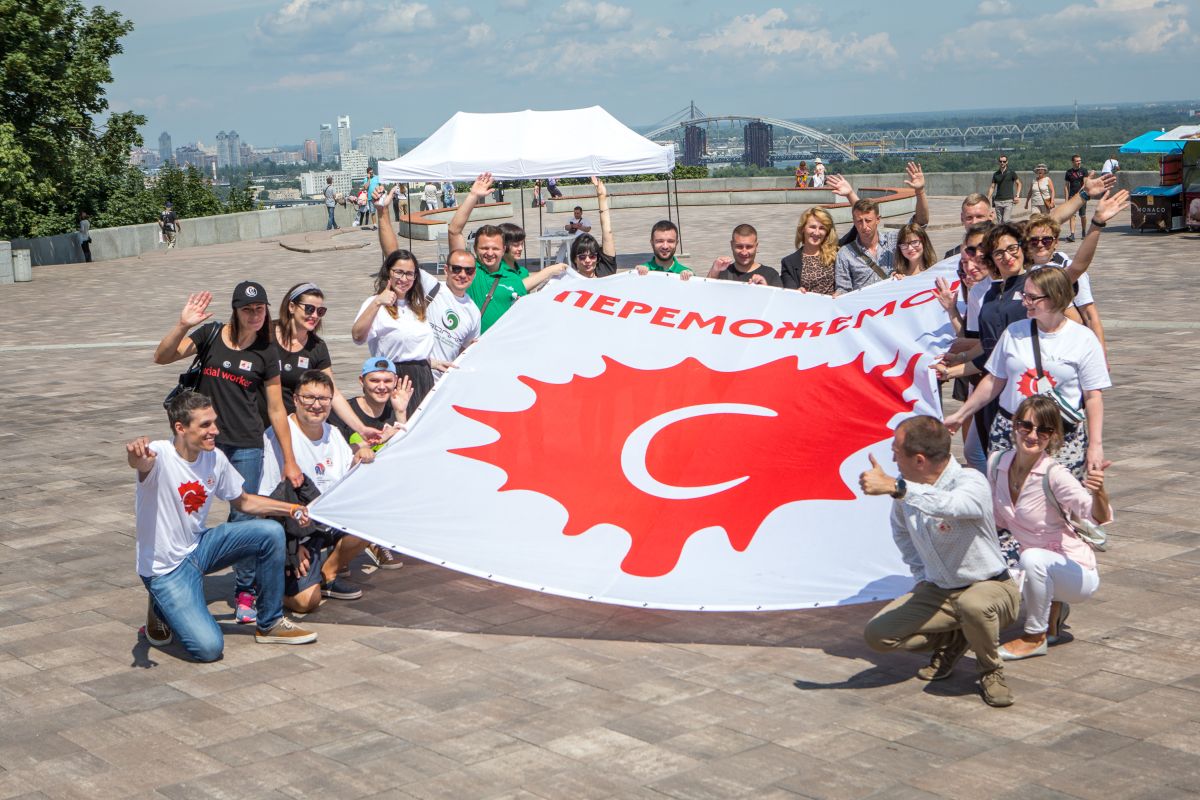
The capital of Ukraine has become a focal point of new record setting and a venue to present an effective package of working interventions, highlight the strength of political will to support decision-making on HIV and TB and the leadership in the countries of Eastern Europe and Central Asia, as well as the Balkan region.
On December 6, 2019 in Kyiv, the International “EECA City Health Leadership Forum” was held, with the participation of top officials of cities – mayors and vice-mayors, representatives of international, national NGOs, invited experts, heads of AIDS and TB centers from 50 cities of the world.
The Forum showcased the results of operational research, practices and innovations with proven efficiency, approaches to HIV detection, testing and treatment, including new technologies and modern methods using network marketing, out-of-the-box decisions of the municipal government for cooperation with NGOs and other partners; the KP movement leaders shared their experience of protecting the rights of communities; moreover, the Forum speakers talked about financing programs and the cost of saving a person’s life, about the regional progress in the context of the fight against epidemics of AIDS and TB.
Andrey Klepikov, CEO of the ICF “Alliance for Public Health”:
“The EECA region in 2020 is already demanding results. And in this context, we are talking about a new dialogue between the state and civil society. Our focus on cities and collaboration with mayors is crucial for addressing HIV/TB. The Alliance team has been working with the regional municipalities teams for the fourth year already, and the cities’ eagerness to cooperate is also increasing. Therefore, the number of partner cities has expanded from 5 to 25 over the past year. As for the methodology, you don’t need to invent the wheel, everything has already been invented and tested. There are working principles on how to reach the level of accelerated response and achieve success. We described our work experience and effective work approaches in cities in a model delivering real results. Cities can make a difference in our countries, and these are not just some imaginary cities, but city leaders, mayors, you and me. For us, this is the way forward. This is #InYourPower, in our power!”
Presentation about the regional progress in combating epidemics, efficient approaches with the overview of the outlook for 2022.
Dialogue about the HIV/AIDS problem in the EECA countries on the highest municipal level
The top officials of the cities discussed good practices, innovations, out-of-the-box solutions of the municipal government and cooperation with non-governmental organizations and other partners.
Within the framework of the forum, a high-level dialogue took place in a panel discussion between the mayors of Kyiv and Odesa (Ukraine), Berne (Switzerland), Chisinau and Balti (Moldova), Svetlogorsk and Soligorsk (Belarus), vice-mayors of Bishkek and Osh (Kyrgyzstan), while Roman Gaylevich (UNAIDS) and Lucica Ditiu (Stop TB Partnership) moderated the discussion.
Vitaliy Klitschko, the Mayor of Kyiv: “HIV is a common problem, and we must join our efforts to stop it”
According to Mr. Klitschko, amid the global epidemics of HIV and TB, the city must create favorable conditions for public organizations fighting epidemics, taking active leverage, and actively engaging in it.
“It is very important that the mayors of many cities around the world would play a leadership role in overcoming diseases. The people’s health should be one of the key priorities of the municipal government, and therefore – a priority in the work of mayors. It is in our power to prevent the spread of HIV and TB, to introduce efficient treatment programs”, said Vitaliy Klitschko.
The Kyiv Mayor is convinced that only joining efforts instead of silencing a common problem can solve it. In Kyiv, this approach is already yielding results.
“Kyiv is showing considerable progress in the fight against AIDS,” said Vitaliy Klitschko. “I am sure that common efforts over the past few years helped us to advance in the fight against this serious challenge for our city and increase the numbers of people who receive medical care and prevention”.
Vitaliy Klitschko signed the Zero TB Cities Declaration on the fight against tuberculosis on behalf of the city. This is the second city in Ukraine after Odesa, which signed the Zero TB Cities.
“Kyiv is taking the lead, and we are ready to extend the positive experience to all regions of Ukraine, the Kyiv Mayor said. – And as for the challenges, we, unfortunately, face a plenty of them”.
Ion Ceban, Chisinau Mayor: “We rely on partnership in combating HIV and TB”
According to the Chisinau City Mayor, Ion Ceban, one of the important tasks for the health care of any city is to ensure that people’s lifespan, in particular of people living with HIV, can be as long as possible. So that they have the opportunity to live to old age, women living with HIV can give birth to healthy children, and the townspeople have access to prevention and testing and undergo it regularly.
“We must consider both treatment and HIV prevention in a comprehensive manner, ranging from vulnerable groups to the general population of cities,” he emphasized.
According to Ion Ceban, special attention should be focused on youth. It is necessary to talk about the transmission methods, the importance of prevention.
A pre-exposure prevention program is already working in Chisinau, and a syringe exchange program is being actively implemented. “This is a very important step for those at risk to keep HIV at bay”, Ion Cebanemphasized. “Next, we have a lot to do about tuberculosis, and we really look forward to a partnership”.
Dmitriy Aleinikov, Svetlogorsk Mayor: “It is easy to achieve 90-90-90 indicators, if we speak up”
In a small Belarusian town Svetlogorsk there is a person who has been living HIV-positive status since 1997. Today his health is quite good and he can live the ordinary life. The reason for this, according to the City Mayor Dmitriy Aleinikov, is that the municipal authorities do not hush up the HIV/AIDS problem, but actively solve it.
“There are only 80 thousand people in Svetlogorsk, but problems such as HIV/AIDS and drug addiction still linger from the Soviet era”, said Dmitriy Aleinikov to the heads of cities of the EECA region at the EECA Cities Forum held in Kyiv on December 6. “And I am grateful that my predecessors did not sweep this problem under the rug”.
Signing of the Paris Declaration posed no additional problems for the city, because, as the Mayor of Svetlogorsk is convinced, achieving the 90-90-90 indicators will be quite easy, if we adhere to the principles of publicity, openness and a strategic approach.
“It will not be difficult, because we speak up, – he stated. – We are tacklingthis problem, it is not new for us, and I am certain that we will solve it”.
Gennadiy Trukhanov, Odesa Mayor: Combating HIV should start from philosophy
Odesa is the first city in Ukraine to commit to the Zero TB Cities initiative and systematically proceeding towards overcoming the TB and HIV epidemic. Today, all forces that used to withstand these challenges alone, became consolidated. Thanks to joint efforts, the effectiveness of treatment has increased from 53% to 72%.
However, as the Odesa Mayor Gennadiy Trukhanov, said at a meeting of mayors as part of the EECA Cities Forum, this was not easy for the city itself. Deputies engaged in heated debate over two sessions. The experience of other cities, in particular the Swiss municipality of Bern, helped to shift the obsolete views.
“We must start with philosophy”, Gennadiy Trukhanov is convinced. – PWID are people with drug addiction. They are dependent. They are not criminals, but people in need of treatment. And only when we socialize them, when they realize that society is not against them, they will look for opportunities for socialization”.
In addition to local, routine problems, the city authorities also have to solve global challenges, in particular, to help health workers in the fight against epidemics. After all, it is in everyone’s interests. “The mayor’s performance is assessed by the city condition: roads, roofs, heating, comfortable public space. That is all true. But we can make cities clean, however with the spread of all dangerous infections in the world, God forbid, the time may come when there will be nobody to walk along these tidy streets”, emphasized the Odesa Mayor.
Inspired by the Bern experience and changing the philosophy of the attitude towards PWID, Odesa promises to take further steps to combat the spread of infections and ensure socialization of PWID. In the near future, the opening of a safe injecting drug use room is planned.
Alec von Graffenried, Bern City Mayor: “Our goal is 100-100-100”
“Bern accumulated solid experience in this area, not because we are better than other cities in any way, but rather because we faced huge problems with drug users. In the 80s, there were hundreds of them right in the center of the city, they wandered around the streets, threw syringes right in the parks and it was terrible”, Alec von Graffenried recalls. “Since then, city mayors had to solve this problem quite effectively, because PWID is one of the most vulnerable groups, and the most problematic in terms of HIV prevention”.
The first step of the city authorities was the free distribution of syringes on the streets. The second step – the authorities went to the places where people sell drugs.
“It turned out to be a lot harder than just distributing syringes. We had to talk to people, and do not arrest them, because drug addiction is a disease. They need to be treated and receive care like patients”, said Alec von Graffenried.
After drug users got used to people who do not blame them, but are willing to help, the city offered them a safe space, free from crime, in the very center of the city. There they could get syringes, take an injection, meet with peers.
Further, the city began to offer PWID medical assistance, social support, so that they could leave the street where everyone could see them.
“We were not telling people, “Come along, we will cure you, you will no longer be addicted”, but simply accepted the fact that they will continue to take drugs. We want to help them so that people could live in normal conditions. – says the Mayor of Bern. – What did we achieve in the end? We have methadone and heroin programs in Switzerland, so that drug users can live a normal life, avoid involvement into crime, to buy drugs. We provided them a possibility to live as an ordinary citizen, and as a result, the number of people with drug addiction decreases, the number of people with HIV decreases even more, tuberculosis is not a problem for Switzerland at all. If we talk about indicators, then Switzerland has come a long and arduous way in 30 years, and now it has reached the goal of 100-100-100”.

Effective HIV strategies that worked well in the cities of the region
The Forum showcased the best municipal practices such as the Harm Reduction Program in Bern, the state-funded Opioid Substitution Treatment Program in Kyiv, new approaches to increase the effectiveness of tuberculosis treatment in Odesa, the promotion of the VCT program in Chisinau, the work on improving the HIV cascade in Almaty and others.
Thus, two years ago, an Almaty citizen had to go to the clinic to get a blood test to get to know their HIV status and wait two days for the result, which again had to be received from the clinic. Obviously, this was far from the best way to identify all people in need of treatment. AFEW Kazakhstan radically changed the approach and improved the situation with HIV detection in the city. In 2018, key innovations were introduced for the first time in Kazakhstan.
First, rapid saliva tests were introduced in the outreach conditions.
This approach is unique, because outreach workers travel to the necessary places to provide testing and counseling. The test itself is very easy to use. It is only necessary to hold a special spatula between the lip and the gum and dip the spatula into the liquid. And after 20 minutes the result is ready.
Secondly, the index testing approach was implemented.
Initially, outreach workers tested those clients whom they knew. Then they asked those of them who had positive HIV status, to refer 3 people from their close circle with whom they practiced risky behavior in the context of HIV to undergo a test. To motivate customers, special coupons were issued with QR codes and outreach worker contacts, which a client could hand out to friends. Everyone who passed the test or attracted another person received 1000 cell phone payment units or a grocery package, upon their choice.
This is a network marketing in action!
Therefore, for a year and a half, 6,000 people were tested. 145 Almaty residents first learned about HIV! For comparison, this is about a third of all identified cases per year in the city!
Third, the efforts of the project team were aimed at increasing treatment coverage.
When the HIV test result turned out to be positive, the client was provided with social support for testing at the AIDS center. If the result was confirmed, the client received assistance to get enrolled for a dispensary registration and immediately start antiretroviral treatment.
At the same time, outreach workers cooperated with healthcare staff to bring back clients who discontinued treatment, the so-called “lost-to-follow-up patients”. Thus, the project team worked with each patient step by step, returning people to treatment and support programs.
As a result of the project 538 people who were diagnosed with HIV now have the right to life! The efforts of outreach workers and a personalized approach helped to provide people with treatment upon learning about their HIV status for the first time or returning to the program.
For comparison: an average of 400 people in Almaty start ARV treatment annually. It turns out that only the efforts of the pilot project team managed to exceed the average annual rate.
Political commitment to ending HIV and TB epidemics and signing of the TB and AIDS Declaration by the six cities at once, a groundbreaking event for the EECA
The groundbreaking ceremony of simultaneous signing the Political Declaration on AIDS and TB: Declaration to Fight against the TB by the six EECA cities: Kyiv (Ukraine), Chisinau (Moldova), Svetlogorsk (Belarus), Bishkek and Osh (Kyrgyzstan), and the Paris Declaration signing by the Balti city (Moldova) was the cornerstone event of the Forum.
Roman Gaylevich, UNAIDS Director in Ukraine: “We welcome and warmly support the personal leadership of the mayors of the cities that have signed the Paris Declaration and the Declaration to Fight against the TB, I would like to put special emphasis on the fact that all these cities have coordinating councils on HIV/AIDS and TB, which include key communities. The joint work of the city authorities and communities, in my opinion, is the core and the driving force behind positive changes”.
We would like to note that the team of the ICF “Alliance for Public Health” and the #SoS_project partners will provide expert, technical and financial support to Svetlogorsk, Osh and Chisinau at all stages of fulfilling their commitments under the Paris Declaration and the Zero TB Declaration.

Key population communities in the focus of attention
Of course, declarations are signed for a reason, and all programs, foundations, public figures and experts are working not just for the statistics, but solely for the sake of saving human life and improving people’s health.
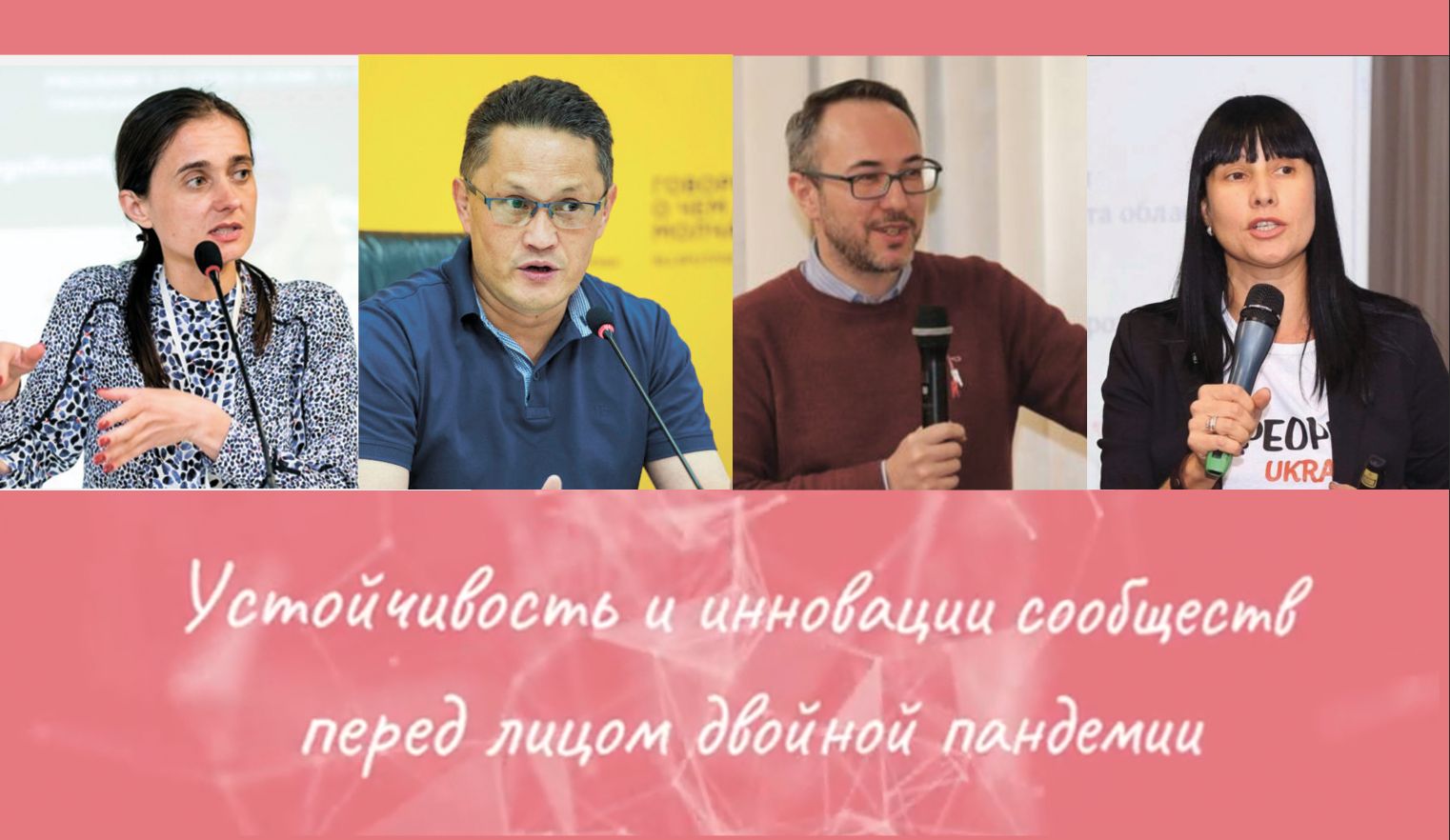
At the beginning of the session, a video presentation of the leaders of the LGBT, PWID, TG, and SW community networks was presented with a perspective on regional problems and challenges that are most relevant in Eastern Europe and Central Asia.
Four leaders of their communities of Almaty, Sofia, Tbilisi and Minsk shared from the Forum stage their experiences and real stories about how they manage to represent the interests and protect the rights of their communities at various levels, be it international or local city platforms. They presented their vision, their strategies and examples of results that can be achieved and how a person’s life can dramatically change in a comfortable social environment.
The emotion was undoubtedly the most intense during this panel with real heroes in their field, people who inspire and adamantly go forward. Kevin Osbourne, Director of the International AIDS Community, moderated the panel.

#InYourPower awards handed to the winners
The Forum culminated in holding the first #InYourPower award ceremony for political leadership in combating HIV/TB in the special nominations and based on the voting results.

Mayors, vice-mayors and representatives of mayors of 13 cities of Eastern Europe and Central Asia received awards: Kyiv, Odesa, Bishkek, Chisinau, Almaty, Tbilisi, Sofia, Osh, Balti, Svetlogorsk, Bar, Bielo Pole, Podgorica.
The prize was awarded to cities for the following achievements:
– Significant successes in the fight against HIV/TB at the city level,
– The political leadership of mayors and city teams in the fight against HIV/TB, as a symbol of commitment to ending the AIDS epidemic, as well as a sign of support from international partners.
A special award based on the results of voting on the site inyourpower.life was presented to Irina Kutsenko, a deputy of the Odesa City Council.
Dr. Michel Kazatchkine, UNAIDS Special Envoy in Eastern Europe and Central Asia, stated, “We need to change policies to save people, and the ownership of city leaders plays a crucial role!”, greeted the mayors on occasion of awards, significant promotion and commitment to ending the AIDS epidemic and TB.
The participation of the journalist and TV presenter Yanina Sokolova as the host of the event was symbolic; the is the ambassador of the Sustainable Development Goal 3, related to the health and well-being, within the framework of the UN national campaign on promoting the SDGs in Ukraine.
The team of the ICF “Alliance for Public Health” coordinated the event in Kyiv with direct support from the Kyiv City Mayor Vitaliy Klitschko and the KMSA, team, in partnership with UNAIDS, as well as with the financial support of the Global Fund to Fight AIDS, Tuberculosis and Malaria.


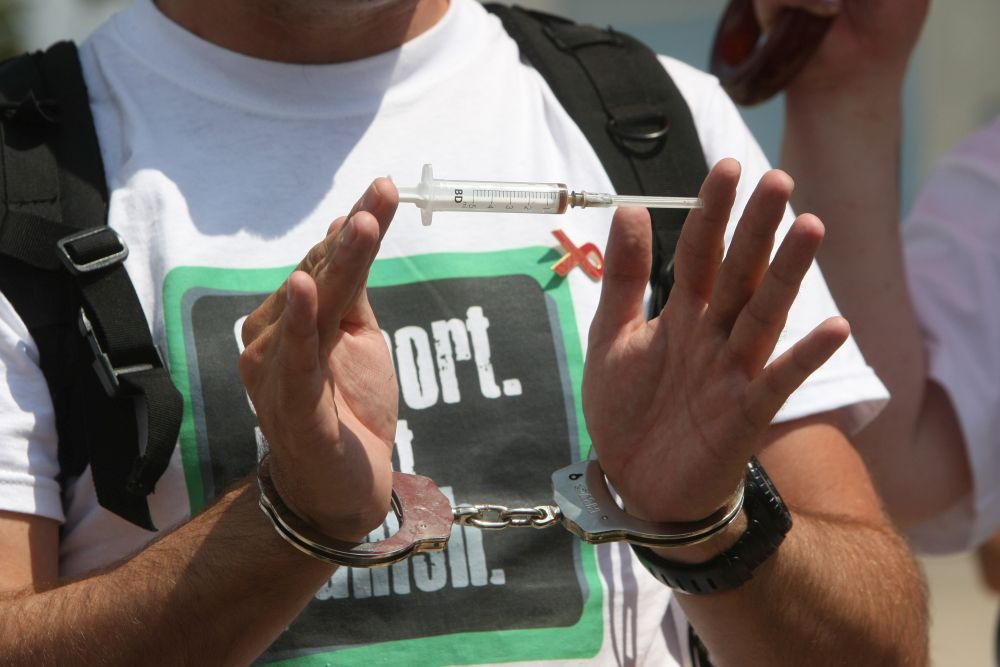
Such a unique experiment for the region attracts the attention of representatives of municipal authorities, NGOs, and other cities. So, this year, the municipal delegations of Poltava, Odessa, Kyiv, Chernigov (Ukraine), Balti, Chisinau (Moldova), Kazakhstan visited the facility to study the experience, a series of meetings were held to discuss the prospects of opening similar rooms in other cities. Therefore, we wonder, in which EECA city the next harm reduction room will be opened in cooperation between the municipal authorities of the city and NGOs?
“The approaches to harm reduction in Ukraine have not changed dramatically for 20 years, so the most challenging task now is to gain trust of people who use drugs so that they are not hesitant to use in this municipal space. Everything here is built on trust, – said a public activist and the facility launch initiator, Oleksiy Zagrebelnyi. – The result of our activity at the moment is that there are more and more visitors, we began to receive feedback from them, which means that the room is in demand. It means that our efforts are not in vain. The services we provide are unique, they are in demand, and it is a success, because the social side of this project has significant benefits for the public”.
A significant example of the harm reduction room benefits is a considerable improvement in the security atmosphere in society and a decrease in the number of complaints to the Sumy authorities regarding the negative consequences of drug use, in particular: littering with used syringes and other means in the territories of hospital facilities, house entrances, playgrounds and just on the streets; use in public places, etc. According to Maksym Galitskyi, the deputy mayor of Sumy on health and safety, such appeals have become scarce once the room was opened. “Previously, there were several appeals every week, now we receive one complaint per month. This is an obvious success”, he said.
According to the chief doctors of the Sumy Regional Narcological Dispensary Taras Zlydennyi, about 50-70 people visit the harm reduction room every day, the total number of patients who are actively using substitution treatment in the city is more than 300 people, and the number of registered patients at the drug dispensary is up to 600 people. The room provides preventive counseling services to reduce the drug use harm in general and provides information on the consequences of street drugs, tests for HIV and hepatitis, counseling for relatives and members of PWUD families, exchange of syringes, as well as protection and preventive measures.
“Sumy region was lucky to have officials who are able to understand, realize, support such an initiative”, said the ex-head of the staff of the Sumy Oblast State Administration, and the current first deputy Minister of Development of Communities and Territories of Ukraine Dmytro Zhivitskyi. – We had political will, and the Head of the oblast administration supported us. Non-governmental organizations took up the function of awareness raising, expert examination and providing international experience for the administration, for the deputies, whose support we managed to gain”. According to him, the work in the harm reduction area provided an effective tool for the implementation of out-of-the-box solutions in the field of public health, which will work in the future. “Taking off in this direction, we realized that we have a well-developed mechanism for making and implementing joint out-of-the-box decisions, which was lacking before this”, he said. – “Back in 2017, we created the oblast Public Health Center, the first full-fledged regional facility. Now we have created a working group, and in mid-July we will adopt the oblast public health program, which will take into account the experience with drug users. That is, our task today is to implement a philosophy of prevention and addressing the causes rather than eliminating the consequences”.
“The first harm reduction cabinet in the world was opened in the Swiss city of Bern 33 years ago. Since this time, the city has become healthier and safer, access to HIV treatment today is unconditional, and a comparison of the situation on the streets of 1986 and today clearly demonstrates the dynamics of improvement. We will talk about this in detail at the regional EECA City Health Leadership Forum on December 6, which will be held in Kyiv. We would like the cities of the EECA region to follow the path of improving the health and quality of life of citizens, using effective evidence-based methods to counter dangerous epidemics such as HIV, TB and viral hepatitis,” said Ievgen Kushnir, program manager of the Alliance for Public Health.
Olena Kucheruk, program manager at the International Renaissance Foundation: “As a person who has been developing harm reduction in Ukraine for 20 years, I remember how the first harm reduction services started. How innovative it was then, and how many barriers then had to be overcome. Then we could not even think that sometimes safe use rooms would be our reality. I am very happy to see that this is becoming possible today. 20 years is a long period of time, but everything is changing: people, doctors, local authorities and the police are now having a completely different understanding of the issue and expertise. It is very pleasing and inspiring. We would like to continue supporting and developing such rooms in other cities of Ukraine”.
“As a rule, local program packages already exist in many cities”, said Yelena Koval, consultant for the International Renaissance Foundation on the availability of pain management medications and drug policy. – “Among local programs, we need to look for those that have a harm reduction component, analyze at which healthcare facilities such programs work, who is involved there. And then – just imagine that an infected syringe can be dropped at the building entrance, on the playground, and calculate how much post-exposure prevention will cost for a person who is accidentally exposed to the infection. How much resources will be needed in order to deliver medications, how much a treatment regimen will cost. Then it becomes clear that the cost of a harm reduction room launch is comparable to the expenses which will be incurred even in a single such case”.
“We faced the task of creating a motivating public background for a more effective dialogue between civil society and government bodies, to inspire and encourage officials to make appropriate decisions in favor of ensuring the sustainability of HIV services and saving lives of more than 2 million people living with HIV in the region. In the process of the campaign development, we studied the trends, lessons and impact of information campaigns in the region over the past 5 years. We had everything in these six months: heated discussions in the team, we conducted in-depth interviews, discussions with officials, communications with experts and political scientists, representatives of communities from different countries, and in this campaign, we formed the most simple and understandable communication “it’s in your power to stop the HIV epidemic. We will work to ensure better visibility of successful and efficient work of such cooperation in the EECA countries and the Balkan region, ” said Inna Gavrylova.
– How to work with officials? What is the internal motivation of government officials?
“Social accountability is a mechanism of interaction between government bodies and civil society, it is a movement towards each other, which helps the state system to respond in a timely and efficient manner to both problems and challenges, as well as emerging opportunities,” said Natalia Podogova. – “Studying the motivation of government officials and politicians to be open and interact with civil society can help attract them to the category of partners and allies, and existing partnerships can be developed and strengthened. You can read about all this in the review prepared by ECOM, and in the preparation of which I was able to participate”.
“How to activate the state to effectively implement priority measures to overcome the HIV / AIDS epidemic is a very complex issue. It is especially difficult in the context of parallel reforms, when there is a political struggle for limited resources. And in these conditions, we need not only to ensure a gradual transition from donor funds, mainly from the Global Fund, to financing from state and local budgets, but also to prevent the cessation of such activities or the deterioration in the quality of their implementation,” – noted Victor Lyashko.