January 02, 2025

The CoMPSS project changes the lives of women who use drugs and OAT patients

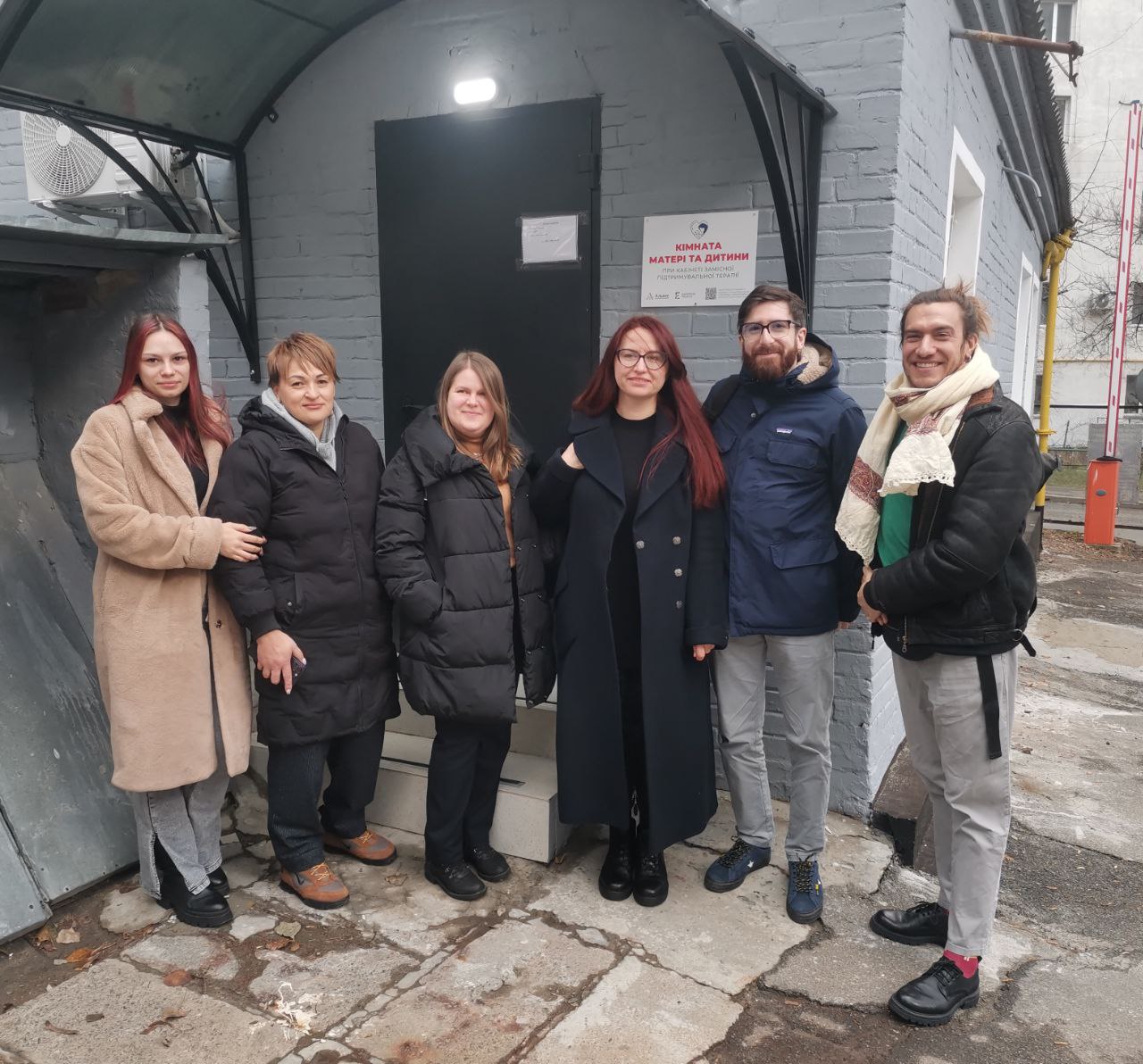
At the end of December, representatives of Expertise France, Arthur Langlois and Antoine Pogorzelski, visited Kyiv. Their visit marks a significant milestone in the CoMPSS project, which aims to support women with opioid use disorders and patients of Opioid Agonist Therapy (OAT) programs.

The CoMPSS project combines the efforts of the Alliance for Public Health and the Ukrainian network of women who use drugs (VONA), was launched in April 2024. Thanks to funding from Expertise France and support from L’Initiative, innovative solutions have been developed to enhance medical and psychosocial assistance.

Key achievements:

Infrastructure Development: Opening of 5 Mother and Child rooms in Kyiv, Lviv, Odesa, Dnipro and Kryvyi Rih, as well as a Green Room to provide comprehensive crisis care for people who use drugs and are victims of violence.
Comprehensive gender-sensitive services: More than 400 clients received medical, psychosocial, legal and humanitarian support.
Training Programs: training for psychologists, social workers and activists, covering the topics of gender-based violence, emotional burnout, and motivational counselling.

During their visit to the renovated “Mother and Child” room at the Kyiv City Narcological Clinical Hospital “Sociotherapy,” the French donors toured the facilities and communicated with the project team. They highly appreciated the quality of the services provided, including medical care, psychological counseling, and humanitarian support.

The CoMPSS project demonstrates how international partnershipsand local efforts can transform the lives of the most vulnerable populations, despite significant challenges, particularly during wartime.

More
Share
December 26, 2024

KEY HIGHLIGHTS OF THE SOS 2.0 PROJECT

As we approach the New Year, we are proud to share the most inspiring achievements of the SoS EECA 2024 project.

This year has proven that strong partnerships, unity, and a deep understanding of countries’ needs can transform thousands of lives. Every success is a testament to your dedication, collaboration, and commitment to making a difference. We are endlessly grateful to our partners and donors for their contribution to building a future where everyone has access to the support they need. Together, we are shaping a story of change and strengthening the region in the fight against HIV Ahead lies new challenges and even greater opportunities to make an impact. May 2025 bring incredible inspiration, remarkable achievements, and shared victories for the benefit of EECA

More
Share
December 23, 2024

Achievements of the Alliance for Public Health in 2024

As we look back on 2024, we are proud to celebrate the incredible results we have achieved together.

We sincerely thank all our partners and donors, civil society and community representatives, volunteers, military, social and health workers, nurses and doctors who worked tirelessly on the ground.

More
Share
December 11, 2024

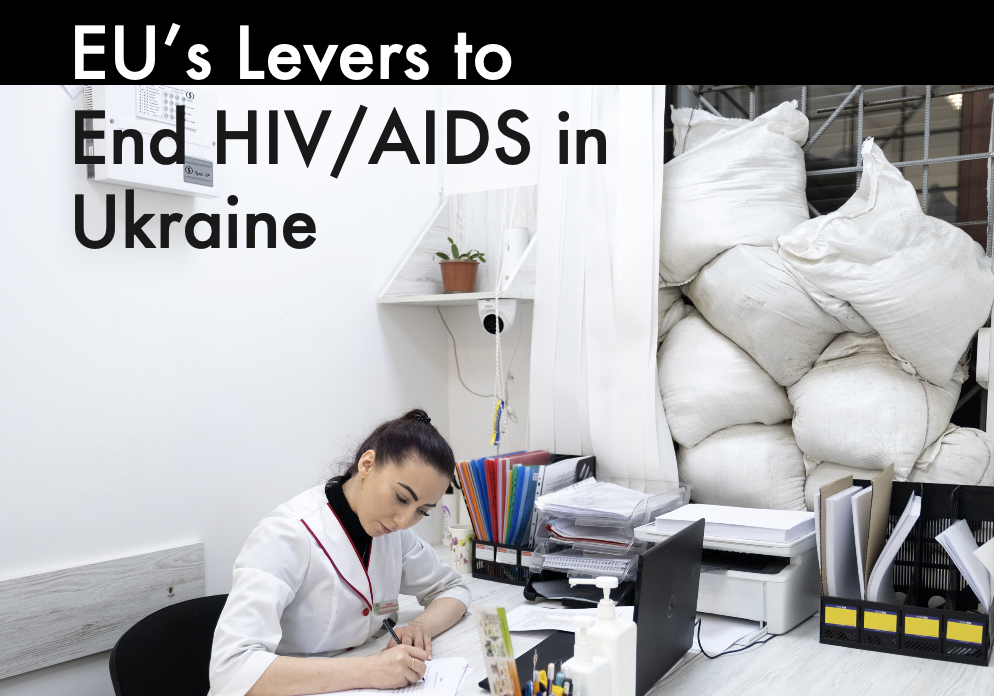
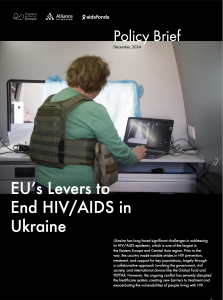
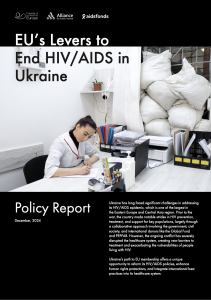
Policy Report Launched: The EU’s Role in Ending HIV/AIDS in Ukraine

On December 11, 2024, the Alliance for Public Health (Ukraine), Aidsfonds, and Friends of the Global Fund Europe launched the policy report “The EU’s Levers to End HIV/AIDS in Ukraine.” The online event, hosted by MEP Vytenis Andriukaitis, concluded a multistakeholder dialogue addressing Ukraine’s HIV/AIDS epidemic and the EU’s critical role in the response.

MEP Vytenis Andriukaitis: “Ukraine demonstrates remarkable efforts and resilience to sustain the AIDS response. The EU can strengthen its role in ensuring these efforts continue. The policy brief launched today provides clear recommendations for leveraging the EU financial instruments, including in the context of the next Multiannual Financial Framework, and leveraging accessing talks, to bolster Ukraine’s progress toward ending HIV/AIDS. As one of the coordinators of SANT, I am ready to be your advocate, and I am looking forward to continuing cooperation and turning all recommendations into action.”

Ukraine’s efforts in tackling HIV/AIDS amidst the war were praised by René Steiner, Delegation of the EU to Ukraine, who stated, “Ukraine teaches us all how even with little means, you can make the best out of it.”

Oleh Khavroniuk, Mission of Ukraine to the EU, highlighted the importance of engaging with the EU Commissioner for Equality, Preparedness and Crisis Management, underlining the importance of integrating Ukraine’s expertise and lessons learnt practices into the EU’s health emergency preparedness and response framework.

The policy report outlines key recommendations for the EU’s future Multiannual Financial Framework (MFF), the accession process, and the Ukraine Facility.

Notably, the event brought together Members of the European Parliament (MEPs), representatives from the European Commission’s Delegation to Ukraine, the Mission of Ukraine to the EU, Poland’s National AIDS Centre, Ukraine’s Ministry of Health Public Health Center, ECECACD, as well as global health organisations such as the Global Fund, and European and Ukrainian CSOs.

Read the download:

Policy Brief

Report


Presentations: Current status of the HIV/AIDS response in UkrainePolicy Brief: Recommendations

Addition materials: 

If you have any questions or are interested in further collaboration around the Policy Brief, please do not hesitate to reach out to us:
Inna Gavrylova, Alliance for Public Health, gavrylova@aph.org.ua
Background on organisers

Alliance for Public Health : Since the early days of the war, Alliance for Public Health has worked together with other civil society and community organizations, healthcare facilities, the Ministry of Health, the Public Health Center, and other government organizations to support people and keep the HIV and TB epidemics under control. And with joint efforts, we have succeeded! During one year of the war, 4 times more people have become Alliance beneficiaries than in previous years – over 1 million Ukrainians! Due to our cooperation with donors and partners, Alliance has delivered and handed over 2,000 tons of humanitarian and medical cargoes to more than 200 healthcare facilities throughout Ukraine, including in the liberated areas of Kherson, Kharkiv, Kyiv, Sumy, and Chernihiv oblasts. Alliance for Public Health works in the countries of the European region, supporting and sharing best practices in the response to HIV/AIDS.

Aidsfonds : Since the start of the Russian invasion of Ukraine, Aidsfonds set up the Emergency Support Fund for Ukraine and Neighboring Countries with the aim of ensuring uninterrupted services and safety for people living with and vulnerable to HIV. The fund provides short-term small grants and mid-term support for community-led and community-based organisations in Ukraine and EECA countries. So far, it has provided 64 grants to support 33 community-led organisations.

Friends of the Global Fund Europe : As an advocacy organisation, Friends Europe has been focusing on providing a platform for Ukrainian voices to call for increased funding to continue community-led initiatives for vulnerable populations. The advocacy started with a statement from Friends Europe’s board of directors. Friends organised events around World Tuberculosis Day in France and in the European Parliament to highlight the work of civil society and community-based organisations in maintaining access to critical health services in particular for key populations. Finally, it facilitated the access of Ukrainian voices to European media with coverage in the Rai and in Euractiv.

More
Share
December 01, 2024

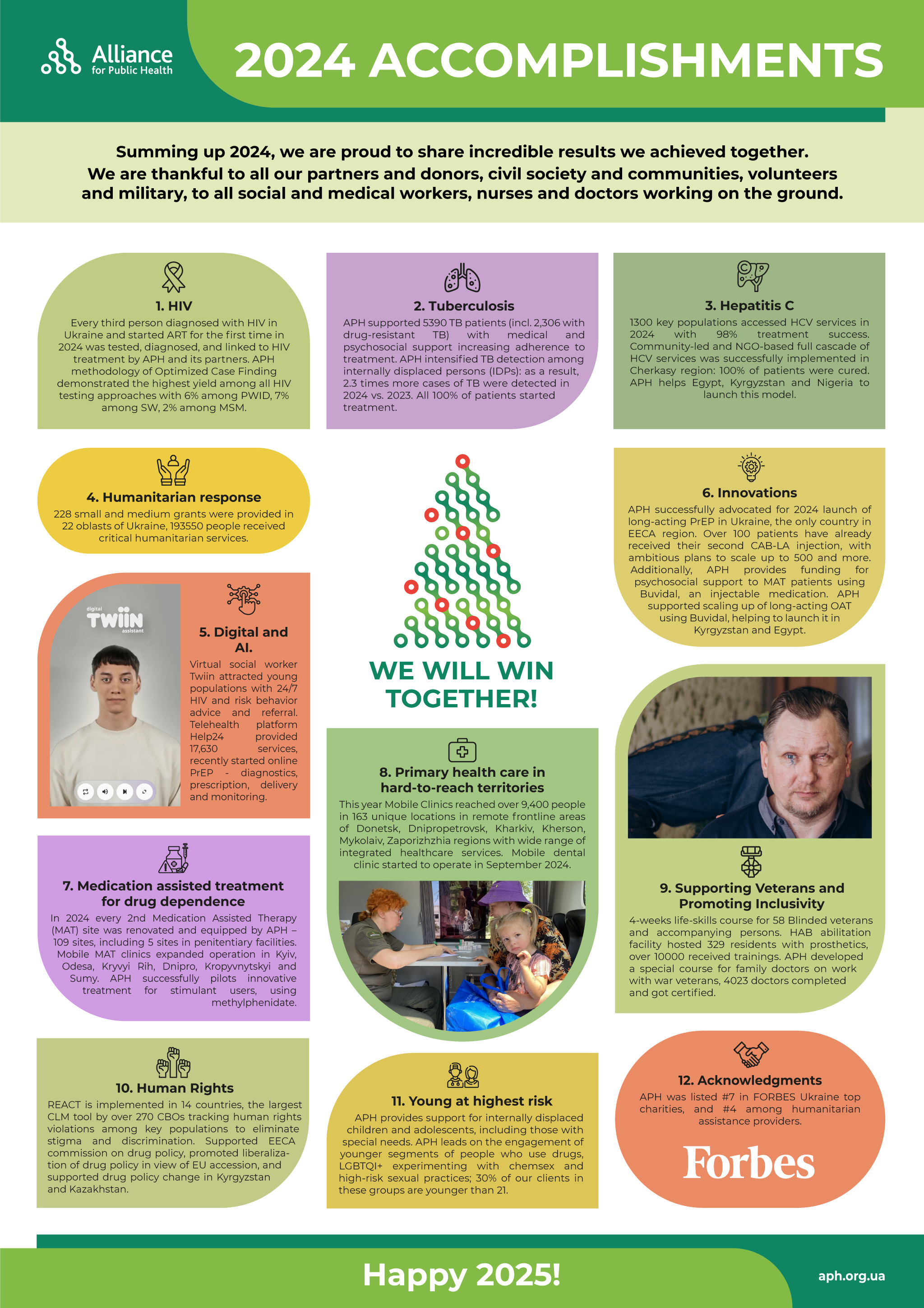
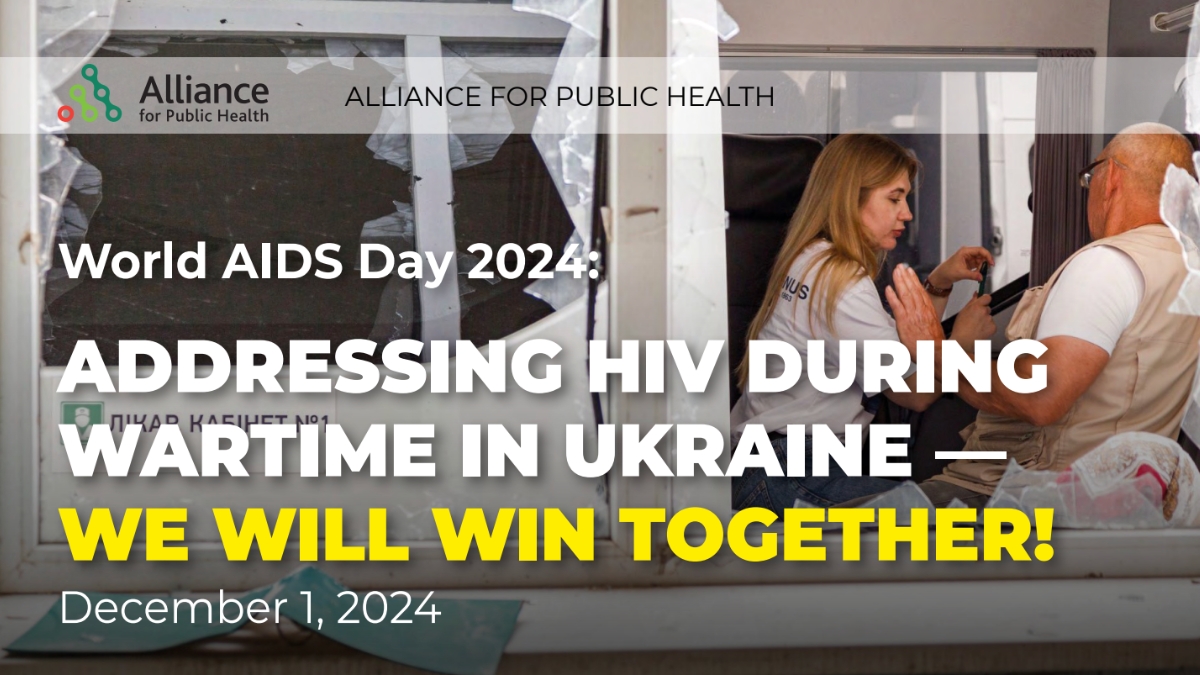
Addressing HIV during wartime in Ukraine — we will win together!

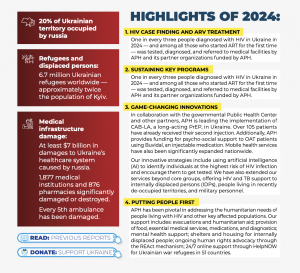
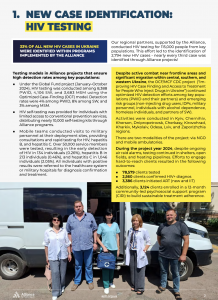
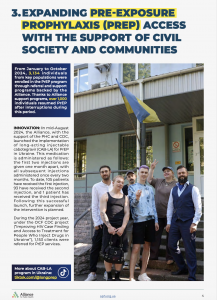
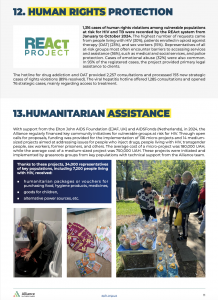
On World AIDS Day, the Alliance for Public Health released a report summarizing 2024’s efforts to combat AIDS in Ukraine during the wartime. The Alliance identified the third of all new HIV cases and introduced groundbreaking innovations, including long-acting PrEP, ensuring continuous treatment. 

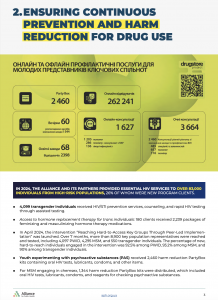
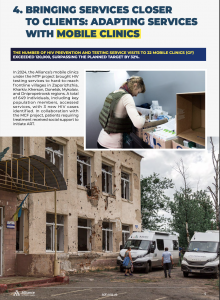
Mobile clinics expanded services to frontline areas, and humanitarian aid was provided to IDPs and military personnel. Digital solutions supported patients remotely, while harm reduction programs for drug users and advocacy for vulnerable populations’ rights were also prioritized. 

World AIDS Day 2024 

More
Share
November 19, 2024

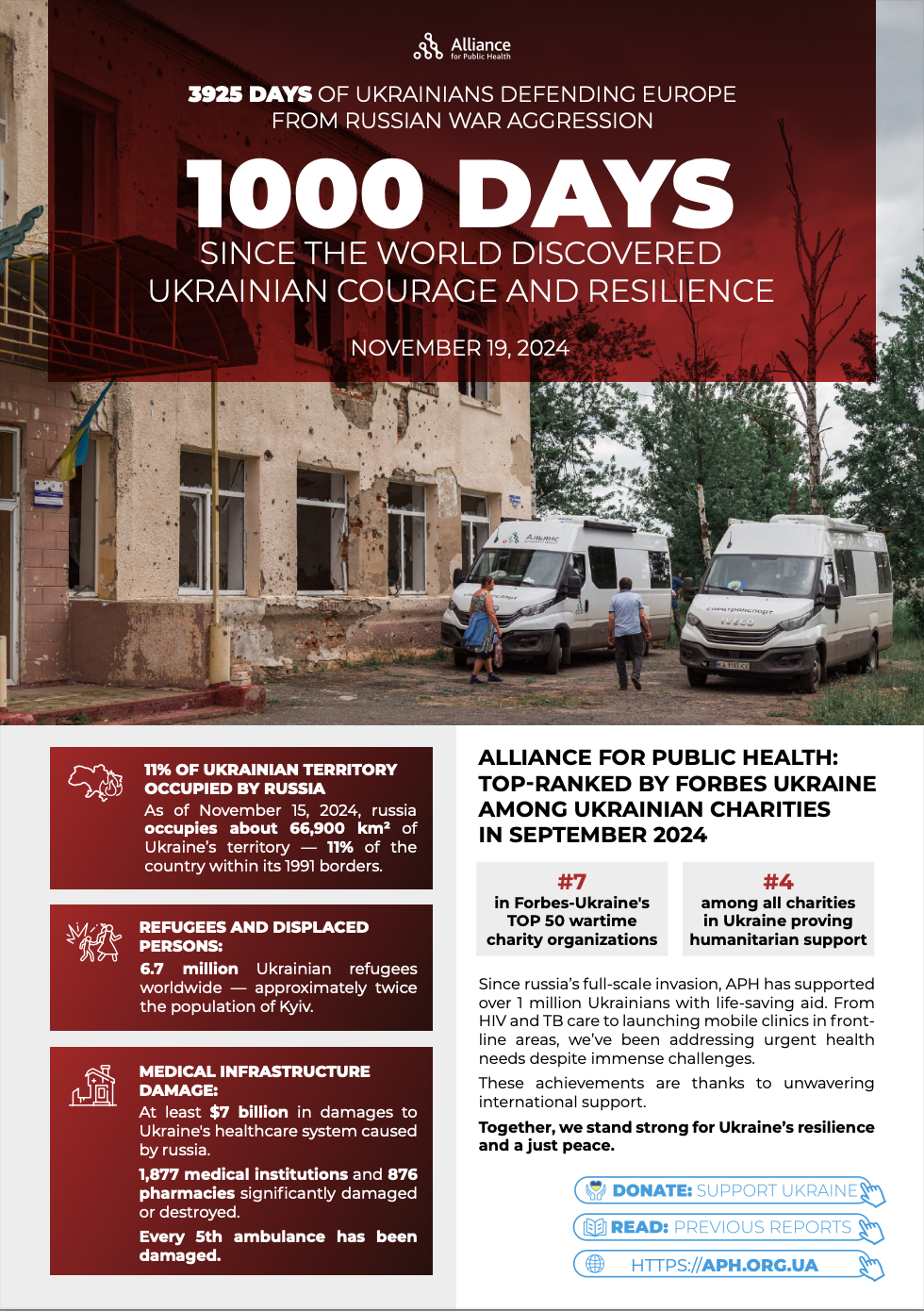
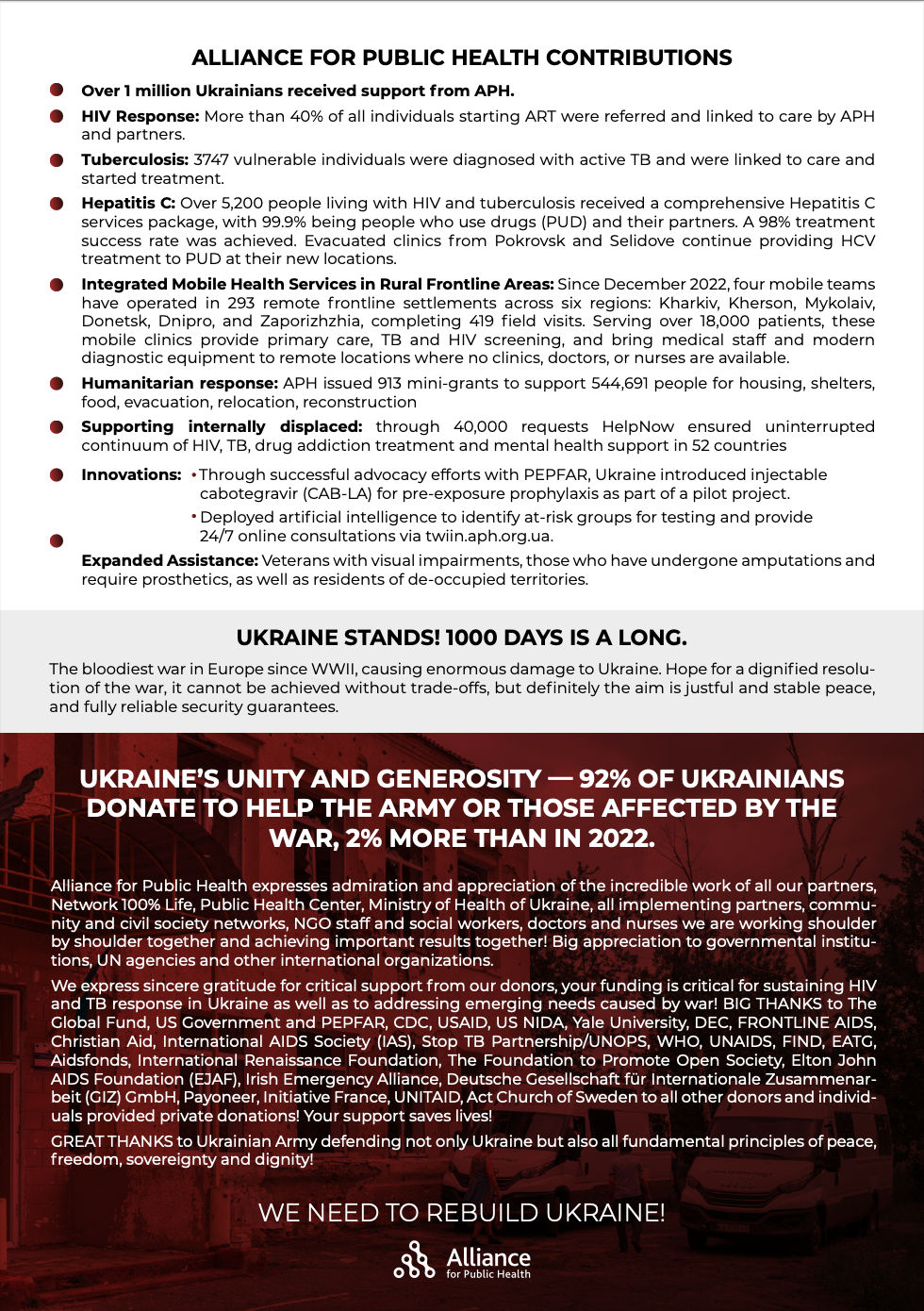
1000 days since the world discovered Ukrainian courage and resilience

Since the start of russia’s full-scale invasion, Ukraine has demonstrated extraordinary strength, resisting one of the world’s largest armies. Despite immense losses, Ukrainians have adapted, defended, and united under relentless attacks. Million people have been displaced, and millions more face trauma and hardship — yet, our resolve and hope endure.

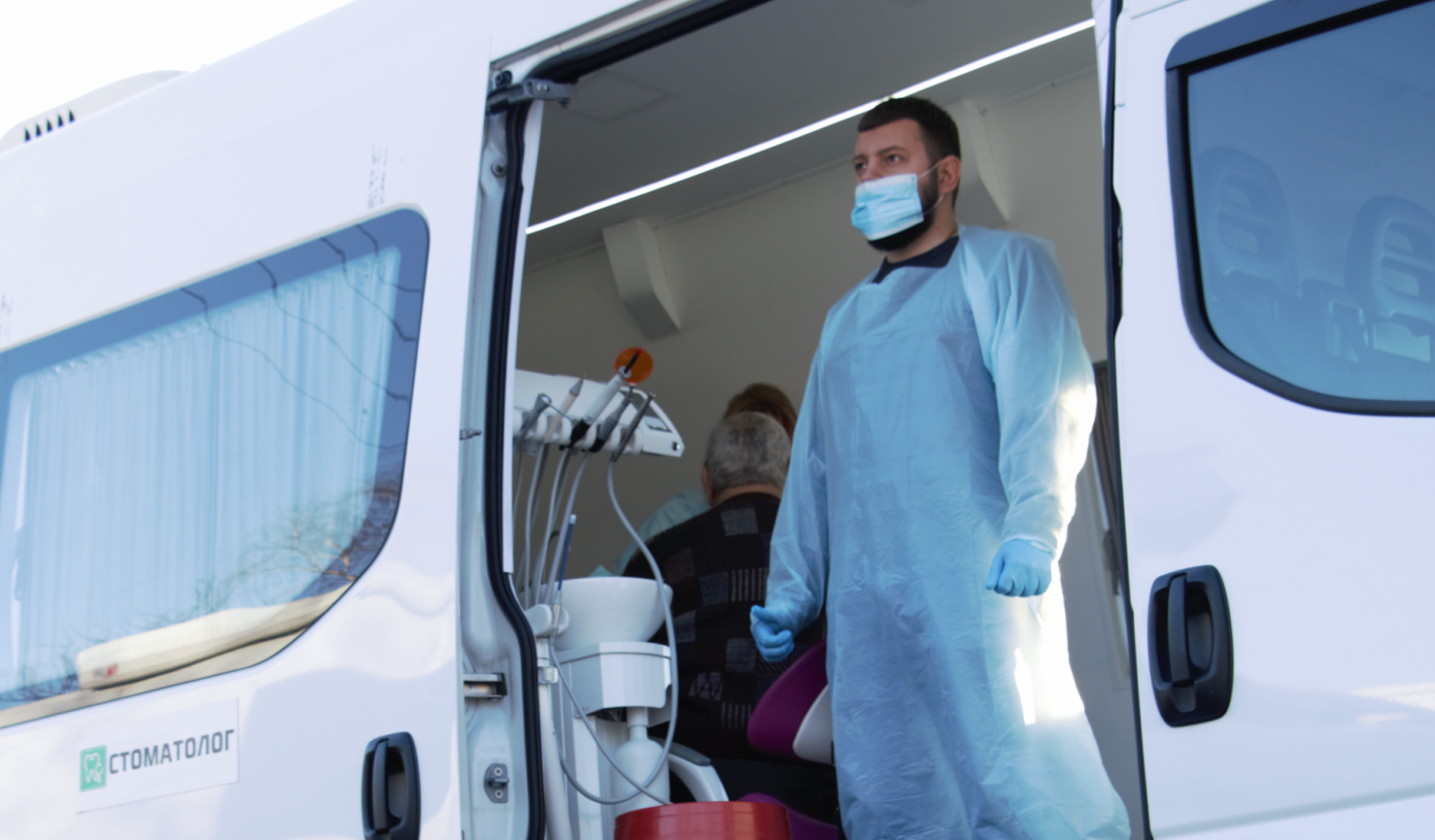
The Alliance for Public Health has been at the forefront, delivering humanitarian aid to over 1 million Ukrainians. Beyond health, we’ve focused on crisis response, controlling HIV and TB, and assisting those harmed by war. To address the destruction of healthcare infrastructure in frontline areas, we launched mobile medical services, offering everything from family medicine to dental care. These achievements have only been possible thanks to strong international support — thank you, donors and partners!

Ukraine’s bravery has inspired global backing to arm its defenders, rebuild infrastructure, and ensure stability. Together, we aim for a just peace with lasting security.

More
Share
November 11, 2024

Alliance for Public Health Organises Kickoff Training on Community-Led Hepatitis C Care for Egypt, Kyrgyzstan, and Nigeria

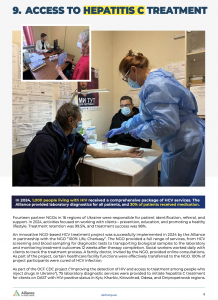
Within project ‘Innovate, Involve, Inspire: Preventing Hepatitis C Through Community-Led Harm Reduction (HEPC III), led by the Frontline AIDS consortium, Alliance for Public Health (APH) together with MENAHRA is conducting a kickoff training from November 10-14, 2024.

It is especially exciting as this training is preceding a very important intervention – hepatitis C treatment initiation using simplified approach for people who inject drugs in community settings, a study and intervention within UNITAID project, that is deemed to change Hepatitis C responses in 3 project countries. With PWID driving Hepatitis C epidemic globally (23% of new cases related to intravenous drug use) and being severely affected by Hepatitis C (about 50% estimated to be infected globally), yet less than half have ever been tested for Hepatitis C and less than 5% accessing treatment we are working on a very important intervention to bridge this gap of treatment access for the most affected population.

It is a kick off training, as we are about to be starting work in the field the coming month. Sofosbuvir has arrived in Kyrgyzstan and tests will follow. Nigeria will get the medications in December. So we are just a step from reaching out to PWID and initiating community treatment interventions. Therefore the multidisciplinary teams of coordinator, doctors, social workers, researchers are working together to plan the forthcoming intervention.

APH is happy to share the experience of Ukraine in community-based Hepatitis C treatment program, which has provided treatment to 13,000 key population representatives across Ukraine. In this project we are developing the study protocol, supporting the countries in implementation, including through this training, procuring Hepatitis C medications and tests.

This program became possible thanks to the vision, ambition and partnership of Frontline AIDS, UK-based organization of which APH is proud to be a member and that gathered us in partnership and a consortium for this project.

We are holding the training in Cairo, Egypt, for a reason. Egypt was awarded ‘gold tier’ status from WHO on path to elimination of hepatitis C by WHO in 2023. What an inspiration it was to hear from Deputy Minister of Health and Population Dr Mohammad Hassany about the incredible public heath success story that Egypt demonstrated to the world in taking control of Hepatitis C epidemic!

Some lessons of success story in the video!

More
Share
October 14, 2024

Global Fast-Track Cities 2024 Conference: 10 Years of City Leadership in the Fight Against AIDS and the Contribution of the EECA Region to Achieving the 95-95-95 Goals

From October 13 to 15, the Global Fast-Track Cities 2024 Conference is being held at Maison de la Mutualité, Paris, marking the 10th anniversary of the launch of the Fast-Track Cities initiative, which began on World AIDS Day in 2014. The event, organized with the support of the Mayor of Paris, brings together more than 550 cities under the theme “Equity in Action”, to discuss achievements in the fight against HIV, tuberculosis, and hepatitis, as well as to focus on further advancing health-related sustainable development goals by 2030.

The delegation of Eastern European and Central Asian countries is also participating in this year’s conference, including representatives from Tajikistan, Ukraine, and Montenegro.

This year’s conference is focused on ensuring equity in access to healthcare services and improving HIV outcomes for all communities. Special attention will be given to sharing best practices in accelerating responses to urban health challenges and exploring new approaches to implementing comprehensive measures in combating epidemics.

During the panel discussion “Equity in Action: Health Equity through Shared Responsibility,” Tetiana Deshko, Director of the International Programs Department at the Alliance for Public Health, emphasized the importance of partnerships between the state and civil society, noting: “It is significant that the 10th anniversary of Fast-Track Cities is being celebrated in Paris — a city that has given global momentum to the solidarity of cities in the fight against AIDS. During the COVID-19 pandemic, Paris introduced the ’15-minute city’ model to ensure access to essential services. And today, as the city hosts the Paralympic Games, it showcases how inclusivity can become a norm in everyday life.”

10 Years of Fast-Track Cities in the EECA Region: $10 Million Allocated Across 34 Cities

One of the key achievements of Fast-Track Cities in the Eastern Europe and Central Asia region has been the unification of 34 cities from 13 countries in the fight against HIV and tuberculosis. Since 2017, municipal authorities in these cities have allocated $10 million for implementing health programs and introducing innovative approaches.

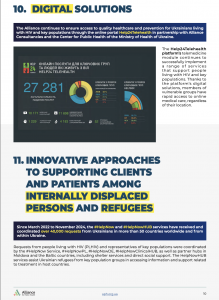
“The regional partnership of cities has been a vital support during Russia’s military aggression against Ukraine. Thanks to our partners, we quickly established the HelpNOW consultative service for migrant patients to help them access treatment in their new locations. The solidarity of cities like Chisinau, Moldova, was crucial for millions of Ukrainian migrants,” added Tetiana Deshko.

The EECA delegation at this year’s conference includes representatives from Tajikistan, Ukraine, and Montenegro, along with activists and government officials.

Among the key speakers at the conference is Gennadiy Trukhanov, Mayor of Odesa, who highlighted the importance of integrating international practices and coordinated efforts to succeed in the fight against AIDS.

“We signed the Paris Declaration and the STOP TB Declaration in 2017, which was a major step toward building a healthy civil society. Thanks to increased funding and collaborative efforts, today 98% of people living with HIV in Odesa know their status, 96% receive treatment, and 96% have undetectable viral loads. This is the result of our joint work,” emphasized Trukhanov.
“We can build roads, dozens of schools, or hospitals. But what’s the point if no one will use them? That’s why we must unite our efforts around the core values: human life and health.”

Sanja Sisović, Program Director of CAZAS and coordinator of the SOS 2.0 project in Montenegro, noted: “The joint implementation of the SOS 2.0 project with the municipality has led to significant progress in introducing innovative approaches to meeting the needs of key populations and HIV prevention. The opening of the House of Health has been a true breakthrough. This unique facility, created in partnership with the regional project implementers and civil society organizations specializing in HIV, has become a center for providing comprehensive assistance. The House of Health is managed by the municipality, and this partnership has resulted in a service that provides hundreds of consultations annually, conducts community testing, and contributes to the development of more inclusive local HIV policies.”


More
Share
September 27, 2024

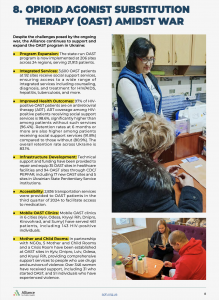
Inspiring Story: “20 Years of OST in Ukraine: The Path to Change and the Fight for Life” – A New DUnews Film

In 2024, Ukraine marks 20 years of the Opioid Substitution Therapy (OST) program. Over these two decades, the program has not only proven its effectiveness but has also become an integral part of the healthcare system. OST helps reduce harm among people who use drugs and serves as a reliable pathway to rehabilitation.

“In the 1990s, drug use and the spread of HIV became a massive problem for Ukraine. It became clear that the old Soviet system of addiction treatment was failing. Soviet drug policy was based on two pillars—punishment and isolation. Our country needed a new approach, one built on support and treatment. This was a historic choice: instead of repression, Ukraine chose human rights, including the right to health,”Igor Kuzmenko, DUnews.

DUnews, with the support of the Alliance for Public Health, has documented the key milestones of these 20 years to share the story of how the program was established and the lessons learned from implementing the best national OST program in Eastern Europe and Central Asia.

“In the beginning, there was a functioning National Committee on AIDS under the President of Ukraine. This status allowed the Committee to make effective political and executive decisions. Thus, in 1996, taking into account global experience, best practices, and recommendations, the Committee began considering substitution therapy as a treatment for opioid dependence,” — said Sergii Filippovych, Director of #SoS_project 2.0.

“For all these 20 years, Ukraine’s OST program has been a pioneering, leading example for the entire region,” — added Ganna Dovbakh, Executive Director of the Eurasian Harm Reduction Association.

Despite all the challenges, including the war waged by Russia, which seeks to impose its views and denies the effectiveness of OST, Ukraine continues to defend people’s right to access this treatment. The film tells the story of the difficult path the country and the community have taken to ensure OST remains accessible and protected for those who need it.

“Thanks to the opioid substitution therapy program, I have a family, and five years ago, my long-awaited son was born!”Anton Basenko, Ukraine’s first OST patient.

The documentary features stories of doctors, activists, policymakers, and members of the community of people who use drugs. They share their experiences, challenges, and achievements from 20 years of fighting for the right to effective treatment.

The film is available on the official YouTube channel of Drug Users News.

The film was created by the Drug Users News team with financial support from the International Charitable Foundation “Alliance for Public Health” as part of the #SoS 2.0 project, funded by the Global Fund.

More
Share
September 27, 2024

Harm Reduction Academy: Successful Second Module in Kenya

From September 9 to 13, 2024, the second module of the Harm Reduction Academy took place in Mombasa, Kenya. Participants from various parts of the world had the opportunity to deepen their knowledge and gain practical experience in monitoring and evaluating harm reduction programs.

Over the course of five intensive days, participants explored the following topics in depth:

Theory of Change: The foundation for designing effective harm reduction programs.

Modern Monitoring and Evaluation Tools: Methods to measure the effectiveness of programs.

Research Methods: Approaches to assessing the impact of interventions and developing program implementation strategies.

In addition to the theoretical component, participants were introduced to local initiatives in Kenya, including:

Drug Situation in the Region: Analysis and approaches to working with people who use drugs.

Opioid Substitution Therapy Programs: Effective methods for treating addiction.

Case Management: Integration of HIV and Hepatitis C prevention and treatment.

The practical experience gained allowed participants to better understand how these programs operate at the community level and to identify the most effective methods for combating epidemics. The knowledge they acquired was applied to the context of their own countries, helping to identify challenges and outline necessary initiatives in the harm reduction field.

The eighth cycle of the Academy welcomed 16 participants from Kyrgyzstan, Egypt, Nigeria, and representatives from Front Line Aids. The first module of the program took place in Georgia with the expert facilitation of Mat Southwell, an expert in HIV, drug use, and harm reduction with over 30 years of experience.

The Harm Reduction Academy is a global initiative aimed at addressing the epidemics of AIDS and Hepatitis C among people who inject drugs. The six-month course consists of three one-week in-person modules, including specialized lectures, practical workshops, and field visits to countries with leading harm reduction practices.

For more information: https://aph.org.ua/uk/nasha-robota/svit/akademiya-zmenshennya-shkody/

More
Share