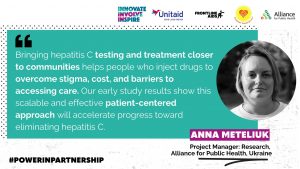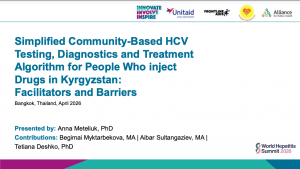
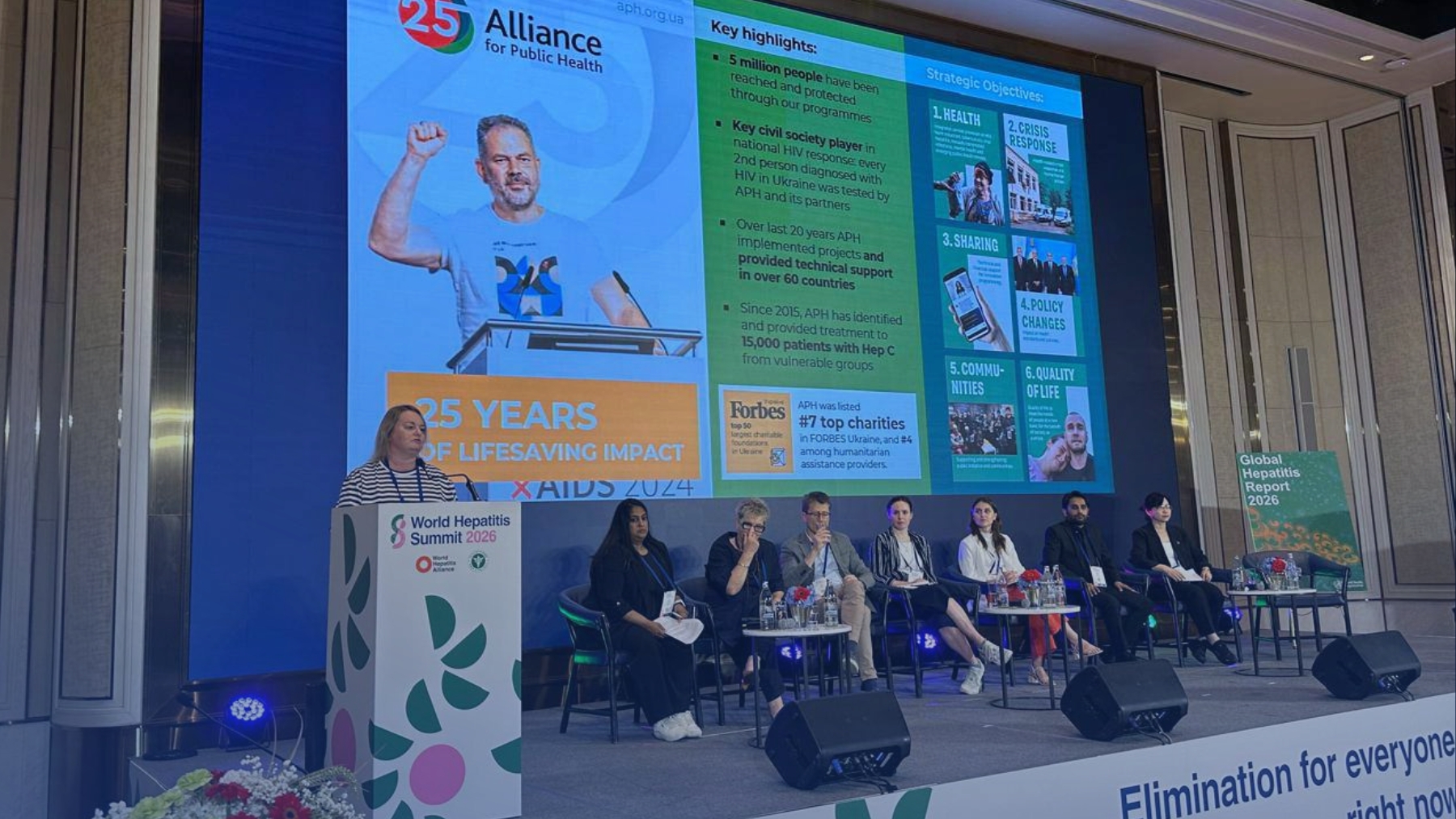
As part of World Hepatitis Summit 2026, taking place from 28 to 30 April 2026 in Bangkok, Anna Meteliuk, representing the Alliance for Public Health, delivered a presentation.
She presented preliminary results of the study:
“Simplified Community-Based HCV Testing, Diagnostics and Treatment Algorithm for People Who Inject Drugs in Kyrgyzstan: Facilitators and Barriers of the Model.”
This study addresses one of the most pressing gaps in hepatitis C response — access to care for people who inject drugs.
In Kyrgyzstan:
- ~25,000 people inject drugs
- HCV prevalence among them reaches 62.2%
- Access to state-funded treatment remains limited
The research explores a community-based, simplified model of care that integrates testing, diagnostics, and treatment into harm reduction services.
Key findings show that:
- Trust in providers, confidentiality, and “one-stop” services significantly improve treatment uptake
- Free and accessible services at the community level are critical
- Barriers such as stigma, long travel distances, bureaucracy, and waiting lists still limit access
Despite these challenges, the model demonstrates strong potential to increase treatment initiation and completion among people who inject drugs.
The study is presented within the project “Innovate, Involve, Inspire: Preventing Hepatitis C Through Community-Led Harm Reduction (HEPC III)”, which is led by Frontline AIDS (UK) in partnership with the Alliance for Public Health (Ukraine) and is implemented in Kyrgyzstan with local partner Association “Partnership Network”.