
Tetiana Deshko: “Criminalisation, limited programme coverage and funding shortages remain key challenges for harm reduction programmes in EECA. But there are also important achievements.”
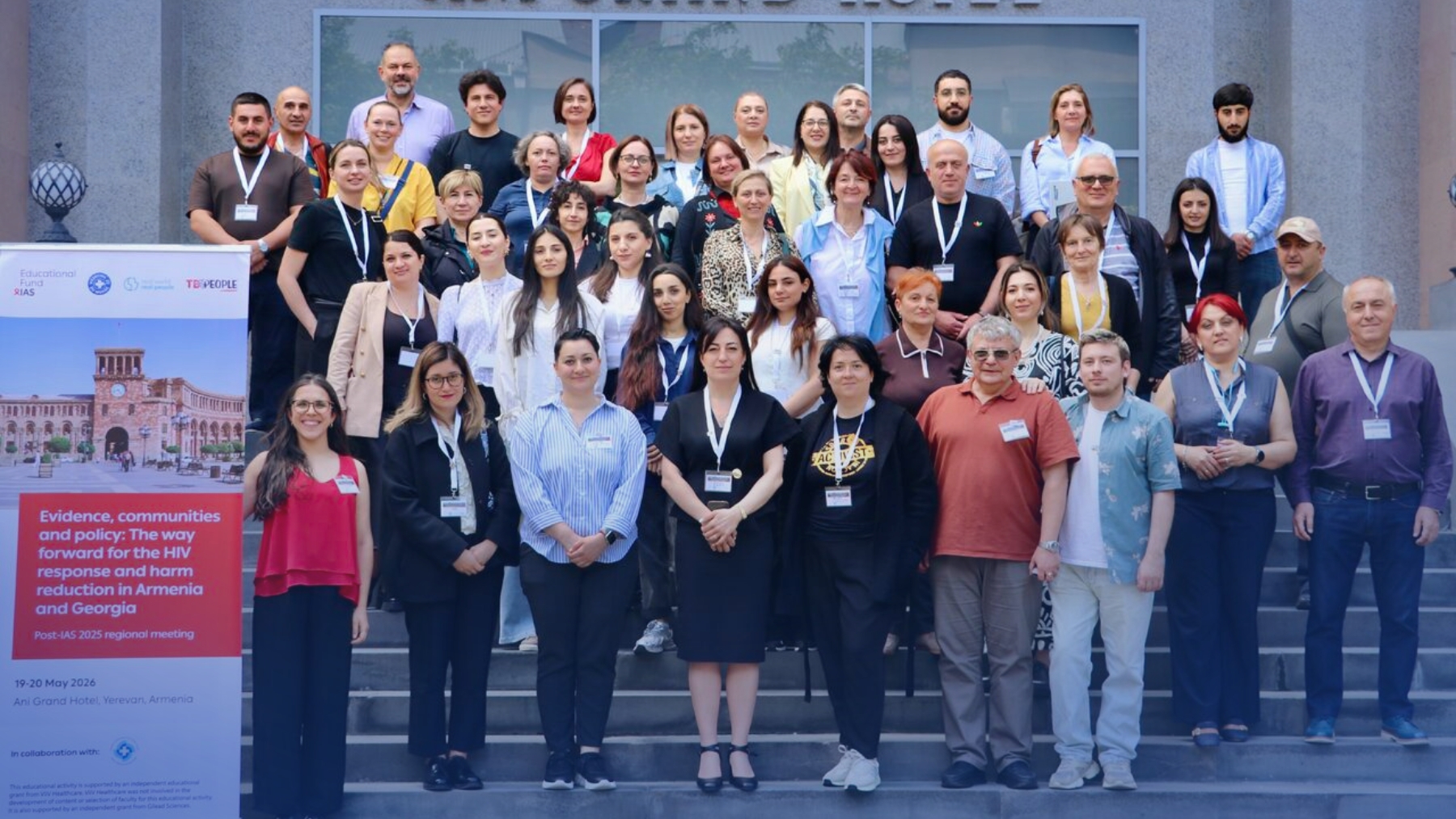
On 19–20 May in Yerevan, a regional meeting took place dedicated to the response to HIV, harm reduction programmes, human rights and sustainable policy development in Eastern Europe and Central Asia (EECA). The event was organised by the International AIDS Society (IAS), Médecins du Monde, the NGO Real World, Real People and the global network TBpeople.
The meeting brought together representatives of international organisations, government bodies, civil society and the healthcare sector from Armenia, Ukraine, Moldova, France and Georgia.
During the event, Tetiana Deshko, Director of International Programmes at the Alliance for Public Health, presented the experience of working within the regional partnership #iSoS in a talk titled “Harm Reduction in EECA: Drug Use Trends, Responses and Outcomes”, focused on current drug use trends, access to services and key challenges for harm reduction programmes in the region.
In her presentation, she emphasised that Eastern Europe and Central Asia remains one of the regions with the highest rates of HIV prevalence among people who inject drugs. An estimated 1.68 million people who inject drugs live in the region, and 43% of new HIV cases in 2022 were linked specifically to injecting drug use. In addition, injecting drug use contributes significantly to the spread of hepatitis C.
Special attention was paid to the insufficient coverage of harm reduction programmes and opioid substitution therapy. In the majority of countries in the region, access to sterile syringes and opioid substitution therapy remains below internationally recommended standards. At the same time, harm reduction systems continue to depend critically on external funding, which creates serious risks to the sustainability and continuity of services.
Tetiana Deshko also drew attention to the negative impact of the criminalisation of people who use drugs and repressive legislation affecting community organisations and civil society. In her words, criminalisation, stigma and restrictions on civil society activity are often the key barriers preventing people from accessing vital services.
Among positive trends, the introduction of new forms of opioid substitution therapy — long-acting buprenorphine — in Ukraine and Kyrgyzstan was highlighted. Discussion also covered the development of approaches to treating stimulant use disorder and the results of a pilot study in Ukraine on the use of methylphenidate for people with ADHD and stimulant use disorders; the study demonstrated a significant reduction in problematic stimulant use and cravings. Participants also discussed access to naloxone, violations of the rights of people who use drugs, overcoming stigma and discrimination, and the importance of sustainable financing of the HIV response in countries of the region.
Participants noted the importance of the practical drug policy work carried out in EECA by the regional drug policy commission chaired by Aleksander Kwaśniewski, including legislative reform in Kyrgyzstan, advocacy for substitution therapy programmes in Kazakhstan, work on drug policy strategies in Moldova and Ukraine, as well as related activities in the European Parliament.
The Yerevan event served as yet another platform for sharing experience, strengthening regional cooperation and seeking solutions grounded in human rights, evidence-based approaches and community needs.