
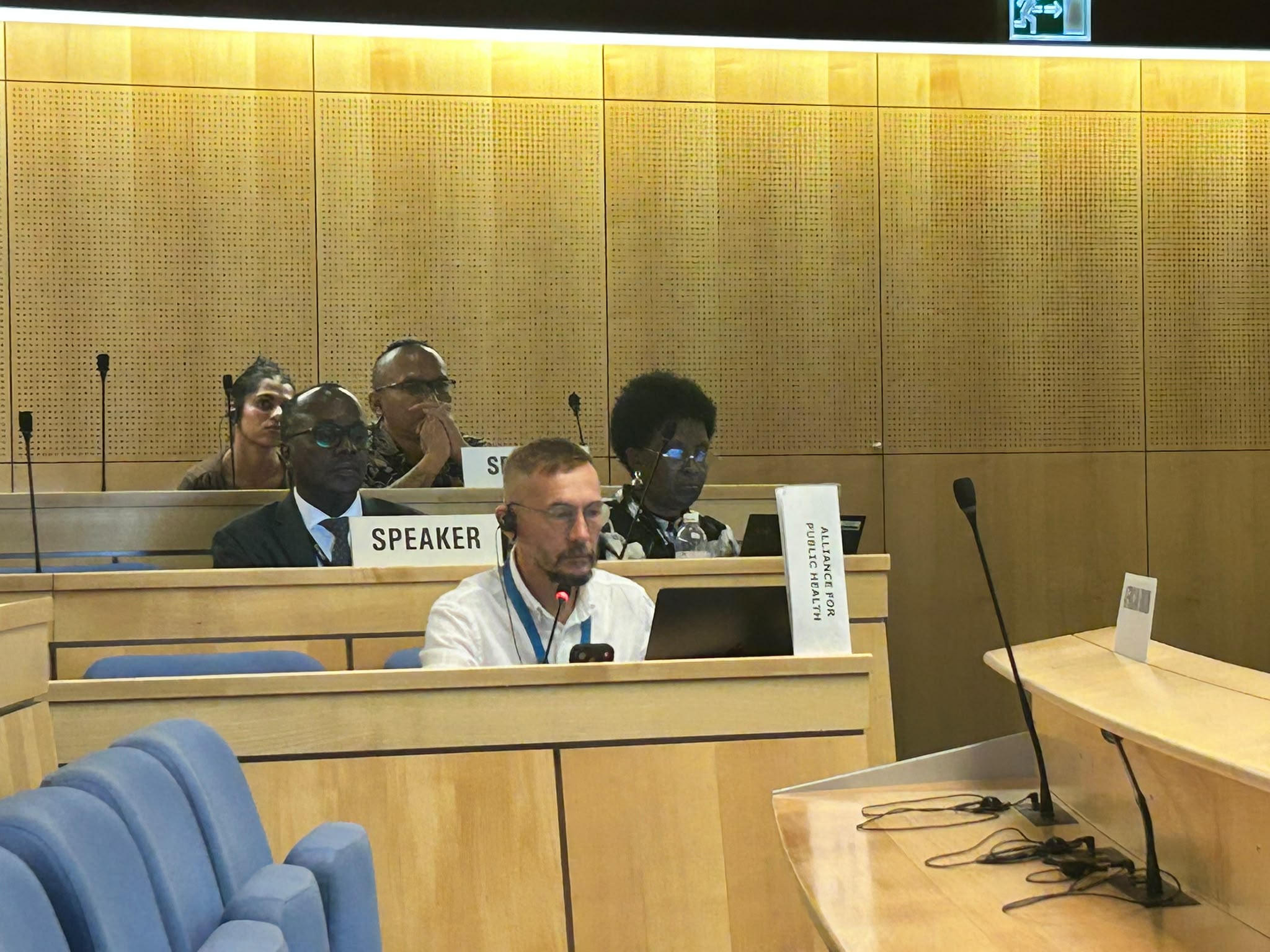
From June 30 to July 2, Ukraine took part in the 58th meeting of the Programme Coordinating Board (PCB) of UNAIDS in Geneva – its first since being elected to the Board last year. The Ukrainian delegation included Deputy Minister of Health and Chief State Sanitary Doctor Ihor Kuzin (via video link), Deputy Director General of the Public Health Center of Ukraine Olha Hvozdetska, First Secretary Valentyn Zhakun of Ukraine’s Permanent Mission to the UN in Geneva, and Vyacheslav Kushakov of the Alliance for Public Health.
Speaking on behalf of Ukraine, Olha Hvozdetska thanked member states for their trust and stressed that Ukraine sees its membership as both a duty and an opportunity – a chance to bring the country’s lived experience of sustaining HIV services throughout the full-scale war to the table.
Representing the non-governmental sector, Dr Vyacheslav Kushakov, Director of Behavioural Health, Telehealth and Crisis Response at the Alliance for Public Health, spoke about Ukraine’s experience in harm reduction. He reminded participants that Ukraine has 30 years of experience in harm reduction — knowledge and expertise the country is ready to share. Despite the full-scale war, Ukraine’s harm reduction programmes have not only continued but expanded, adapting to growing needs and reaching new, previously underserved communities.
Kushakov outlined several recommendations for the global response:
- Reprioritize prevention – reach people early, before harmful patterns take hold, and close gaps in late HIV detection and treatment initiation.
- Address overlapping risks – rising use of synthetic cathinones, deteriorating mental health, sexualized drug use, transactional sex, and drink spiking linked to sexual violence are converging, driving demand for drug checking and for mental and sexual health services, including psychedelic-assisted therapies.
- Invest in proactive, multichannel outreach – social network strategies and mobile, digitally-assisted services are essential where displacement has left qualified providers scarce.
- Protect civil society’s role in the transition to state funding – excluding communities and civil society organizations risks weakening outreach, confidentiality, anonymity, and trust.
- Resist the push toward punitive drug policy – pressure from conservative political forces to revise legislation threatens to undo harm reduction work that saves lives.
The meeting marked an important step for the independent PCB Working Group, which will present final recommendations on UNAIDS’ future structure and governance in October.