
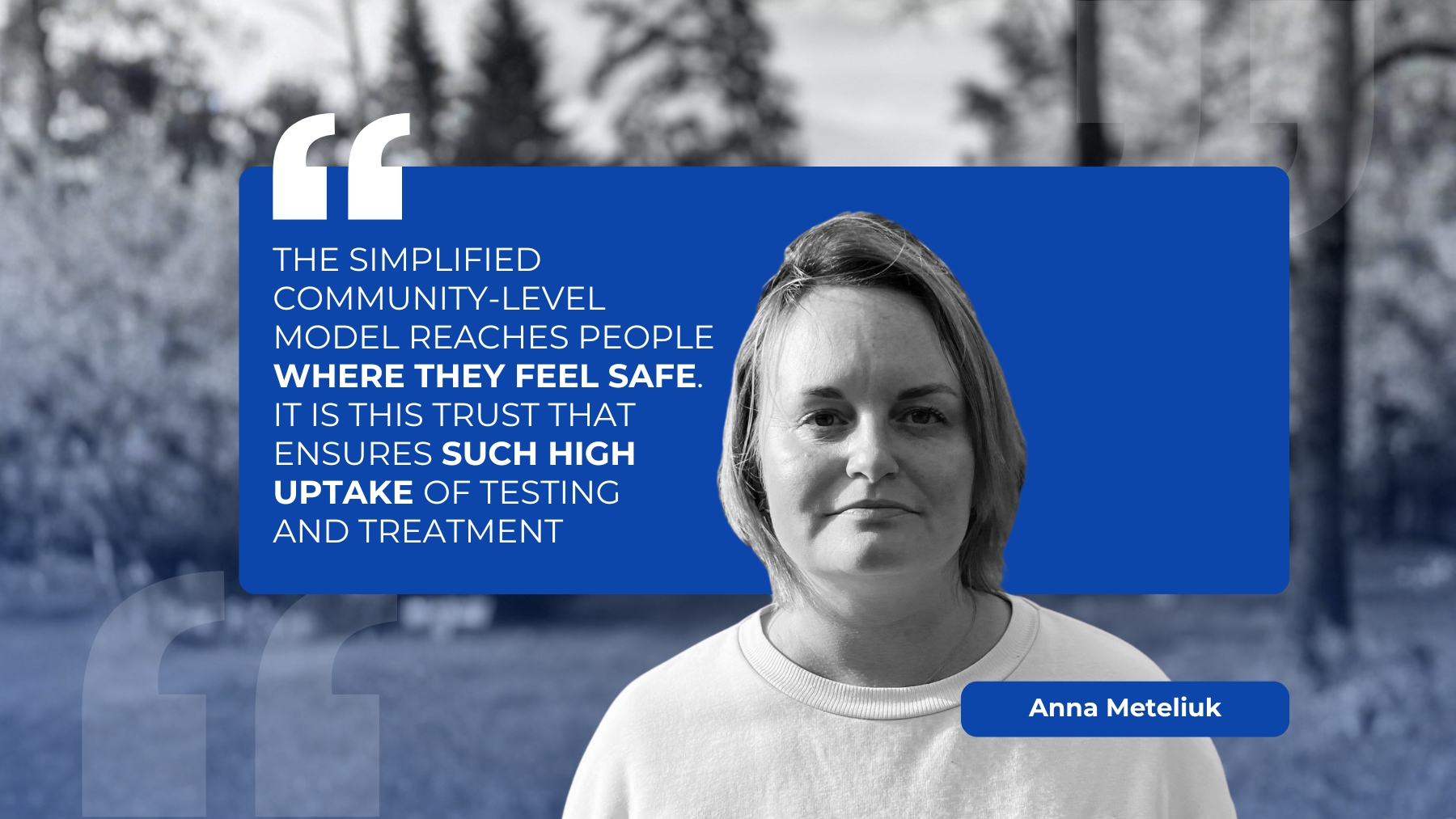
On 17 June 2026, during the webinar “From Evidence to Impact in Harm Reduction: HIV and Hepatitis C Prevention within the Global Fund, Grant Cycle 8”, Anna Meteliuk, Project Manager of the HEPC III programme of the Alliance for Public Health, presented preliminary results of a simplified model for community-based testing and treatment of viral hepatitis C (HCV) among people who inject drugs (PWID).
Viral hepatitis C remains one of the most significant health challenges for PWID. According to estimates by the World Health Organization, nearly one in two people in this group is living with HCV – approximately 6.8 million people as of 2022. Unsafe injecting practices account for up to 43.6% of all new infections globally. Despite this burden, only about 47% of PWID have ever been tested for HCV. Ukraine is among the ten countries accounting for nearly 80% of all hepatitis C cases in this population.
The project. The presented data were generated within the HEPC III project – “Innovate, Engage, Inspire: Community-led Hepatitis C Prevention through Harm Reduction” – a 2023–2026 programme led by Frontline AIDS with financial support from Unitaid, in which the Alliance for Public Health serves as the lead consortium partner.
The project tests underutilised global innovations aimed at reducing hepatitis C and HIV transmission among people who inject drugs by integrating testing and treatment directly into harm reduction services. The preliminary results presented during the webinar come from Kyrgyzstan and Nigeria.
Simplified model
This approach enables patients to complete the entire care pathway within a community-based organisation:
- rapid HCV testing at locations where PWID congregate and during outreach activities;
- confirmation of active infection using PCR testing (GeneXpert) in a community-based laboratory;
- treatment initiation by a project physician and provision of a 28-day supply of medication on site;
- ongoing patient follow-up, with data entered into national hepatitis C treatment registries.
In parallel, clients are tested for HIV, hepatitis B, tuberculosis, and pregnancy; those with positive results are referred to special care services.
Preliminary results
The data demonstrate high levels of service uptake:
- Kyrgyzstan (since April 2025): nearly 7,500 PWID were tested; 670 individuals initiated treatment; 429 completed treatment.
- Nigeria (since November 2025): 889 people were tested; 126 initiated treatment; 66 completed treatment.
“The simplified community-level model reaches people where they feel safe. It is this trust that ensures such high uptake of testing and treatment,” explained Anna Meteliuk.
An important additional finding is that integrated HCV services served as an entry point for HIV case detection. Among clients diagnosed with hepatitis C, new HIV infections were identified: 18 people (almost 2.0%) in Kyrgyzstan and 11 people (6.0%) in Nigeria. All of these individuals were previously unaware of their HIV status and were referred to care; according to available information, all have initiated antiretroviral therapy (ART).
“When we bring hepatitis C testing closer to the community, we don’t only treat hepatitis C – we identify people living with HIV who were unaware of their status and link them to care. Integration is the way forward,” she added.
Key conclusions. The simplified community-led model ensures testing, diagnosis, treatment initiation, and follow-up in familiar and accessible environments for PWID, reducing barriers to care. Integration of hepatitis C and HIV services represents a strategic direction for improving programmes for key populations, while hepatitis C treatment simultaneously becomes an entry point for identifying new HIV cases.
“Our approach works. It has proven highly successful in Kyrgyzstan and Nigeria, and we believe it should be integrated into both Global Fund programmes and national health strategies to expand access to hepatitis C services for people who inject drugs,” emphasized Anna Meteliuk.
The webinar aimed to share new evidence and approaches for hepatitis C and HIV prevention, strengthen the voice and leadership of communities of people who use drugs, and facilitate dialogue among partners, implementers, and stakeholders ahead of Global Fund Grant Cycle 8.