
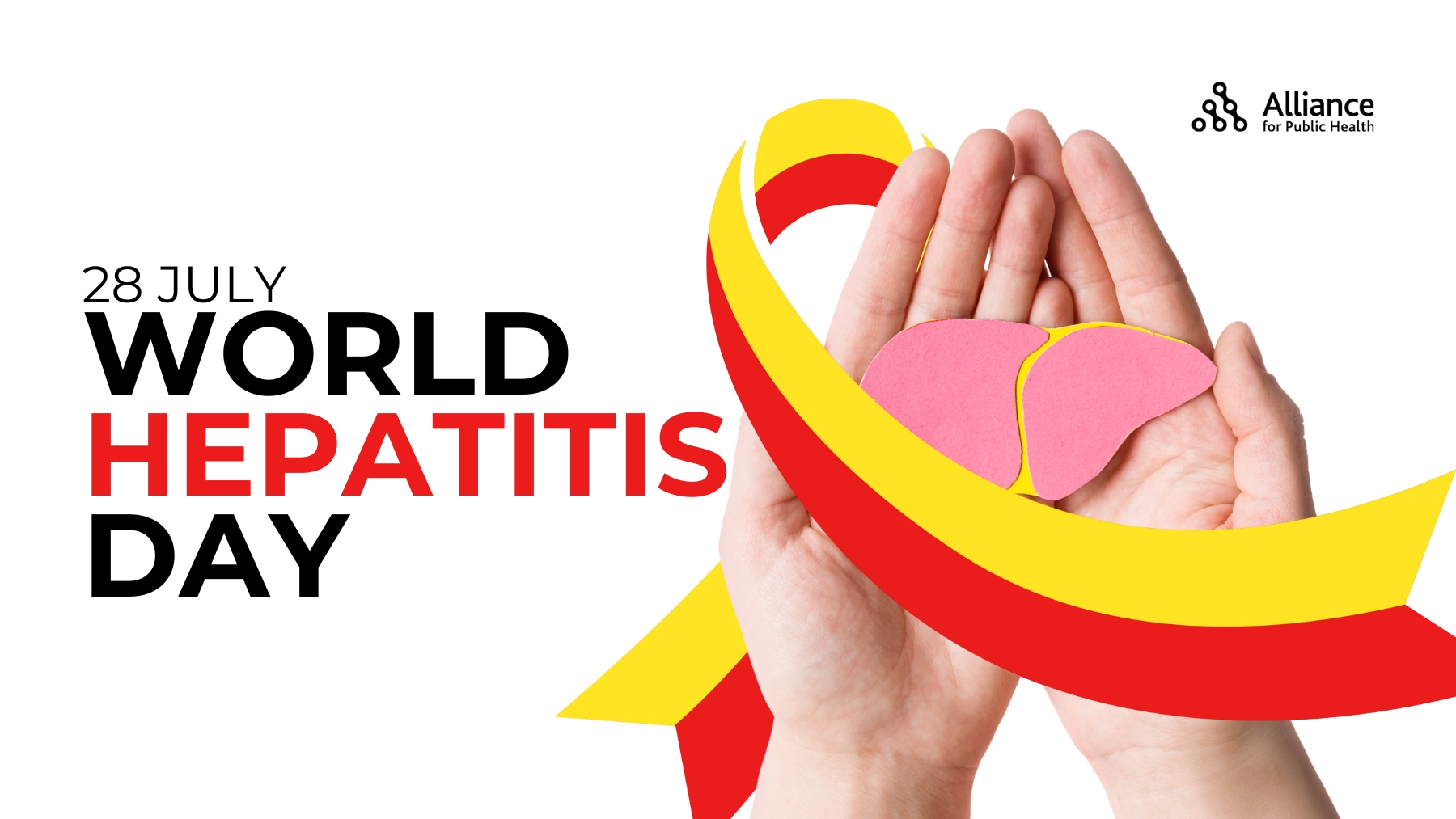
Every year on 28 July, the world observes World Hepatitis Day to raise awareness of the global hepatitis epidemic and to encourage actions. By this day the International Charitable Foundation “Alliance for Public Health” (APH) highlights its long-standing efforts, commitment and success in response to Hepatitis C, both within Ukraine and beyond.
According to the World Health Organization’s World Hepatitis Report 2024, around 3,500 people die daily from hepatitis B and C, and approximately 6,000 new infections occur each day. Globally, about 254 million people are infected with hepatitis B and 50 million with hepatitis C.
Tetiana Deshko, Director of the International Programmes Department,  Alliance for Public Health, emphasises:
“Viral hepatitis presents a tremendous challenge, especially in countries with a high disease burden, such as those with low or middle incomes. To eliminate hepatitis C, we must focus on the patients and enable them to start treatment on the same day as a positive test using rapid diagnostics within the community. Today, this is possible and we are expanding such programmes in Ukraine and worldwide.”
13 years of fighting hepatitis C in Ukraine
Since 2012, when APH launched a comprehensive package of HCV-infection treatment for people who inject drugs, the Organisation has sustained efforts to scale up access to Hepatitis C screening, diagnosis, treatment, and prevention. APH implements a community-based treatment model that overcomes barriers and reaches the most vulnerable groups. This is especially significant given that, based on behavioral research, the prevalence of hepatitis C among people who use drugs in Ukraine exceeds 60%. Prior to the full-scale invasion, it was estimated that 5% of the general population in Ukraine was infected with the hepatitis C virus, with 3.6% living with chronic hepatitis C – a rate higher than the WHO European Region average of 2.9% in 2022.
An example of the Alliance’s innovative solutions is the digital tool TWIIN, developed by APH in response to the challenges posed by the COVID‑19 pandemic and full-scale war to improve access to services. TWIIN integrates AI, digital human technology and online platform to deliver essential support, ranging from proposing nearby testing points and ordering self‑testing kit to provide anonymous consultations on common symptoms of hepatitis C, HIV, tuberculosis, addiction, sexual and mental health, as well as referrals to a doctor if necessary. Such an AI-powered consultant makes primary diagnostics as accessible to individuals as possible, regardless of their geographic location or availability of medical services.
Zahedul Islam, Director of the Treatment, Procurement, and Supply  management department, Alliance for Public Health notes:
“We break down barriers so that the most vulnerable people in Ukraine can receive timely diagnosis and affordable hepatitis C treatment, which saves lives. Since 2015, through our low-threshold programmes, over 14,495 patients in key populations, including those living with HIV and tuberculosis – have begun therapy. Even during full-scale war, around 40% of them, that’s over 5,800 individuals, received the support they needed. Services are delivered directly within communities so no one is left behind.”
Starting 2012 significant focus is placed on patient education: social workers provide three individual sessions with each patient covering virus transmission modes and safe behavior practices to prevent HCV re-infection.
APH became a pioneer in hepatitis C treatment in Ukraine: in 2016, it was the first to start treatment with direct-acting antiviral drugs, and gradually significantly reduced their cost. In 2017, it launched HCV diagnosis and treatment in the penitentiary system. In 2021, it integrated HCV treatment among tuberculosis patients, obtaining valuable evidence of its effectiveness.
In 2020, the APH’s strategic model was recognized by WHO and included in the Compendium of Best Practices in the European Region, confirming its effectiveness and impact on the healthcare system.
Starting in 2021, an innovative HCV diagnostics tool – using Gene-Xpert equipment was launched by APH, with reagents supplied directly to medical facilities laboratories. In 2023, the APH was the first to initiate the procurement and delivery of Xpert® HCV VL Fingerstick technology to Ukraine, allowing initiation of treatment within an hour after the confirmation of HCV infection diagnosis.
APH started decentralization of viral hepatitis C treatment in 2022, covering 57 healthcare facilities in 16 regions. Fourteen non-governmental partner organizations in the field are involved in case finding, referral for diagnosis and treatment, and individual support. The result is a 99% treatment completion rate and a 98% successful cure rate.
In 2024, amidst the war, APH piloted a task shifting project to reallocate HCV treatment among people who use drugs, to non-governmental organization. This pilot resulted in 100% treatment success.
Real impact of APH is best evidenced by patients success stories:
Taras, age 45, Ukraine:
“I survived combat and decided to keep fighting. In August 2022, I joined the assault brigade as a volunteer. After one of the toughest battles, only two of us were left alive. I arrived at the hospital in critical condition—doctors literally rebuilt my gut and saved my liver. After a long rehabilitation, I returned to civilian life, only to learn I had another enemy — hepatitis C. I had no symptoms and discovered it only by chance during testing. But from the first visit to health care facility, I felt I wasn’t alone, a social worker from the NGO ‘Alternative’ in Odesa supported me every step of the way. I knew I had to win this fight too, so I could remain strong not just on the front lines, but in life.”
Tetiana, age 44, Ukraine:
“My husband and I have three children, living in frontline Dobropillia in Donetsk region. We both had co-infections – HIV and hepatitis C. With free hepatitis C treatment from the NGO ‘Our Help’, everything changed in our family. Already during treatment, we felt revitalized, regaining strength, energy, and confidence in the future. Our children were happy we could be active again—we rested and worked together, and they learned the value of life and hard work. We saw them starting to smile more. We became parents once more, able to support and stand by our children. This programme wasn’t just about free medicines – it restored our lives and the comfort of being a family again.”
Olha, age 41, Ukraine:
“Due to the war, I had to leave my native Luhansk region to be displaced to Rivne. Life of the displaced person is challenging – new city, dormitory, unfamiliar faces. I started feeling unwell but blamed fatigue and stress. Symptoms did not go away. After examinations in the hospital, I received an unexpected result – positive for HCV-infection. This diagnose shocked me… Thanks to the APH’s project, I got free treatment. And today, I’m healthy. I’m truly grateful to everyone who backed me up, especially to social workers from Rivne oblast charity foundation ‘Our Future’. Without their support, I could still be living with a dangerous diagnosis, completely unaware of it.”
Expanding programmes abroad: Egypt, Kyrgyzstan and Nigeria
Drawing on experience from Ukraine, APH is scaling its work internationally. Within the “HCV Innovate Involve Inspire” consortium, led by Frontline AIDS (UK) and funded by Unitaid (2023–2026), it aims to reduce new hepatitis C infections among people who inject drugs in community‑based programmes across Egypt, Kyrgyzstan and Nigeria.
Laurie Schowalter, Frontline AIDS Lead Programmes:
“We are proud to collaborate with APH through the HepC III programme. With many decades of experience in developing high-quality health programmes focused on communities and drug users, APH brings technical expertise, excellence, and compassion to this work. Their efforts to break down the barriers to HCV testing and treatment move us closer to a future free of viral hepatitis.”
Aniedi Akpan, Executive Director of Drug Free And Preventive Healthcare Organization – DAPHO (Nigeria), says: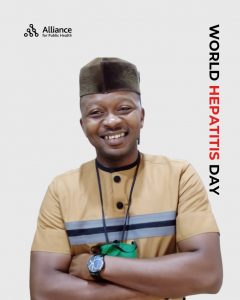
“The community-led and based HCV Innovate Involve Inspire project in Nigeria will situate HCV prevention and treatment at drug user community Centre making it accessible in terms of proximity, reach to the community and cost. The intervention is important in its implementation strategy and its potential to drive change within the community due to community leadership, collaboration and experience sharing on the project at International levels through the Community Advisory Board, among the consortium implementing countries (Egypt, Kyrgyzstan, Nigeria and Ukraine), at National levels through the multi-sectoral National Steering Committee and at sub-national level through the joint stakeholder and community State Steering committee.”
The project aims to test 13,700 people who inject drugs and treat 1,456 of them across the three countries by the end of 2025 (276 in Egypt, 930 in Kyrgyzstan, 250 in Nigeria). Gene‑Xpert devices will be installed in harm‑reduction settings in each country for rapid diagnosis.
Dr Wael Mansour, psychiatrist at one of the OAT sites in Egypt, is implementing a pilot intervention on long‑acting injectable buprenorphine (LADB) as part of the project:
“Since I attended “Harm Reduction Academy” workshops delegated from the GSMHAT, together with the Heliopolis team, guided by the principles of Harm Reduction Academy, we went through upgrading all the efforts being done in the field of addiction medicine in Egypt, stepping wise, we adopted three access as a supporting start:
- First, training Healthcare Providers and Harm Reduction Workers on blood borne diseases (HIV), (HBV) and (HCV): including prevention strategies, testing, and treatment options, how to encourage PWID to engage with dignity without stigma and how to properly react to the FAQ specially those related to religion and social norms.
- Second, promoting and supporting the concept of one window services based on public health needs rather than moral judgments “HPH provides virus screening and treatment in addition to three treatment choices (OAT, inpatient facility and the traditional outpatient intensive care) for substance users specially (PWID) together with family education and support
- Supporting advocacy efforts for laws and policies that enable access to harm reduction services and empowering communities through peer engagement and public events and social media videos and posts.
I am honored to express my gratitude to Harm Reduction Academy principles which reflect on improving our response to blood borne diseases among People Who Inject Drugs (PWID).”
This project seeks to evaluate the effectiveness of integrating hepatitis C testing and treatment services into community‑based harm‑reduction programmes in resource‑limited countries – Egypt, Kyrgyzstan and Nigeria. The accompanying research aims to generate new evidence and identify effective strategies to overcome barriers to hepatitis C testing and treatment among people who inject drugs, contributing to global elimination efforts.
The real impact is best illustrated through the lives changed:
Leonid, age 57, Kyrgyzstan:
“I put off hepatitis C treatment for a long time, out of fear and not knowing where to start. But once I learned about the community‑based programme, everything changed. They explained everything in detail, helped with testing and supported me at every stage. It’s really convenient – you don’t have to commute far; everything’s close by. I feel supported and grateful to everyone involved. Thanks to you, I began the path to recovery and now I can live a long life.”
Maria, age 26, Kyrgyzstan:
“When I found out I had hepatitis C, I was confused and afraid. But thanks to our community, I had an opportunity to start treatment – it was organised conveniently, close to my home, with attentive support. Weeks into therapy, I felt refreshed, my sleep and mood approved, and constant fatigue disappeared. I began to recover and feel alive again. Huge thanks to everyone who helps us fight and believe in better.”
Alina, age 37, Kyrgyzstan:
“As a mother of four, when diagnosed with hepatitis C, my world collapsed. I didn’t know where to seek help and was terrified for my health and my children’s future. Luckily, our community told me I could receive treatment nearby, without bureaucracy and with humane care. Everything was clear, accessible and, most importantly – supportive at every stage. Within a month I felt better – I regained energy, weakness faded, and I became an active mother again. I started recovering. Thank you from the bottom of my heart. This isn’t just treatment, it’s a return to life.”
Mykyta, age 31, Kyrgyzstan:
“After release [from prison], I realised that if I didn’t take care of my health now, it might be too late. I was diagnosed with hepatitis C while being incarcerated but didn’t receive treatment then. Once free, I approached the community; they welcomed me without judgement, as a normal human being. They helped with tests, quickly enrolled me into the treatment programme and explained everything. Here no one is abandoned – they walk with you step by step, constantly calling you and checking on how I feel. I just started treatment but already feel revived and hopeful. I’m grateful that there are people and this help.”
Dmytro Nestulia, a case manager in Cherkasy from the organisation “100% Life”, part of the Alliance’s hepatitis treatment project, says:
“I cured my hepatitis and helped hundreds in Ukraine start and complete treatment. In the APH project, we start therapy on the same day as a positive test. I was delighted to share this experience with colleagues from Kyrgyzstan, Egypt and Nigeria, who are now beginning community‑based treatment.”
Joining the World Hepatitis Alliance
In 2025, the Alliance for Public Health joined the World Hepatitis Alliance (WHA)—a global network striving for hepatitis elimination. Public membership in the WHA enables sharing experiences, international advocacy, and collective efforts to combat the global epidemic. Viral hepatitis B and C claim millions of lives annually, and local and global action is essential for elimination.
Eliminating viral hepatitis is ambitious but absolutely achievable. Our longstanding experience in Ukraine and successful international projects show that, through innovative community‑based approaches, targeted funding, and strong partnerships, we can end the hepatitis C epidemic. The APH will continue to be committed to further contribute to hepatitis elimination.