
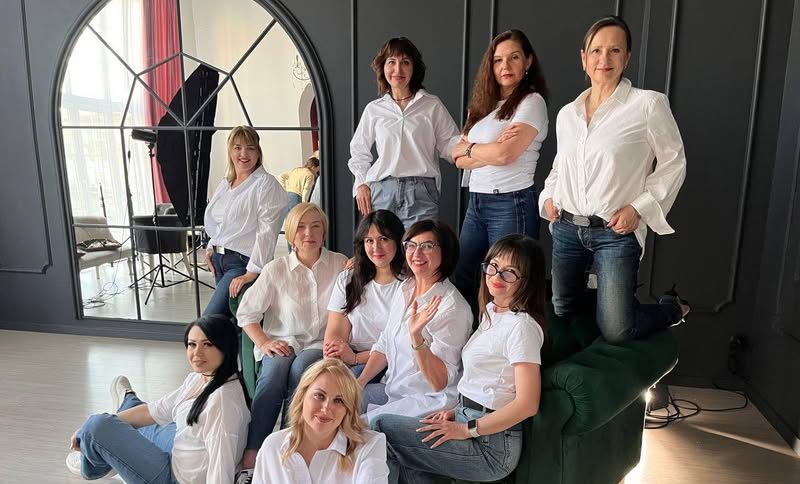
The Alliance continues to actively assist Ukrainians by responding to their needs with a wide range of humanitarian initiatives. For the fourth consecutive year, with significant financial and technical support from Christian Aid and the Church of Sweden, 620 mini-projects have been implemented to address the urgent needs of local communities and individual households.
Thanks to participation in the mini-grant contest, community initiative groups receive funding to implement mini-projects that are relevant to both IDPs and “host” communities in specific regions. The grant money is used to repair buildings, equip bomb shelters and children’s playgrounds, set up spaces for hobby clubs, purchase necessary equipment, etc. Various educational, corrective, and rehabilitation activities are also carried out.
Victoria Martirosova, Program Manager at the Alliance for Public Health, has told us about the implementation of the new phase of the project “Supporting Community Initiatives in Ukraine” and new approaches to working with regional facilitators.
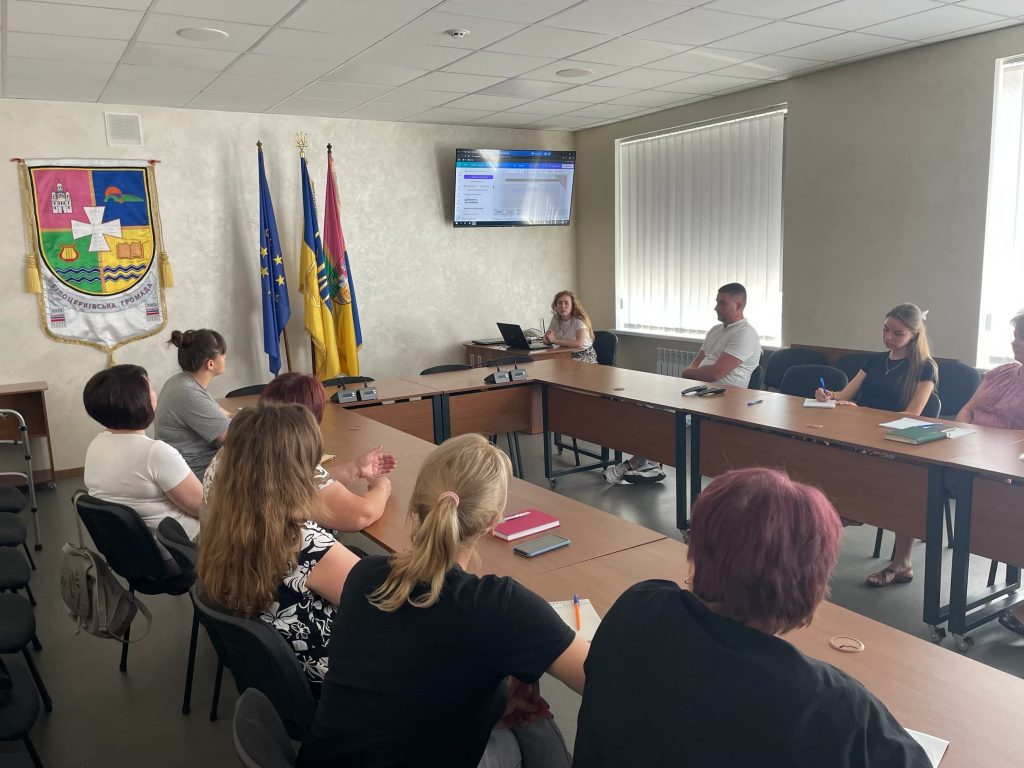 This phase of the project will last from February to September 2025 and, unlike previous phases, will focus on deepening activities in the specially selected remote territorial communities. Once the situation in the frontline territories has been analyzed, it was decided to concentrate activities in the territorial communities of six regions: Zaporizhzhia, Donetsk, Odesa, Dnipropetrovsk, Kharkiv, and Poltava regions, and the city of Kramatorsk. We wanted as many people as possible to be able to participate in the grant contest. To this end, announcements about the open contest were widely distributed among the communities and local authorities. The Alliance’s regional facilitators also worked very actively with the communities and initiative groups, telling them about the contest, mini-grants, etc. We managed to attract many interested participants—76 applications were received, from which 55 winners were selected.
The cost of implementing one mini-project is, on average, UAH 200,000, summing up to a total grant amount of UAH 10 million. The applications submitted by initiative groups to the contest were focused on the highest priority needs in their communities. In order to ensure that the selection was objective, it was conducted in two stages.
The first selection stage took place in the specific communities, where selection commissions were set up. These commissions reviewed applications from their region and selected winners based on a certain number of points. After review by the regional commissions, the winners were determined by the Alliance’s National Commission, which also reviewed all 76 applications, but with notes about which initiatives won in each region.
When selecting the winners, the competition committee members paid attention to the following factors:
– that it was a large territorial community where IDPs live,
– local authorities were willing to implement initiatives,
– there were active people and volunteers interested in improving the life of the community, since it was the first time in the history of mini-grants, when the Alliance used a new approach – to implement several initiatives in one community at the same time.
“A distinctive feature of this phase of the project is that several different mini-projects can be implemented simultaneously in the local community by different initiative groups. This is the
Alliance’s first experience of this kind, and it will be very interesting to see how this approach works and how effective it will be,” said Viktoria Martirosova.
Facilitators as a driving force of the Project
In order to delve deeper into the communities, especially rural ones, there is a need to involve a regional “coordinator” who is a local resident and who would be present “in the field” when needed.
A facilitator is a person who communicates directly with initiative groups and assists them at all stages of project implementation: writing grant applications, implementing the project, preparing reporting documentation, etc. Facilitators are the driving force and assistants to initiative groups, as well as a kind of intermediaries between the Alliance and communities. From the very start of the project, they worked in communities: they got to know the leadership, residents, initiative groups, helped to set up the regional contest commissions, served as secretaries of these commissions, and assisted the Alliance with all paperwork. The involvement of facilitators at all stages is very helpful to the communities themselves, as it helps to educate and support them throughout the entire process.
“Since the beginning of the war, I have been working at the humanitarian projects, and now I am working on the implementation of mini-grants. What inspires me in this work? Of course, it’s the people around me, people who need help. When you realize that you can help and already have some experience in this, you want to share it and inspire others,” says Kateryna Horbyk, a facilitator in the Poltava region. “I understand that it is thanks to projects supported by mini-grants that small communities that have lost hope and are not expecting any help are being rebuilt. It’s great that we have the opportunity to help in this way!”.
Kateryna Horbyk, a facilitator in the Poltava region, shared the specifics of her work and the challenges of collaborating with remote communities.
When I found out that there were already communities to work with, I immediately started communicating with the heads of local territorial communities, because they knew the needs of their residents better than anyone else. We arranged meetings to get to know each other in the first place and to understand their needs and problems. Then we had several working meetings aimed at training people who were eager to join us to prepare their grant applications. This was the stage at which initiative groups were formed in the community. After the winners were announced, we, the facilitators, were constantly in touch with them, as we provided consulting services on the work processes, such as procurement, implementation of activities, publications on mini-projects, etc. It’s great that people in small communities are ready to hear you, and listen to you when you give them some advice.
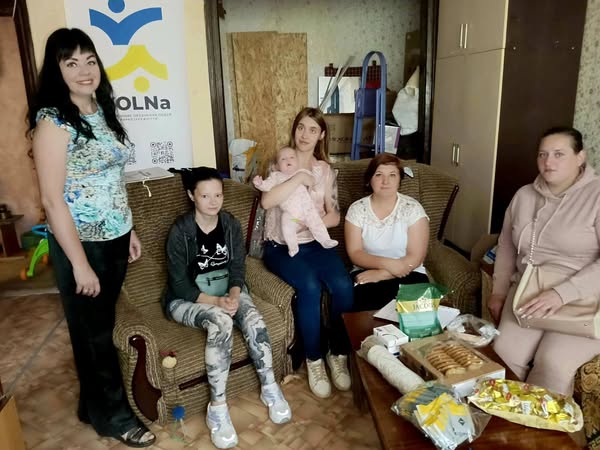 We are currently conducting “experimental training sessions” in the territorial communities of the mini-grant project. This is an analysis of the implementation of mini-grant projects in practice, during which we discuss what has already been done, what problems arise, what can be improved, and their future plans. Therefore, we travel to communities, organize meetings, and hold lively and interesting discussions. It is difficult to plan routes for visiting communities because we work in remote territorial communities that are 2-3 hours’ drive away. All these communities are located outside the Poltava community, in towns and villages that are really remote logistically and have almost no access to donor funding. But we do it because such visits, meetings, and discussions are a guarantee that initiative groups, gaining knowledge, skills, and positive experience in implementing mini-projects, will move forward and implement larger projects later on.
What challenges do I see:
– there is a need to learn how to work with people in the communities, who usually do not even know how to organize any working processes;
– a facilitator bears a great responsibility, because the project implementation depends on our efforts.
The Alliance helps facilitators on this difficult path through holding regular working meetings, thematic training sessions, consultations, and experience exchanges within the framework of the Community Initiatives Support Platform.
Read about the interim results of project implementation on our Facebook page. The activities are carried out within the framework of the project “Supporting Community Initiatives in Ukraine,” implemented by the Alliance for Public Health of Ukraine with financial and technical support from the Church of Sweden and Christian Aid.