
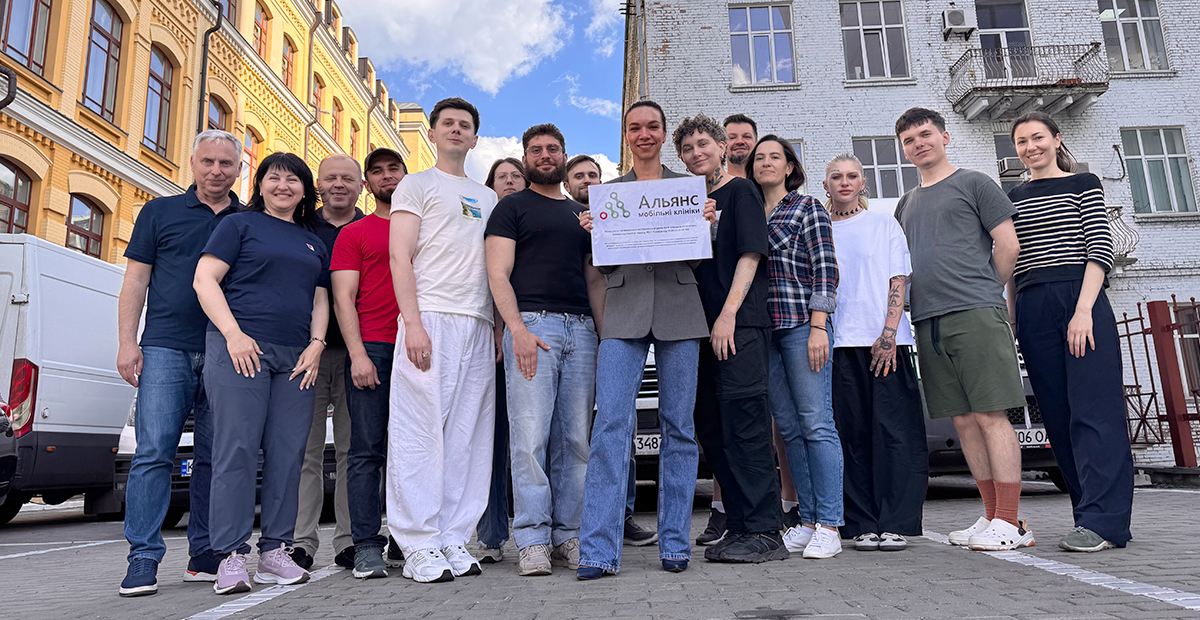
The Alliance for Public Health (APH) has been granted a medical practice licence for its mobile clinics. For a project launched in response to Russia’s full-scale invasion, this is an important step towards closer integration with Ukraine’s health system. For patients, it means that a consultation at a mobile clinic can now lead on to follow-up care and treatment.
The licence was granted under Order No. 783 of the Ministry of Health of Ukraine, dated 11 June 2026. It covers general practice – family medicine, obstetrics and gynaecology, ultrasound diagnostics, healthcare organisation and management, and nursing.
APH’s mobile clinics have been operating since December 2022. The teams travel to frontline and de-occupied communities, where russian attacks have damaged or destroyed health facilities, doctors are in short supply and pharmacies have closed. For many residents, reaching the nearest hospital remains difficult, costly or dangerous. The mobile clinics bring healthcare closer to people by providing access to medical professionals, diagnostic equipment and essential medicines directly in their communities.
Since the project began, six mobile clinic teams have provided care to more than 38,000 people in 599 hard-to-reach frontline locations across the Chernihiv, Dnipropetrovsk, Donetsk, Kharkiv, Kherson, Mykolaiv, Sumy and Zaporizhzhia regions. The teams use 25 specially equipped vehicles, including one dental unit.
With the licence, medical staff can now work within a single licensed healthcare provider. A key part of this transition is keeping medical records in line with national requirements and using eHealth, Ukraine’s electronic health system. Examination results, test findings and prescriptions entered into the system can then inform further care and treatment, in accordance with the rules governing access to medical data.
“The care a person receives, even in the most remote village, is no longer a one-off episode of humanitarian response. It becomes part of their medical history. This matters deeply to us. We want people to be able to continue their treatment, and we want the next doctor they see to be able to take into account the tests and prescriptions they have already received,” says Anna Korobchuk, Head of the Mobile Health Programmes Department at the Alliance for Public Health.
This continuity is especially important for people with chronic conditions who need regular monitoring. It helps doctors track changes in a patient’s health and make decisions based on the care already provided. When a mobile clinic cannot meet a patient’s needs, the patient can be referred for further diagnostics, a specialist consultation or treatment at another health facility.
APH’s experience shows how a humanitarian response can evolve into a healthcare service connected to the national health system and remain accessible even where war has disrupted people’s usual routes to care.
Watch a video about the work of APH’s mobile clinics.
Support the mobile clinics
APH is raising funds to expand screening for diabetes and cardiovascular disease in frontline communities. The funds will also help start treatment, continue follow-up through telemedicine and refer patients to specialised care. Your support will help the teams keep reaching people for whom healthcare remains hard to access.