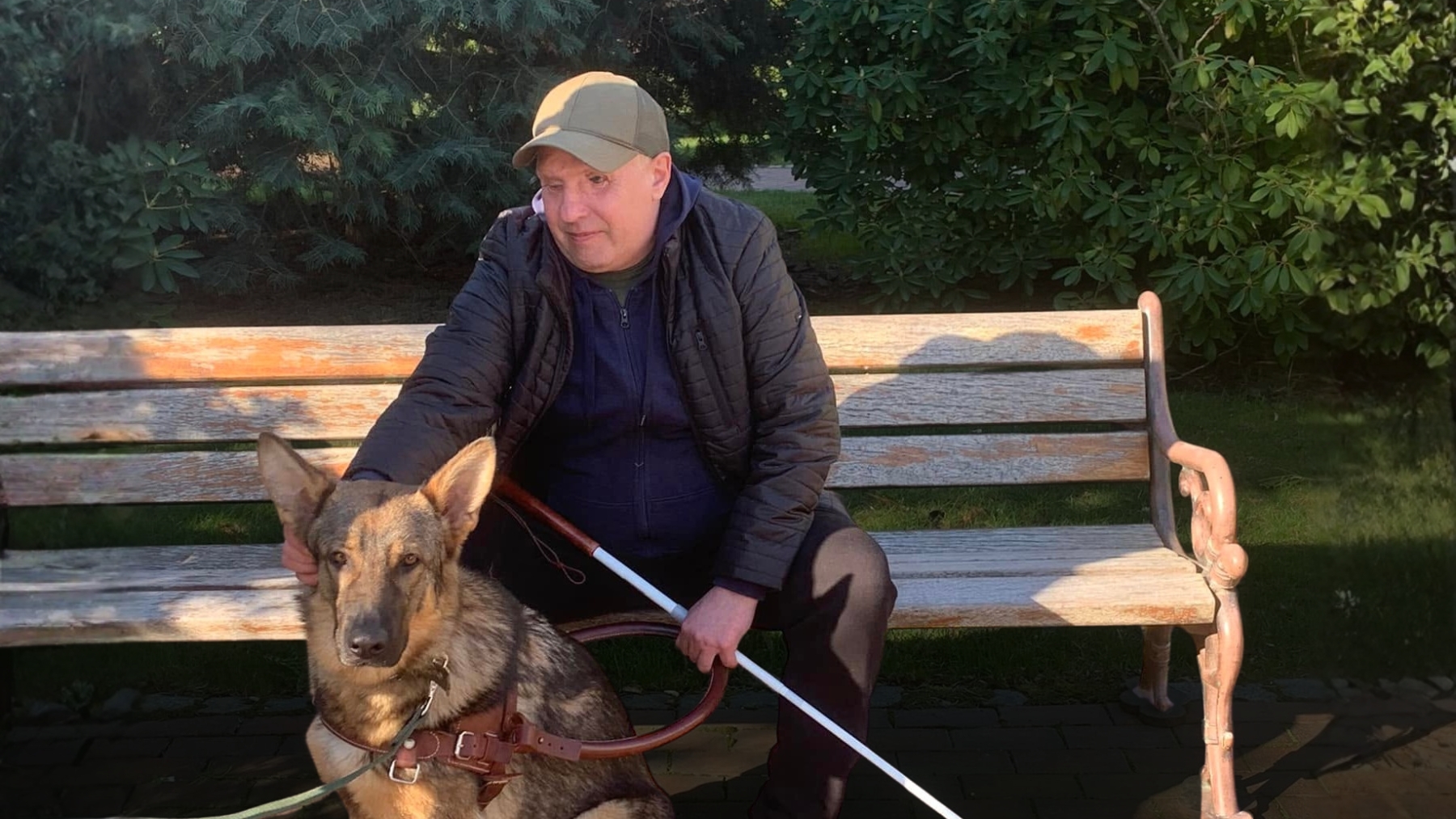
Andrii Lemak, a 48-year-old construction worker and a native of the Carpathians, did not need anyone to explain to him what war was. After his experience on the Maidan and service in Debaltseve, in February 2022 he went to the military enlistment office without hesitation and joined the ranks of the 24th Mechanised Brigade. Waiting for him at home were his beloved wife Liuba and their three children.
After a severe injury in April 2022, the life Andrii and his family knew was shattered. A tank strike tore apart his arm and pierced his skull, resulting in a ten-day coma. When he finally regained consciousness in the hospital, he remembered nothing except strange visions in which he saw himself from above — with a mutilated body and a blackened arm. Ahead of the family lay a long and exhausting journey: evacuation, endless IV drips, injections, and surgeries. To date, Andrii has completed several rounds of rehabilitation, and each new stage has been a fierce battle to restore basic physical functions and reclaim his role as a father and husband.
“I couldn’t understand what had happened to me — whether it was just a dream or something else,” Andrii recalls of his state after coming out of the coma.
This is the reality faced today by thousands of Ukrainian veterans who have sustained extremely severe mine-blast injuries and full or partial loss of sight. Without systematic, long-term, multi-stage rehabilitation, such injuries condemn people to constant pain, loss of the ability to work, and deep psychological crises — leaving families to face the consequences of war on their own.
The way back — to oneself and to life
Andrii did not immediately find the strength to step outside his four walls. After a severe injury — the entire front part of his skull was crushed and replaced with a metal plate, and his arm, with a torn-out bone, was barely functional — he found himself in complete isolation. Only when volunteers found the family’s contacts and offered help did his wife Liuba agree without hesitation. That is how Andrii first joined the Touch Point programme.
And that step changed everything.
Rehabilitation begins with the simplest things — the daily, patient repetition of basic skills. Because of his brain injury, Andrii struggles with short-term memory loss. At home, constant reminders only caused irritation and nervous tension between the couple. The programme, however, turned this exhausting process into a clear system: step by step, with every new rotation, the trainers helped him adapt to his physical limitations.
Over weeks of intensive sessions, Andrii learned to orient himself in space using his one functioning arm, a cane, and tactile perception. What once seemed unnecessary amid the whirl of everyday chores and earning a living has now become a matter of survival. The specialists helped him break the cycle of loneliness, find new motivation, and — most importantly — taught him to move independently through the world in which fate had placed him.
For the first time, he came to understand that the darkness around him was not a temporary dream that would pass, but a new reality in which it is possible — and necessary — to live. The project’s trainers introduced him to the tools of inclusion that restore a veteran’s autonomy, despite a severe concussion and a battered body.
“Until you lose your sight, you never think about these things. But God spared my life, and I have children — I need to find new interests and keep living,” Andrii says.
Equally important was the sense of community. The change of environment and the company of fellow soldiers with similar injuries restored Andrii’s emotional balance: here he can grieve, talk openly, or share a joke when he is in the mood. Exchanging experiences and new impressions brought back his belief that he was not left alone with his misfortune.
The programme matters not only for veterans, but also for their loved ones. For Liuba, who carries the weight of their large family, the household, and work in the village on her shoulders, these weeks of rehabilitation became her only respite — a time when she can breathe out, rest from the exhausting daily routine, and restore her own strength by her husband’s side.
Life after rehabilitation: Andrii’s new point of support
Today, Andrii has once again become a pillar of strength for his family and fellow villagers. A man who permanently lost his sight as a result of a severe war injury is no longer trapped within the limits of his memories. Thanks to the systematic support of the Touch Point team, he has regained control over his life.
The Touch Point programme helped Andrii overcome the most difficult barrier of all — adapting his daily life and mindset to complete darkness. The programme’s instructors taught him to move confidently with a white cane, navigate the dirt roads of his native village through tactile cues from the ground and grass, and safely cross the local footbridge. Beyond restoring mobility, specialists also worked closely with Liuba, helping her develop practical skills in psychological support and inclusive care, which brought greater understanding and balance back into their home.
“Nothing is difficult for me, because I can see. But him… He can do anything. He is so stubborn,” Liuba says, watching her husband walk to the shop or to a neighbour’s house on his own.
The loss of sight and short-term memory challenges after his coma did not break Andrii’s spirit. More than that, his home has become a therapeutic hub for the entire village. Soldiers returning home during rotations often visit Andrii for advice and support. Having survived the horrors of war and multiple stages of rehabilitation himself, he now encourages fellow veterans, shares jokes, and reminds them that everything will eventually be alright.
Andrii’s story is a reminder that helping veterans rebuild their lives is a shared responsibility. Every successful rehabilitation is more than medical assistance — it is the restoration of dignity, independence, and hope. Supporting inclusive rehabilitation programmes today is an investment in stronger communities, a more resilient society, and a future in which no veteran is left behind.
Hundreds of Ukrainian veterans living with severe vision loss and traumatic brain injuries are still waiting for their chance to regain independence and reconnect with the world around them. The Touch Point project operates entirely thanks to donor support. Every contribution helps restore dignity, autonomy, and opportunity to those who sacrificed their health in defence of Ukraine.
How to support Touch Point
You can support the programme today:
- via direct donation on the Alliance for Public Health platform: https://donate.aph.org.ua/en/ (all current campaigns)
- via the international platform GlobalGiving (Touch Point)
- via alternative digital giving tools on Endaoment (Touch Point)
- as well as through other fundraising channels used within the campaign
Every contribution is an opportunity for people affected by the war to regain independence, dignity, and control over their own lives — and an investment in sustainable public health solutions in Ukraine.
About the Touch Point programme
Touch Point — Adaptation for Veterans Who Lost Their Sight — was created to ensure that blind veterans are not left alone with their trauma.
The programme includes:
- mobility and orientation training;
- digital skills development and assistive technologies;
- physical rehabilitation;
- psychological counselling;
- continued support after returning to the community.
The programme was developed in partnership with the World Health Organization (WHO), Blind Veterans UK, the Ministry of Veterans Affairs of Ukraine, the Ministry of Education and Science of Ukraine, the Levenya Educational and Rehabilitation Centre, the NGO Modern View, and other Ukrainian civil society organisations.