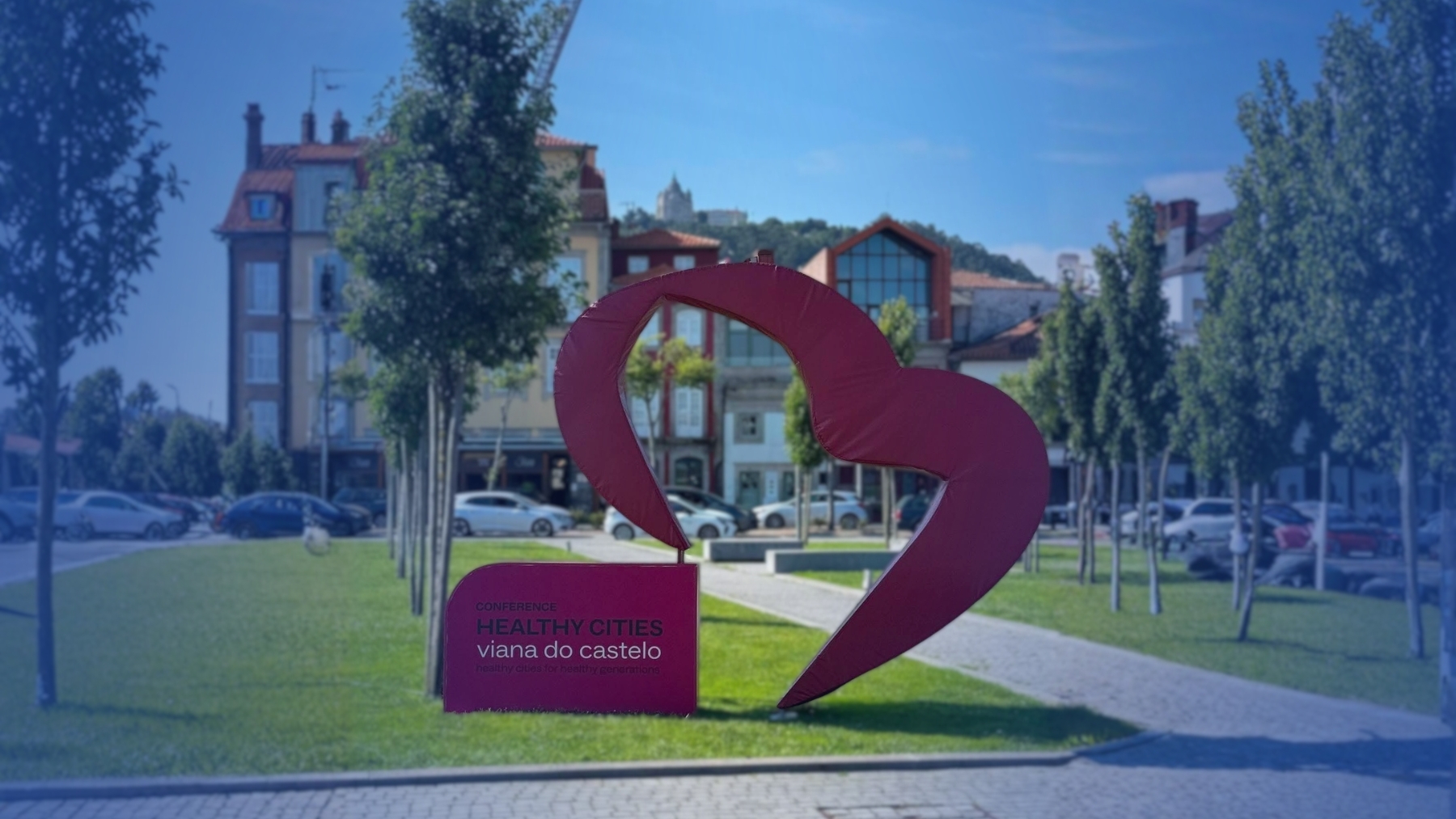
The WHO European Healthy Cities Network Conference 2026 opened yesterday in Viana do Castelo, Portugal. As one of the leading international platforms for discussing urban public health policies, this year’s conference marks the 40th anniversary of the Ottawa Charter for Health Promotion and officially launches Phase VIII of the Network (2026–2030) under the theme “Healthy Cities, Healthy Generations.”
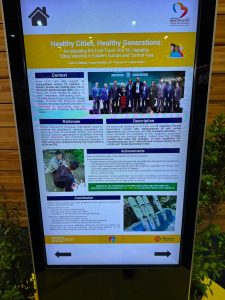
The Alliance for Public Health is represented at the conference by Tetiana Deshko, Director of International Programs. As part of the official programme, the Alliance’s regional iSoS partnership team is presenting a poster presentation titled “Healthy Cities, Healthy Generations: Accelerating the Fast-Track HIV, TB, Hepatitis Cities Initiative in Eastern Europe and Central Asia” (authors: T. Deshko, Y. Kushnir).
“Over nearly ten years of engagement with the Fast-Track Cities initiative, we have seen cities become true leaders in the response to HIV. While national strategies can sometimes be slowed by bureaucracy, mayors and local teams are often able to respond more quickly to people’s needs. Since 2017, we have supported 34 cities across 13 countries in Eastern Europe, Central Asia, and South-Eastern Europe in joining the initiative. Most importantly, the majority of Fast-Track Cities continue to finance HIV services through local budgets. This demonstrates the sustainability of the results achieved and their successful integration into local service delivery systems,” says Tetiana Deshko, Director of International Programs at the Alliance for Public Health.
The poster presentation summarizes the results of the Alliance’s long-term efforts to advance the Fast-Track Cities initiative across Eastern Europe, Central Asia, and South-Eastern Europe. Since 2017, 34 municipalities from 13 countries have joined the initiative with the Alliance’s support by signing the Paris Declaration and committing to accelerate efforts to end the epidemics of HIV, tuberculosis, and viral hepatitis.
According to a survey conducted by the Alliance among 23 partner cities ahead of the conference, 17 cities allocated local budget funding for HIV services in 2025, while another 18 plan to provide such funding in 2026. These findings demonstrate strong political commitment and the institutional capacity of cities to sustain HIV programmes even after external support has ended.
“The conference in Viana do Castelo provides an opportunity to showcase to our European colleagues what is happening in Eastern Europe and Central Asia — a region that often remains underrepresented in global discussions on healthy cities. Phase VIII of the WHO Network gives us a chance to consolidate this experience at a more systemic level and identify new partners for knowledge exchange and collaboration,” says Ievgen Kushnir, Senior International Programs Manager at the Alliance for Public Health and co-author of the poster presentation.
Particular attention at the conference is being given to urban resilience in times of crisis. The Healthy Cities Network has established a dedicated working group on urban resilience, reflecting the growing importance of this topic across Europe. During the conference, the Alliance for Public Health shared its experience of supporting cities during Russia’s full-scale war against Ukraine and ensuring the continuity of essential services for communities affected by conflict. This experience generated significant interest among city representatives and international partners.